Pediatrics Research

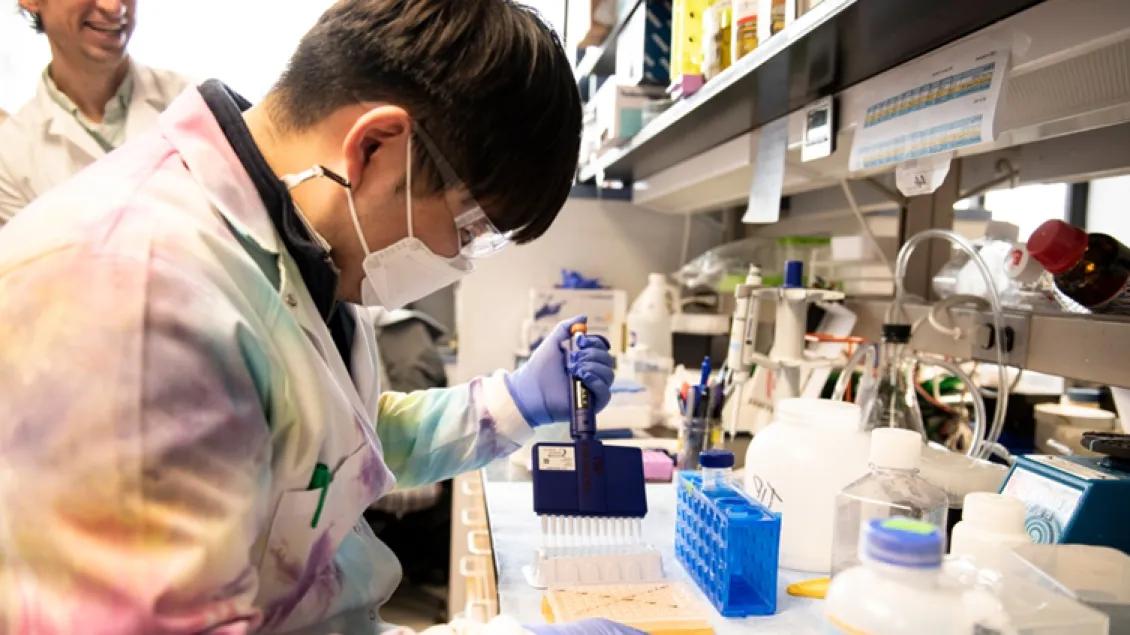
a person working with lab equipment

Research-Driven Discoveries

Transforming child health through groundbreaking research.

Advancing Pediatric Research

The U-M Medical School Department of Pediatrics stands among the top 15 departments nationally for NIH funding, with a robust research portfolio exceeding $40 million in active awards. Our faculty, trainees, and students are united by a mission to advance scientific understanding of the prevention, diagnosis, and treatment of childhood diseases—and to translate these discoveries into improved health care for children everywhere.

A Thriving Research Environment

Faculty, residents and fellows benefit from a wealth of mentorship and collaboration opportunities—both within our department and across the Medical School and wider University of Michigan community.

Faculty in the Department contribute to this mission by performing research along the entire spectrum of clinical and translational research – from basic scientific discovery in the laboratory, community and clinic to the translation of these discoveries to patients and to practice. Faculty have access to a wide range of mentors and collaborators within the department, medical school and university to pursue interests in basic science, translational, clinical and health services research as well as education and quality improvement.

We foster a dynamic research culture that spans the full spectrum of pediatric inquiry, including:

  • Basic Science
  • Translational Medicine
  • Clinical Research
  • Health Services Research
  • Medical Education
  • Quality Improvement Initiatives

• Core research facilities for both basic and clinical research

• Statistical and data collection support

• Intramural funding opportunities

• Faculty development launch committees

• Grant review programs

• Clinical research design and statistical analysis

• Educational leadership

• K-award training

• R-award boot camps

Our Centers & Programs

M-CHORD

The Michigan Congenital Heart Outcomes Research and Discovery (M-CHORD) is composed of multi-disciplinary faculty members from pediatric cardiology, cardiac surgery, critical care, genetics, nephrology and psychology, along with a dedicated staff of research nurses, study coordinators, database programmers and a biostatistician.

Mott Children's Hospital National Poll on Children's Health

The C.S. Mott Children’s Hospital National Poll on Children’s Health measures the public’s opinions, perceptions and priorities regarding today’s most important child health issues and trends. These findings inform new policy initiatives and research on important concerns facing kids today.

Susan B. Meister Child Health Evaluation and Research Center

The Susan B. Meister Child Health Evaluation and Research (CHEAR) Center at the University of Michigan is one of the largest health services research centers that focuses on children, conducting research and training across several core themes that include data science, emerging technologies, health outcomes research, health care policy, and communications.

Woodson Children's Clinical Research Lab

The Charles Woodson Children's Clinical Research (CWCCR) Lab, managed by the U-M Medical School Department of Pediatrics, provides children's health research investigators with core facilities for the preparation and short-term storage of biological specimens. 

The CWCCR Lab is open to the Department of Pediatrics research faculty and staff involved in children's health research. Faculty and staff can contact the lab coordinating manager for questions about the lab. For internal lab resources, visit the Pediatrics Intranet

Publications & Grants

Discover more about the Department of Pediatrics grants and publications.

View publications

Featured News & Stories

See all news
Health Lab

Path forward for glioblastoma treatment

Experts in brain cancer outline current discoveries and offer a path of hope for glioblastoma treatment
baby with hearing aid on ear looking from side view with blue pacifier in mouth
Health Lab

Research may help better predict outcomes in kids with congenital cytomegalovirus

Two new studies may help researchers and clinicians better understand congenital cytomegalovirus (CMV), the most common infectious cause of birth defects and a leading cause of non-genetic hearing loss in children.
family smiling inside capitol
Health Lab

12-year-old shares journey with sickle cell anemia on Capitol Hill

A 12-year-old takes his story to Washington, D.C., sharing with lawmakers how specialized treatment transformed his life with sickle cell disease.
person close up nails and shots going into face on comptuer screen gif moving
Health Lab

What is looksmaxxing?

A Q&A with Dr. Bravender discussing what looksmaxxing is. Along with the true dangers of it, what parents should know, and when to intervene.
children with adult at daycare outside on a porch
Health Lab

Collaboration with community child care centers creates innovative research tool

Michigan Child Care Related Infections Surveillance Program, or MCRISP, brings together child care providers in Washtenaw County, Mich. and doctors at the University of Michigan Health to effectively monitor pediatric respiratory and gastrointestinal illness transmission.
UMich Med Mosaic on blue background with colorful geometric shapes
UMich Med Mosaic

Beyond the White Coat: Finding Your Voice at the Patient’s Bedside

In this episode of UMich Med Mosaic, host Mackenzie Kay speaks with MD students Josh Chen and Gabriel Culian about what it feels like to step onto the hospital wards for the first time. They reflect on their earliest patient encounters, the transition from standardized patients to real clinical settings, and the role medical students play in building trust, explaining care plans and supporting patients and families. They also discuss witnessing serious illness, grief and life-changing conversations, while exploring how early clinical experiences shape confidence, empathy and the kind of physicians they hope to become.