
-
Medical Student Programs -
Pediatric Residency -
Child Neurology Residency -
Medical Genetics Residency -
Fellowships -
Adolescent Medicine -
Developmental Behavioral Pediatrics -
Medical Biochemical Genetics -
Neonatal-Perinatal -
Pediatric Cardiology -
Pediatric Critical Care Medicine -
Pediatric Endocrinology -
Pediatric Gastroenterology -
Pediatric Hematology & Oncology -
Pediatric Hospital Medicine -
Pediatric Infectious Diseases -
Pediatric Nephrology -
Pediatric Pulmonary -
Pediatric Rheumatology -
Pediatric Psychology
-
-
Advanced Training Programs -
Facilities & Spaces
Child Neurology Residency Curriculum & Rotations
The U-M Medical School Department of Pediatrics and Department of Neurology's Child Neurology program offers a unique training ground. Training takes place at C.S. Mott Children's Hospital, with a 12-story inpatient wing and a 9-story outpatient wing, 1.1 million square feet, 342 beds, and a busy ED, inpatient psychiatric unit, and Pediatric, Neonatal, and Pediatric Cardiothoracic ICUs.
Every room in the hospital can support long-term EEG monitoring. The children's hospital is conveniently attached to the adult hospital, balancing function as an independent unit with easy access to Adult Neurology conferences and to Pediatric Neurology continuity clinics during the adult rotations.
For More Information
Unique Training Experience
- Extremely close and cooperative relationships between the Child Neurology, Pediatrics, and Adult Neurology training programs
- Child Neurology continuity clinic during the Pediatrics PGY2 year
- A month-long Neurology Bootcamp elective just before starting the PGY3 year
- Begin Child Neurology training (along with Adult Neurology training) during the PGY3 year
- Strong emphasis on graded autonomy and responsibility as residents advance and on continuity of care
- Joint teaching conferences with Neonatology, Pediatric Critical Care, Pediatric Genetics, and Neuroradiology
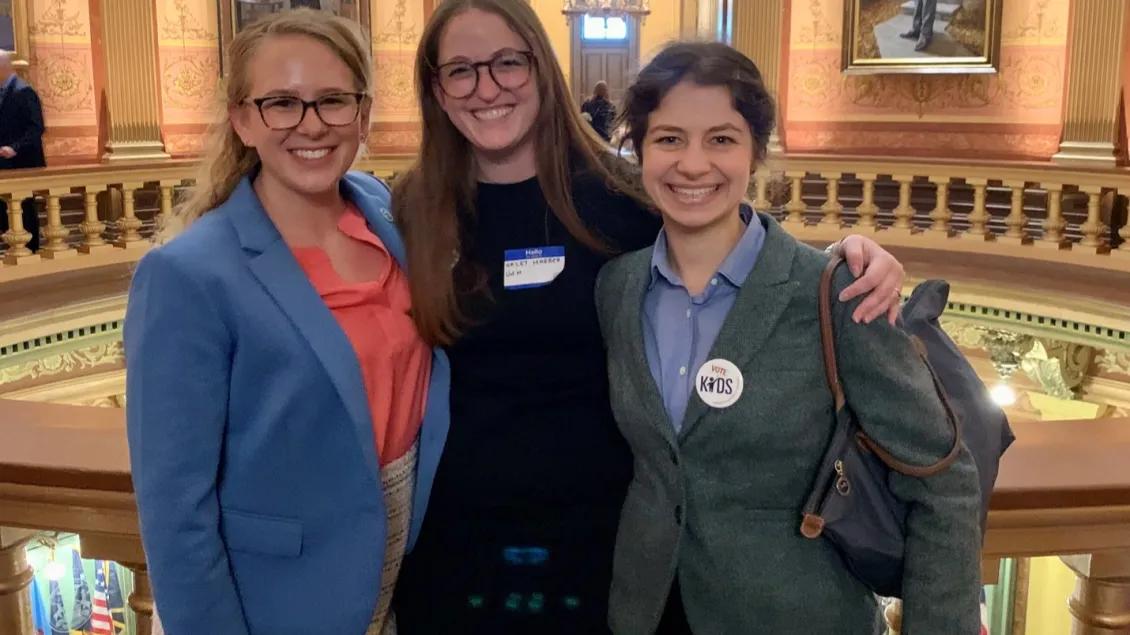
Dr. Sarah Dixon, our residency’s Advocacy Director, leads an advocacy curriculum with lectures and an annual “Spring into Action” advocacy challenge. Advocacy mentorship begins during the PGY1 year to explore advocacy interests with potential to implement longitudinal advocacy projects throughout residency.
Global health electives are offered in both the Pediatric and Child Neurology residency programs, with interested faculty to assist with mentoring. Global REACH is a U-M Medical School organization which facilitates worldwide clinical, educational, and research collaborations.
Our residents teach each other in a self-designed neuroanatomy series, with input and feedback from our education experts. Division-wide meetings for faculty and residents are dedicated to educational methods and skills.
Our residents can participate in CoMET (Community of Medical Educators in Training), a program designed for residents and fellows aiming to become the next generation of clinician-educators.
Ann Arbor was voted the best place to live in the US, and once you’re in Ann Arbor, you might never want to leave!
The House Officer Association (union) advocates for residents, which results in excellent salary and benefits, including holiday and birthday pay, excellent parental leave policy, well-stocked House Officer lounge, lactation rooms, cell phone, and meal allowances.
- You will receive 28 vacation days per year, as well as 1 personal day
- We place a strong emphasis on resident wellness, with many resources:
- In-hospital fitness center with locker rooms
- Lactation rooms
- Excellent mental health support
- Resident Mentoring Program starting PGY1 year
- Jeopardy program (no questions asked)
- Very approachable faculty and close interactions with Pediatrics and Adult Neurology
- Monthly agenda-less breakfast with the program leadership
- Debriefings after stressful clinical interactions
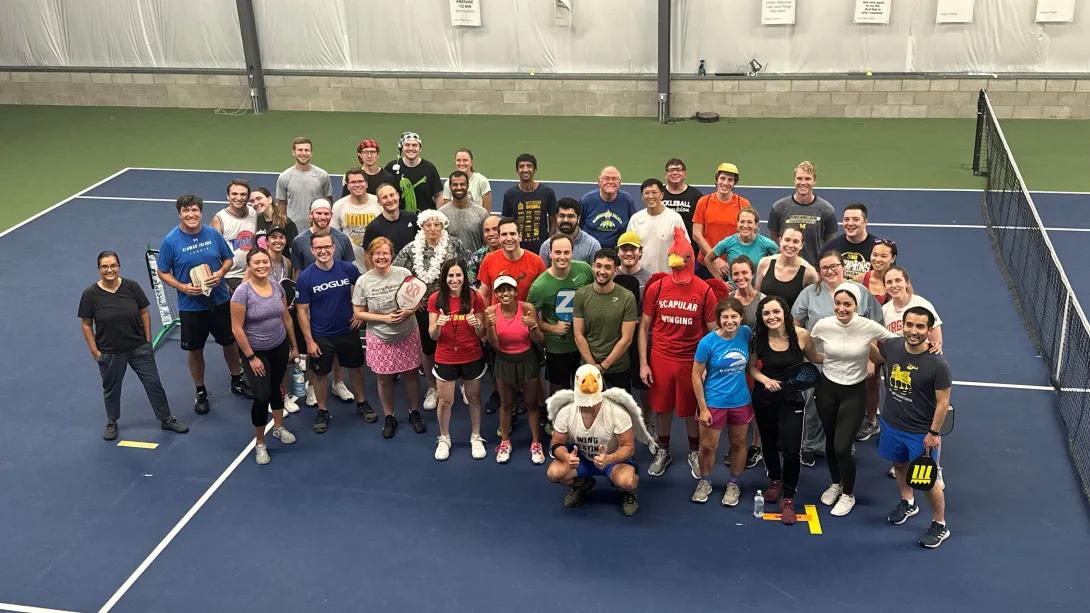
- Social events, including game nights and escape room escapades
Child Neurology Services
We have 2 inpatient consult services: an ICU consult team and a floor/ED consult team. We see approximately 35 new consults per week between the 2 services. We also have a Pediatric Epilepsy Service for scheduled EEG admissions with inpatient nurse practitioners; there are over 700 admissions per year. Our active outpatient clinics include over 15,000 clinic visits yearly as well.
Our teams include residents, faculty with neurocritical care and neurohospitalist expertise, ICU nurse practitioners, and clerkship and elective students.
Members of our faculty also participate in a broad range of pediatric multi-disciplinary programs and clinics, including Neuro-oncology, Sleep Disorders, Neuromuscular Disease, Complex Epilepsy, Autism/Developmental Assessment, High Risk Neonatal Follow-Up, Neurocritical Care Follow-Up (with Neuropsychology and Physical Medicine and Rehabilitation), Stroke, Movement Disorders, Fetal Neurology, and Neurocutaneous Disorders Specialty Clinics.
Resident Rotations
- The Child Neurology continuity clinic begins during the PGY2 year and continues weekly throughout training.
- Trainees begin Neurology training with a month-long Neurology Bootcamp elective just before starting the PGY3 year.
- Our Adult Neurology rotations include services that are meant to be the highest yield for the Child Neurology trainee: the General Neurology service, the Stroke service, the Consult service, the NICU (Neurology Intensive Care Unit), and many outpatient subspecialty options.
- Child Neurology inpatient rotations include an ED/Floor consult service and ICU consult service.
- Residents can choose to rotate on our Pediatric Epilepsy service.
- Child neurology outpatient rotations include a New Patient general neurology clinic and opportunities to rotate through our multiple subspecialty clinics.
- Additional rotations include EEG (6 weeks), Neuromuscular (4 weeks), Neuropathology (2 weeks), Physical Medicine & Rehabilitation (2 weeks), and Psychiatry (4 weeks).
| Rotation | PGY2 | PGY3 | PGY4 | PGY5 | Total |
| Bootcamp | 1* | 1 | |||
| EEG*** | 0.5 | 1 | 1.5 | ||
| Physical Medicine & Rehabilitation*** | 0.5 | 0.5 | |||
| Child & Adolescent Psychiatry*** | 1 | 1 | |||
| Neuropathology*** | 0.5 | 0.5 | |||
| Other elective** | 2 | 2.5 | 2.5 | 7 | |
| Vacation | [1] | 1 | 1 | 1 | 3 |
| Pediatric Neurology | |||||
| Outpatient (new patients + subspecialty) | 1 | 1 | 1 | 3 | |
| ICU consults | 0.5 | 1.5 | 1.5 | 3.5 | |
| ED/floor consults | 0.5 | 2 | 1.5 | 4 | |
| Home night float | 2 | 1.5 | 3.5 | ||
| Neuromuscular*** | 1 | 1 | |||
| Neurosurgery*** | 0.5 | 0.5 | |||
| Adult Neurology | |||||
| Consults | 1.5 | 1.5 | |||
| Stroke | 2 | 2 | |||
| Ward | 1 | 1 | |||
| Evening shift | 0.5 | 0.5 | |||
| Neurology ICU | 1 | 1 | |||
* Number represents the number of 4-week blocks (1 = 4 weeks)
** Electives can be scheduled in Adult or Child Neurology as desired during PGY3 to PGY5 years – per ACGME requirements, need to complete a total of 3 months of outpatient clinical adult neurology and 3 months of elective adult neurology clinical experiences (which includes Bootcamp, Neuropathology, and 1 month of our EEG curriculum)
*** EEG, Neuromuscular, Neurosurgery, Physical Medicine & Rehabilitation, Child & Adolescent Psychiatry, and Neuropathology can be completed anytime during PGY3 to PGY5 years
Note: The weekly Child Neurology continuity clinic begins in PGY2 year. Aside from Bootcamp, the remainder of PGY2 schedule is under the Pediatrics curriculum. The PGY3 schedule also includes 4 weeks of General Pediatrics (because of the swap with Bootcamp)
Scholarship Opportunities
All residents complete a mentored capstone project and present their project at the University of Michigan Neuroscience Day. Capstone projects include research, quality improvement, education projects, or a scholarly review. Most residents present a project at a national meeting and many have won local and national research awards.
We have excellent integration across departments, and our residents have completed projects with Adult Neurology, Sleep Medicine, Genetics, Psychiatry, Neurosurgery, and basic science labs. We have a world-famous pediatric health service research program, CHEAR, with many opportunities for residents to get involved. Dr. Louis Dang, our division’s Research Director, and other members of the Resident Research Committee run our robust scholarship curriculum, including didactics and roundtable discussions.
Our residents are eligible to apply to the Clinical Neuroscientist Training Program (NIH/NINDS UE5, formerly known as R25), directed by Dr. Roger Albin.
Quality Improvement
We have a longitudinal quality improvement curriculum for our residents. Our residents have completed excellent quality improvement projects, including these recent projects:
- Increasing folic acid prescription for patients who could become pregnant who take anti-seizure medications
- Increasing screening for mental health disorders in clinic
- Reducing unconscious bias in our resident selection process
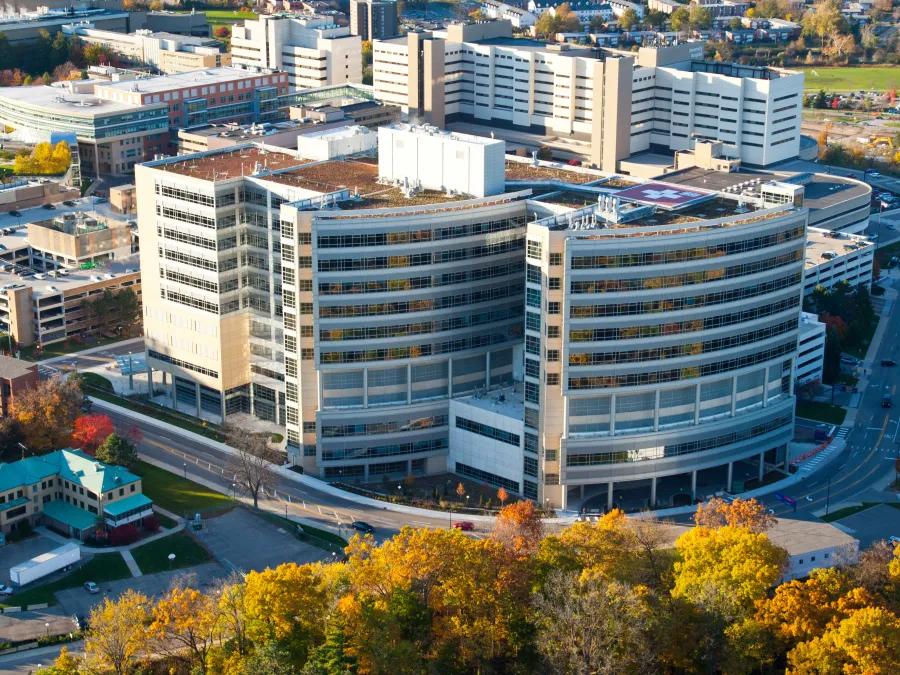
See Where Training Takes Place
Expand your career trajectory in a high-volume academic medical center that also supports and excels in a wide range of basic science, translational and clinical research programs.
