
Pediatric Pulmonary Fellowship Clinical & Research Training
The U-M Medical School Department of Pediatrics' Pediatric Pulmonary Fellowship offers a wide range of opportunities across patient care, education, and research to provide a unique training experience for fellows.
For More Information
Clinical Training
- 12-14 blocks of clinical service including the Pulmonology Inpatient Service (including pulmonary and vent service) and Pediatric Pulmonology Consult Service. The majority of clinical service weeks will be on the Consult Service.
- Electives in allergy, sleep, interventional bronchoscopy and others according to fellows’ interest (ENT, adult pulmonology, radiology, etc.)
- Longitudinal continuity clinic where fellows follow their own patients over 3 years
- Extensive flexible bronchoscopy and interventional bronchoscopy exposure
- Daily student and resident teaching opportunities
Exposure to unique clinical programs including: The Severe Asthma Clinic, Bronchopulmonary Dysplasia Clinic, the Home Ventilator Program, the Cystic Fibrosis Program, the Aerodigestive Program, the Childhood Interstitial Lung Disease Program, the Primary Ciliary Dyskinesia Program, the Pediatric Pulmonary Hypertension Program, the Single Ventricle Program, the Trisomy Program and many others- depending on fellows’ interest.
- At-home call
- Weekly protected didactic teaching
- Optional two-week elective in Egypt
Curriculum
Year 1
- 2 weeks of orientation
- Approximately 6 blocks of inpatient service (Pediatric Pulmonology Inpatient Services and Pediatric Pulmonology Consult Service)
- 2-week Allergy elective
- 2-week Sleep elective
- 4 weeks of vacation
- 18 weeks of research
- Weekly longitudinal outpatient clinic
- Quarterly outpatient pediatric ventilator clinic
- At-home call. Only on call when on inpatient or consult services.
Year 2 & 3
- Approximately 3 blocks of inpatient or consult service
- 4 weeks of vacation
- Weekly longitudinal clinic
- Quarterly outpatient pediatric ventilator clinic
- 36 weeks of research
- At-home call. Fellows are only on call when on inpatient or service
- Optional interventional bronchoscopy and global electives
This training calendar is only a template. It can be modified according to the interests and career goals of each fellow. For example, a fellow doing blended sleep training will spend additional time in the sleep lab and less time on research. A fellow interested in asthma might spend more time in asthma clinics.
Rotations
During the first two weeks of fellowship, the fellow is oriented to the hospital, the division and life as a fellow. We arrange small group training with expert physicians and associate staff.
This includes:
- Training in flexible bronchoscopy
- Advanced simulation models
- Hands-on management of tracheostomies and ventilators
- Hands-on training on the use of various respiratory equipment such as inhalers and PEP devices
- How to perform and interpret pulmonary function testing
- Observation of inpatient pulmonary and pulmonary ventilator service rounds
- Observation of specialty clinics including asthma clinic and home ventilator clinic
- Detailed review of all department, house officer association and program policies and procedures
- Weekly 2-hour small group crash course on pediatric pulmonary physiology.
By the end of orientation, fellows are well-equipped to start working independently but continue to get direct assistance and supervision from senior fellows and faculty.
The inpatient service covers both the Pulmonary Inpatient Unit and the Pediatric Ventilator Unit (PVU). Fellows typically do 2 weeks on- service at a time including one weekend. While on service, fellows round with the advanced practice providers (APP) and the attending. There are usually 7-10 patients admitted to the Pediatric Pulmonology Inpatient Unit including those with conditions such as asthma, cystic fibrosis, acute respiratory infections, and 5-10 patients admitted to the PVU.
The APP will write notes and orders; the pulmonology faculty and fellow are responsible for overseeing care and providing teaching. Fellows take overnight calls 2-3 nights per week and one weekend for every 2 weeks on service. Pages will often come from parents requesting help for a sick child, the emergency room requesting admission, or from the pediatric resident requesting help for a sick child admitted to the hospital.
Fellows do a total of 2 weeks of service at a time on the Consult service. Pulmonology consultations are seen in many different units of the hospital including the emergency room, the general pediatric inpatient floors, the intensive care units, the neonatal intensive care unit and the cardiothoracic unit. Fellows take overnight calls 2-3 nights per week and one weekend for every 2 weeks on service. Pages will often come from parents requesting help for a sick child, the emergency room requesting admission, or from the pediatric resident requesting help for a sick child admitted to the hospital.
During this 2-week outpatient elective, fellows participate in outpatient pediatric allergy clinics. They also work with adult pulmonologists to see adults with severe atopic asthma. This elective is designed to help fellows learn about the atopic component of asthma and use of biologic therapy for asthma and other atopic diseases in children and adults. Fellows attend didactic allergy conferences and continue to attend pediatric pulmonology didactic conferences and their own weekly continuity clinics.
Fellows will spend time in sleep clinics to learn about the assessment and management of children with sleep-disordered breathing. They will also spend time in the sleep lab to learn how to protocolize and interpret polysomnograms. Fellows will attend didactic sleep conferences and continue to attend pediatric pulmonology didactic conferences and their own weekly continuity clinics.
This optional elective will be offered to senior fellows interested in acquiring greater procedural competence in interventional bronchoscopy. Fellows will work with adult bronchoscopists alongside other pulmonary/critical care and thoracic surgery fellows.
In their first year, fellows will use the research blocks to start exploring their research interests, meeting with different investigators, reading, and preparing for their research projects which are the focus of years two and three. In the second half of the first year, fellows are expected to have a better understanding of their main research interests and identify a research mentor.
The program director will work closely with the fellow throughout this process. In years two and three, research will occupy a greater part of a fellow’s schedule. Fellows will work very closely with their research mentors and are expected to meet with their scholarly oversight committee 2-3 times per year to review the overall progress of the project. Fellows should plan to submit an abstract to the Pediatric Research Symposium every year and an additional abstract to a pertinent national conference (American Thoracic Society, North American Cystic Fibrosis Conference, SLEEP, etc.)
Fellows will see their patients on their own and staff with one of two attendings in clinic with them. They have clinic one half-day per week. Fellows develop very close relationships with their patients and families over the course of their training.
During their clinics, fellows are expected to sign out their pagers to the attending on service to reduce distractions. Each fellow will see 4 patients per half day in the first year and 6 patients per half day in years 2 and 3. The care of patients with chronic diseases often requires a multi-disciplinary approach. Therefore, fellows will work alongside nurses, respiratory therapists, dieticians, social workers and others to provide optimal patient care.
Every 3 months, fellows will spend a half-day in the pediatric ventilator clinic with the attending faculty and nurse practitioner. This is an opportunity to observe the management of children using ventilators at home including tracheostomy care, and ventilator adjustments and weaning.
Fellows who are looking for more experience with specific clinical diseases and programs are welcome to spend more time in subspecialty clinics. For example, those interested in chronic mechanical ventilation can spend more time in outpatient pediatric ventilator clinics or rounding with the pediatric ventilator service. Fellows can work with attendings in the severe asthma program, the aerodigestive program, the primary ciliary dyskinesia program, the complex respiratory infection program, the interstitial lung disease program, the bronchopulmonary dysplasia program, the pulmonary hypertension program, the single ventricle program, the congenital diaphragmatic hernia and chest wall disorders program, the neuromuscular program and others.
Fellows that would like to increase their exposure to advanced airway and interventional bronchoscopy can schedule an elective with the adult interventional bronchoscopy program. Fellows have also taken additional time to work with faculty outside of the pulmonary division such as otolaryngologists, radiologists, and non-physician experts including respiratory therapists in the pediatric ventilator service. All of these can be arranged on a case-by-case basis.
Fellows have opportunities to travel to Egypt to help support developing cystic fibrosis programs with faculty and supporting clinical staff. Global electives need to be arranged several months in advance and are typically two weeks in duration.
Fellows undergo simulation training in pediatric flexible bronchoscopy using a combination of a 3D-printed airway and a virtual reality simulator. Thereafter, they receive formative feedback and just-in-time training with every patient bronchoscopy. Fellows usually perform 40-50 bronchoscopies in their first year of training and fewer during their research years.
Research Mentorship
During the first year of fellowship, each fellow is introduced and exposed to different programs of pulmonary research at the University of Michigan Medical School, including basic science research, mechanistic clinical research, and health services research. The fellowship leadership assists the fellow in identifying mentors and a project that aligns with their career goals. At the end of the first year, the fellow is expected to have identified a research mentor to work with during the 2nd and 3rd years of the fellowship program. Scholarly work also extends to quality improvement projects and clinical case reports. All fellows are expected to have completed a scholarly work submitted to a journal.
Mentorship can be found in the research programs of faculty in the Division with active research programs related to cystic fibrosis, asthma, viral infections, bronchopulmonary dysplasia, lung development, sleep disorders, microbiology, and immunology that account for expenditures >$3.8M per year.
In addition, strong interdisciplinary interactions exist for mentorship from faculty in the Department of Medicine, Division of Pulmonary and Critical Care; Department of Molecular and Integrative Physiology; the Susan B. Meister Child Health Evaluation and Research Center (CHEAR) and School of Public Health on projects related to respiratory diseases in children.
In addition to the mentor, scholarly activity committees are convened for each fellow composed of faculty members in the division and other researchers relevant to the proposed work. Such committees meet regularly with the fellows to help guide their projects.
Research Support
The Department of Pediatrics has numerous resources for research support services including core services for molecular biology, biostatistical support, computer support, and data management. Our fellows present at the annual symposium run by the department as well as other centers/programs in the university.
For trainees interested in research careers, the division has a long-standing track record of assisting fellows transition to the faculty level as independent researchers. Fellows are eligible for support from one of the many NIH-funded T32 program.
Support at the Junior faculty level is available from Departmental K12 and Institutional K12 programs that assist in mentored career development toward a research career.
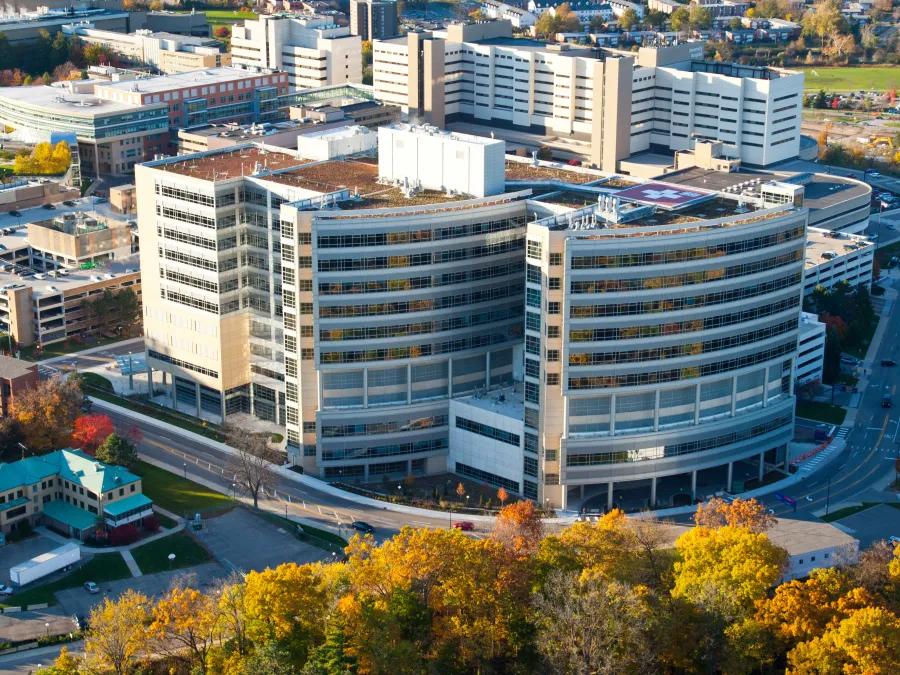
See Where Training Takes Place
Expand your career trajectory in a high-volume academic medical center that also supports and excels in a wide range of basic science, translational and clinical research programs.
