
MD Program Curriculum
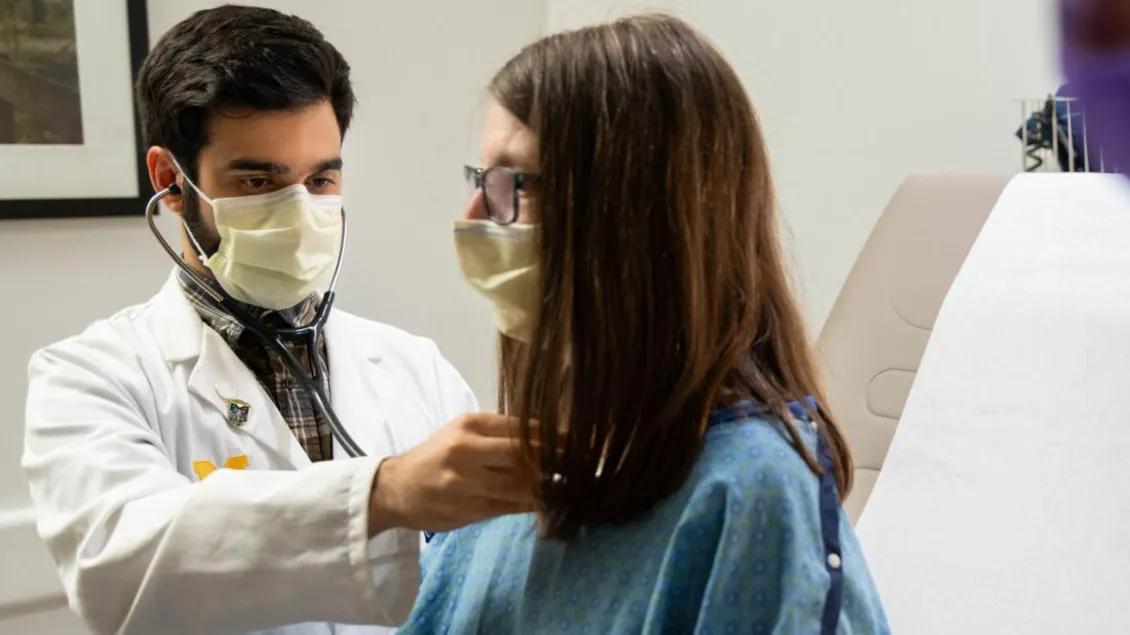
Higher Learning
Prepare to lead as a valuable member of a team no matter where you serve.
An Invaluable Impact
You are part of the change that drives your learning. We continuously and strategically review, update and enhance what and how we teach with student input at every stage.
Amassing essential foundational knowledge is balanced with the art of being a physician, leader and collaborator. Skills are taught and developed in the context of how they will be practically applied as you launch your career and make an impact while you train. Along the way, you'll provide invaluable insight and feedback that help improve the process.
The result: a dynamic and evolving curriculum delivered in a supportive, collegial environment with responsive faculty and dedicated time to explore your passions.
Our Curriculum Model
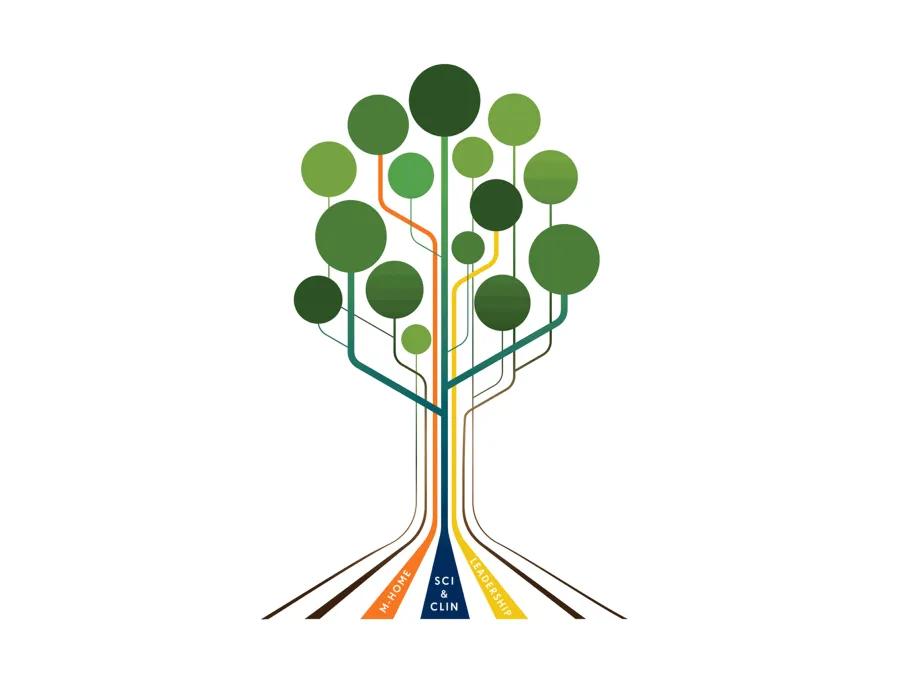
In honor of the oak trees for which Ann Arbor is named, our curriculum model uses a tree metaphor to describe its phases. You will gain foundational knowledge in the first two "Trunk" phases before moving on to the flexible "Branches" phase as you prepare for your medical career.
Our med students do not wait to graduate before taking on society's biggest challenges in health care delivery and health systems. We provide the structure, resources and support to make an impact while you train with us.
The Scientific Trunk is your preclinical year, the starting point in a journey of continuous learning. Students complete six foundational and organ-system based blocks where normal and abnormal (physiology and pathophysiology) are presented side by side. Students also complete longitudinal courses designed to foster their clinical skills, clinical reasoning and health care systems knowledge.
The Clinical Trunk features two phases of learning: in Transition to Clerkships, students prepare to enter the clinical environment, focusing on linking their scientific foundations to clinical skills and patient care; and in Core Clerkships, students are immersed in required departmentally organized clinical rotations. The clerkships include internal medicine, surgery and applied sciences (a combination of surgery, pathology, anesthesiology, anatomy and radiology), OBGYN, pediatrics, family medicine, neurology and psychiatry.
Our M2 core clerkships utilize a criterion-referenced H/HP/P/F grading scale, designed to offer flexibility in assessment within each tier. In other words, students will be graded not against their peers but rather on their own performance in relation to specified criteria within each clerkship. Students will be able to distinguish themselves for their future residency application process while still focusing on learning the material and collaborating with their classmates.
Just prior to starting M3, you will select one of four Branches to match your career interests and focus the remainder of your medical education. Once you choose a Branch. you will meet your Branch Director, a faculty member ready to help you attain your goals. This is the place in the curriculum where you may elect to start a dual degree, do international rotations, develop primary research projects, create and manage health programs, or embark on other individualized projects that interest you. You'll also do your emergency medicine rotation.
Most med students begin their Capstone for Impact project during this phase. The Branches include Diagnostics & Therapeutics, Patients & Populations, Procedure-Based Care and Hospital-Based Care.
This finishing phase of the Branches is all about honing your clinical skills through two sub-internships including one in the ICU. Medical students will participate in a Residency Prep Course, integrating scientific knowledge into the care you provide to patients on the wards, and explore opportunities to impact health and health systems for the greater good through your Capstone for Impact project.
Insider's Guide to the Curriculum
Get the details on the University of Michigan Medical School's MD curriculum from medical student Kavya in this series of videos. View the playlist.
You Might Be Interested In:
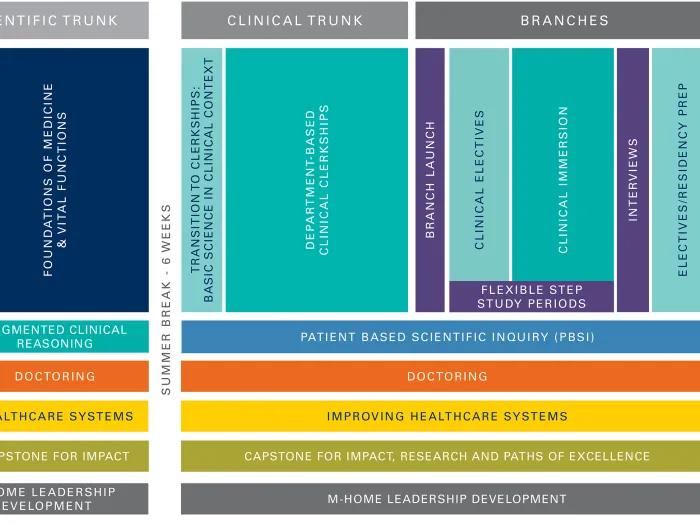
Curriculum Diagrams
View detailed diagrams on the Michigan Curriculum, Scientific Trunk options, Clinical Trunk, and a general Branch overview.
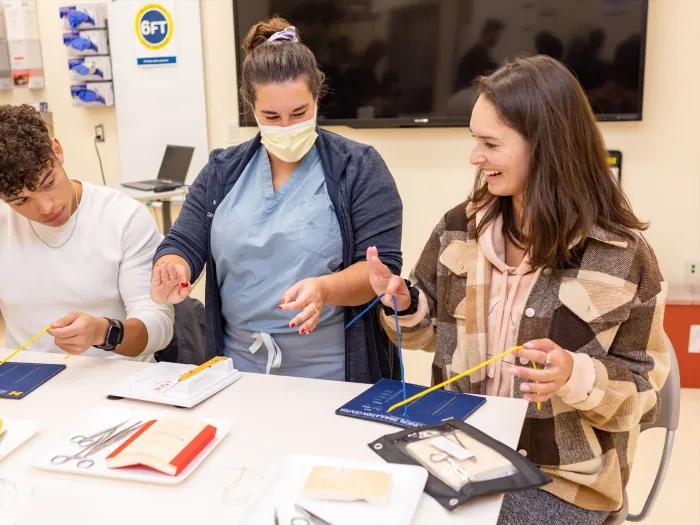
MD Program & Curriculum Highlights
Bring out your best. See some highlights of what sets us — and ultimately you — apart.
M-Home
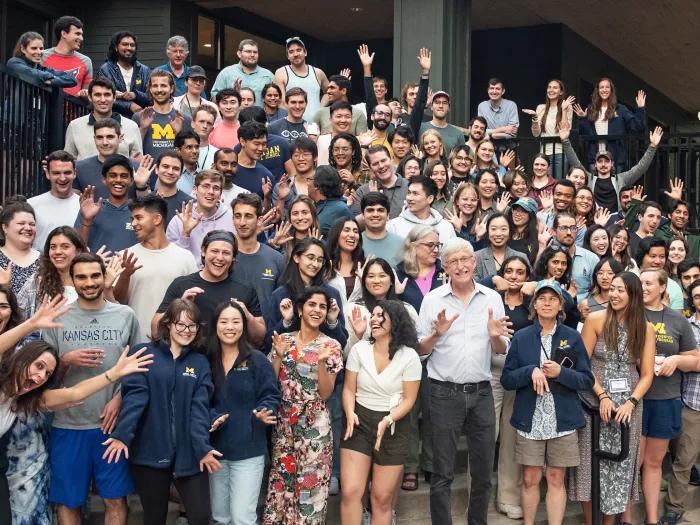
Belonging, connection, support. M-Home is to help you build strong personal and professional support with fellow students.
Curriculum Calendars
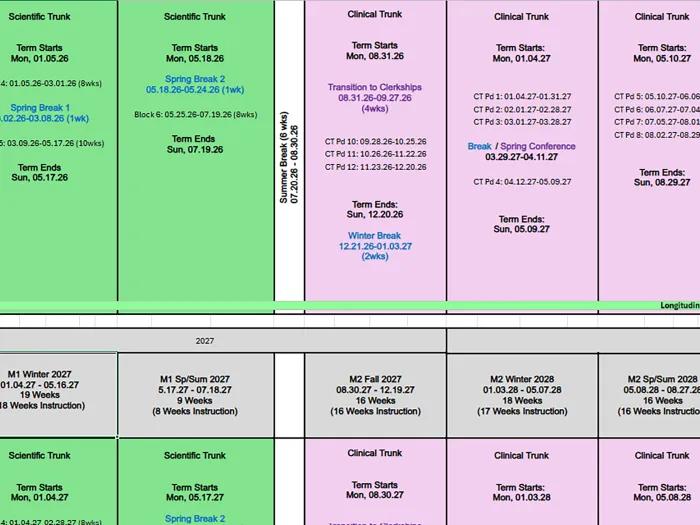
View academic calendars for all four years.
