
-
Medical Student Programs -
Pediatric Residency -
Child Neurology Residency -
Medical Genetics Residency -
Fellowships -
Adolescent Medicine -
Developmental Behavioral Pediatrics -
Medical Biochemical Genetics -
Neonatal-Perinatal -
Pediatric Cardiology -
Pediatric Critical Care Medicine -
Pediatric Endocrinology -
Pediatric Gastroenterology -
Pediatric Hematology & Oncology -
Pediatric Hospital Medicine -
Pediatric Infectious Diseases -
Pediatric Nephrology -
Pediatric Pulmonary -
Pediatric Rheumatology -
Pediatric Psychology
-
-
Advanced Training Programs -
Facilities & Spaces
Pediatric Residency Curriculum & Rotations
The U-M Medical School Department of Pediatrics Residency Program follows a 26-block structure, with each block spanning 2 weeks, providing an optimized learning experience for residents. Reach residency year includes a total of 4 weeks of vacation.
For More Information
Program Overview
Our curriculum includes several key components:
- Professional Development Week each year
- Anesthesia Week (Year 1) and surgical subspecialty exploration (Year 2)
- Pediatric Community Health Advocacy Rotations (Year 1 and Year 2)
- Exposure to robust ICU and subspecialty experiences
- Vast array of elective rotations to curate individualized curriculum (over 42 weeks' worth), experiences based on areas of interest (General Studies, Intensive Care, Global Health & Healthcare Disparities, and more!)
- Longitudinal mental health experiences
- Graded autonomy and emphasis on leadership through supervisory experiences in many settings
Advocacy
Our residents work to enhance our accountability to our local and global community through sustained and informed engagement.
- Michigan Advocacy Group
- Doctors for Tomorrow
- Pediatric Community Health and Advocacy Rotation
- Michigan American Academy of Pediatrics (MIAAP) Advocacy Day
- Reach Out and Read
Rotations
Please note that the block order shown is for illustrative purposes and does not reflect what any individual resident’s schedule may look like; instead, it illustrates the number of experiences by category.
- Two 2-week blocks of inpatient nights (with a paired senior resident)
- Two 2-week blocks of Pediatric Emergency Medicine within our dedicated Children's Emergency Department
- Two 2-week blocks of Newborn Nursery: Opportunities for skill development in neonatal resuscitation
- Two 2-week blocks of Neonatal ICU: Dedicated time both as part of a primary team and as part of the delivery/resuscitation team
- Five 2-week blocks of Pediatric Hospital Medicine
- Three 2-week blocks of Inpatient Subspecialty Medicine (Cardiology and Hematology/Oncology)
- Four 2-week blocks of Ambulatory Subspecialty Medicine: A combination of clinic experiences and inpatient consult experiences
- Professional Development Week: Emphasis on mentorship, career development, and personal well-being
- Anesthesia Week: Learning opportunities for PIV placement, advanced airway placement, and more with multidisciplinary team members within the Department of Anesthesiology
- 4 weeks of vacation (including two 1-week blocks of vacation)
- Longitudinal Experience: Continuity Clinic (36 half days), Mental Health (8-Half Days)
| Block 1 | Block 2 | Block 3 | Block 4 | Block 5 | Block 6 | Block 7 | Block 8 | Block 9 | Block 10 | Block 11 | Block 12 | Block 13 |
| Anesthesia –Professional Development Week | Developmental Behavioral | Developmental Behavioral | Pediatric Emergency Medicine | Pediatric Emergency Medicine | Pediatric Hospital Medicine | Pediatric Hospital Medicine | Pediatric Hospital Medicine | Pediatric Hospital Medicine | Pediatric Hospital Medicine | Inpatient Subspecialty | Inpatient Subspecialty | Inpatient Subspecialty |
| Block 14 | Block 15 | Block 16 | Block 17 | Block 18 | Block 19 | Block 20 | Block 21 | Block 22 | Block 23 | Block 24 | Block 25 | Block 26 |
| Inpatient Nights | Inpatient Nights | Newborn | Newborn | NICU | NICU | Ambulatory Subspecialty | Ambulatory Subspecialty | Ambulatory Subspecialty | Ambulatory Subspecialty | Ambulatory General Pediatrics - Vacation 1 week | Ambulatory General Pediatrics - Vacation 1 week | Vacation |
- Two 2-week blocks of inpatient nights (with a paired first-year resident)
- Two 2-week blocks of Pediatric Emergency Medicine within our dedicated Children's Emergency Department
- Two 2-week blocks of Pediatric ICU
- Two 2-week blocks of Neonatal ICU: Dedicated time both as part of a primary team and as part of the delivery/resuscitation team
- One 2-week blocks of Pediatric Hospital Medicine
- One 2-week block of Inpatient Subspecialty Medicine (Cardiology and Hematology/Oncology)
- Seven 2-week blocks of Elective Rotations (4 of which are Core Elective Experiences): Combination of clinic experiences and inpatient consult experiences
- Ambulatory General Pediatrics Experiences
- Dedicated 2-week block of Pediatric Community Health with opportunities for advocacy experiences and community engagement
- Mental Health Portfolio: Dedicated week of mental health experiences (clinic and inpatient experiences)
- Two 2-week blocks of Adolescent Medicine: A combination of clinic experiences and inpatient consult experiences
- Professional Development Week: Emphasis on mentorship, career development, and personal well-being with dedicated resident-teacher/medical education experiences
- One 2-week block of Ambulatory Surgical Care: Multidisciplinary experiences in various clinic settings, including but not limited to Neurosurgery, Otolaryngology, Pediatric Surgery, and more
- 4 weeks of vacation (including two 1-week blocks of vacation)
- Longitudinal Experience: Continuity Clinic (36 Half-days), IC - Elective (32 Half-days), Mental Health (8 Half-days)
| Block 1 | Block 2 | Block 3 | Block 4 | Block 5 | Block 6 | Block 7 | Block 8 | Block 9 | Block 10 | Block 11 | Block 12 | Block 13 |
| Ambulatory General Pediatrics | Pediatric Community Health | Adolescent Medicine | Adolescent Medicine | Pediatric Emergency Medicine | Pediatric Emergency Medicine | Pediatric Hospital Medicine | Inpatient Subspecialty | Inpatient Nights | Inpatient Nights | PICU | PICU | NICU |
| Block 14 | Block 15 | Block 16 | Block 17 | Block 18 | Block 19 | Block 20 | Block 21 | Block 22 | Block 23 | Block 24 | Block 25 | Block 26 |
| NICU | IC - Core Elective | IC - Core Elective | IC - Core Elective | IC - Core Elective | IC - Core Elective | IC - Core Elective | IC - Core Elective | Ambulatory General Pediatrics / Teacher Experience | Ambulatory Surgical Care | Mental Health / Vacation 1 week | Professional Development Week / Vacation 1 Week | Vacation |
- Two 2-week blocks of inpatient nights (with a paired first-year resident)
- Two 2-week blocks of Pediatric Emergency Medicine within our dedicated Children's Emergency Department
- Two 2-week blocks of Pediatric ICU
- Two 2-week blocks of Pediatric Hospital Medicine
- One 2-week block of Inpatient Subspecialty Medicine (Cardiology and Hematology/Oncology)
- Ten 2-week blocks of Elective Rotations (4 of which are Core Elective Experiences): A combination of clinic experiences and inpatient consult experiences
- Two 2-week blocks of Critical Care Experiences (PICU, NICU, or Pediatric Emergency Medicine)
- Professional Development Week: Emphasis on mentorship, career development, and personal well-being
- 4 weeks of vacation (including two 1-week blocks of vacation)
- Longitudinal Experience: Continuity Clinic (36 Half-days), IC - Elective (32 Half-days), Mental Health (8 Half-days)
| Block 1 | Block 2 | Block 3 | Block 4 | Block 5 | Block 6 | Block 7 | Block 8 | Block 9 | Block 10 | Block 11 | Block 12 | Block 13 |
| Ambulatory General Pediatrics | Pediatric Community Health | Pediatric Emergency Medicine | Pediatric Emergency Medicine | Pediatric Hospital Medicine | Pediatric Hospital Medicine | Inpatient Subspeciality | Inpatient Nights | Inpatient Nights | PICU | PICU | IC - Acute Care | IC - Acute Care |
| Block 14 | Block 15 | Block 16 | Block 17 | Block 18 | Block 19 | Block 20 | Block 21 | Block 22 | Block 23 | Block 24 | Block 25 | Block 26 |
| IC- Core Elective | IC- Core Elective | IC- Core Elective | IC- Core Elective | IC - Elective | IC - Elective | IC - Elective | IC - Elective | IC - Elective | IC - Elective | Ambulatory General Pediatrics Vacation 1 week | Professional Development Week / Vacation 1 Week | Vacation |
Continuity Clinics
Residents are assigned to one of nine U-M Health pediatric ambulatory care clinics for their continuity clinic experience. Clinics vary widely in terms of their patient population. On average, residents will have 36 half says of continuity clinic each year of residency.
A primary care curriculum is provided to residents each month for review with their preceptors prior to the start of their clinic days. The continuity clinic experience allows residents the opportunity to work closely with not only their clinic preceptor but also their clinic’s nurses, medical assistants, dieticians, social workers and lactation consultants while establishing relationships with children and their families.
Clinical Simulation
U-M Medical School is proud to offer residents the opportunity to train on some of the most advanced simulations in the world at the Clinical Simulation Center. Our pediatric residents regularly participate in realistic, immersive simulation experiences in neonatal resuscitation, high-level trauma and management of critically ill patients.
A procedural curriculum offers dedicated conference time for practicing required procedures with faculty instruction. “Mock Codes” require a team of residents to direct the resuscitation of a complicated patient from start to finish. After the encounter, debriefing and additional teaching is provided on an individualized basis. Through frequent practice, our residents are prepared to manage life threatening situations in the inpatient and intensive care units.
Areas of Concentration
We are proud to offer individualized educational experiences during residency. Every resident chooses an area of concentration (AOC) to focus their additional training. Each AOC offers suggestions of subspecialty electives that will be helpful for those interested in that specific field of pediatrics and residents have the option to choose additional or alternative electives of interest.
In second and third year, residents also begin an additional longitudinal clinic experience, which may be driven in part by their AOC.
This AOC is for residents interested in NICU and PICU as well as residents interested in cardiology and emergency medicine. This AOC provides additional procedural training for interested residents. Additionally, residents can participate in a longitudinal subspecialty clinic experience in the field of their choosing.
For residents who are undecided about the direction of their future career, this AOC provides the flexibility to meet the individualized curriculum requirement while exploring electives that would be beneficial to a career in either subspecialty or general pediatrics.
This AOC encourages residents to choose electives that will help prepare them for a career working in underserved settings. Residents have the opportunity to participate in an international away elective and spend additional time working in diverse clinical environments within our local community.
This AOC encourages residents to choose electives that will be helpful in their careers as hospitalists. It provides additional opportunities to supervise the care of the newborn as well as additional time working side-by-side with attending hospitalists.
This AOC identifies certain subspecialty electives that will help augment knowledge of the disease processes that residents will encounter in their future practice. Additionally, residents can participate in a longitudinal subspecialty clinic experience in the field of their choosing.
In addition to encouraging subspecialty electives that will be helpful for residents entering a career in primary care, this AOC offers a month-long, immersive senior primary care experience. Residents participating in this AOC often will also supplement their continuity clinic experience by either adding an additional half day in the same clinic or at an alternative clinic site to interact with a different patient population.
This AOC provides an opportunity for residents to engage in a more immersive research experience. In lieu of a longitudinal clinic experience, residents participating in this AOC are allotted additional research time during elective months as well as research months. Residents who participate in this AOC are active in the Pediatric Physician-Scientist Training Program and may elect for more research time through the various pathways offered through the program.
Conferences
Our conference curriculum is created specifically to provide a strong educational foundation for our residents. Conferences also provide a nice break from clinical duties, time to connect with co-residents, and the opportunity to get to know some of the pediatric faculty.
We host a morning case-based conference and a noon didactic lecture daily. We offer our conferences both in-person and via Zoom. They are interactive and organized to reflect board content specifics outlined by the American Board of Pediatrics. Crash courses are held early each year and are directed towards helping interns develop foundational pediatric knowledge and skills that will be useful during their first clinical year.
- Grand Rounds: Weekly Grand Rounds presentations offer in-depth, state-of-the-art reviews of pertinent and contemporary pediatric topics. Presenters include departmental faculty as well as visiting professors and guest speakers from other institutions.
- Humanism & Wellness Series: The humanism and wellness series are monthly conferences on a range of topics including but not limited to mental health, mindfulness training, healthy nutrition, and arts/humanities in medicine. There are also routine debriefing sessions where residents are encouraged to share their experiences with each other in a safe, supportive environment. Interns have a scheduled week of Professional Development and Wellness in order to allow them time to focus on professional, personal, career, and academic goals. Seniors also have two half days of Professional Development and Wellness built into their schedule on elective rotations.
- Journal Clubs: Senior residents select a journal article based on an intriguing clinical question and work with a faculty mentor to lead a discussion surrounding the critical appraisal of the article.
- Residents as Teachers Workshops: Residents attend interactive workshops focused on improving their skills as educators. Key points of educational theory are addressed including attributes of the excellent teacher, principles of adult learning and strategies for giving and receiving effective feedback.
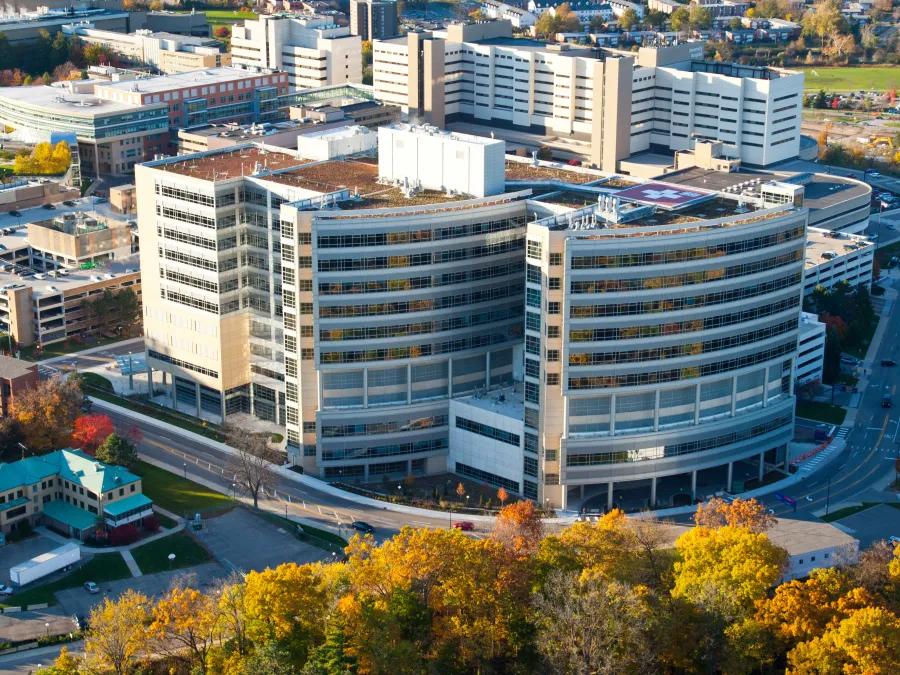
See Where Training Takes Place
Expand your career trajectory in a high-volume academic medical center that also supports and excels in a wide range of basic science, translational and clinical research programs.
