
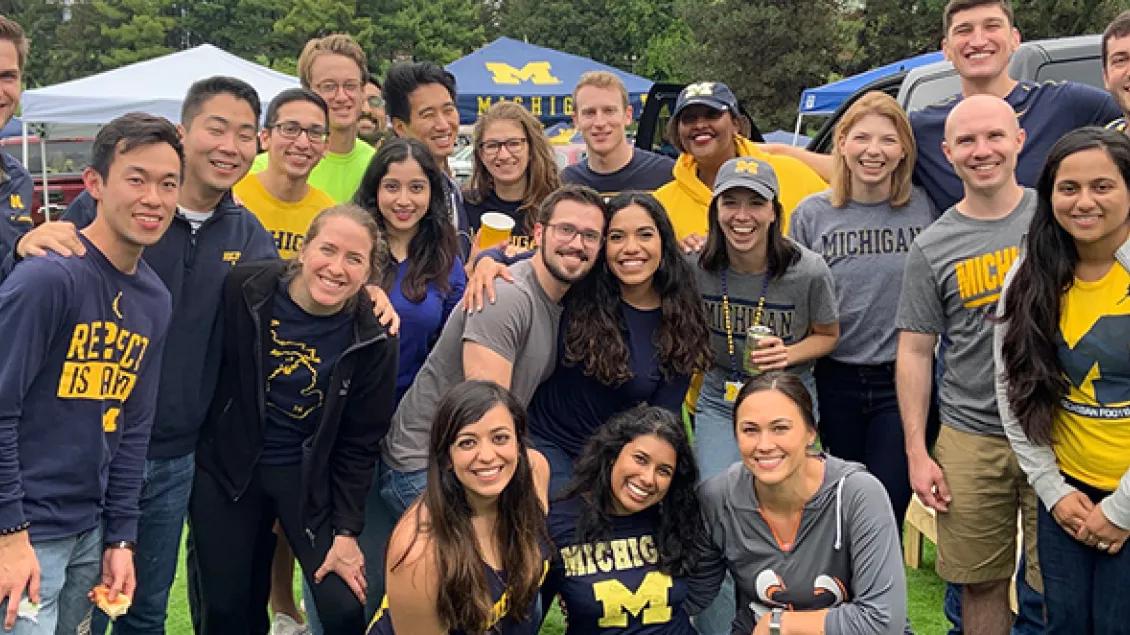
Internal Medicine Resident Life
The University of Michigan Medical School Department of Internal Medicine is committed to supporting the well-being of our residents by offering a wide variety of resources including physical, mental, and emotional well-being. We also offer many resources to promote continued professional development for our residents. Learn more about our commitment to health and wellness and available resources and programs.
Explore below to learn about resident life, why our residents chose Michigan Medicine for their residency, and what they enjoy about training here. Hear directly from our residents about how their wellness has been prioritized at the Department of Internal Medicine.
For More Information
Hear from Our Residents
Resident Stories
Watch more resident story videos to hear about why they chose U-M Medical School Department of Internal Medicine.
Read Why Residents Love Michigan Medicine
Discover a residency experience like no other at the U-M Medical School's Department of Internal Medicine. Our program is a blend of strong mentorship, collaborative culture, and extensive research opportunities, all within a supportive and wellness-focused environment. With dedicated program directors and exceptional residents, we offer a unique journey towards personal and professional growth. Join us and be part of a community where your development and well-being are our top priorities.
Medical school: Medical College of Wisconsin
Career Plans: Hematology/Oncology
Coming into residency with almost no prior inpatient hematology/oncology experience, I wasn't sure what to expect—but I have absolutely loved my time on this service! This rotation exposes you to a broad spectrum of medicine and state-of-the-art treatments, from inpatient chemotherapy for leukemias to managing complex internal medicine complications like infections or bowel obstructions.
Here is what a typical day looks like on the hematology/oncology service:
Morning: Prep and Scenic Commutes
- 4:45 AM – 5:00 AM | Wake Up & Scope the List
My alarm goes off, and I check the Haiku app (the mobile version of Epic) to see if any new patients were admitted to our team overnight. Admissions split between two dedicated Hem/Onc teams, taking call every other day. - 5:15 AM | The Drive to Work
I throw on some scrubs and enjoy the drive. One of the best things about Ann Arbor is the beautiful, scenic nature—even in the early morning. I listen to music or put on a medical podcast if I'm feeling extra ambitious. - 5:40 AM | Fueling Up
After a quick five-minute indoor walk from the parking lot, I use my program-provided "Blue Bucks" to grab an Einstein bagel from the cafeteria and a hot chocolate from the House Officers lounge.
Mid-Morning: Sign-Out and Interdisciplinary Rounds
- 5:45 AM – 8:00 AM | Pre-Charting
I head to the team room to take sign-out from the night resident. Admissions on call days are split between two interns: Early Call handles overnight admits up until 2:00 PM, and Late Call covers 2:00 PM to 6:00 PM. Our senior resident is always there to supervise, teach us management steps, and help us navigate patient care logistics. I then "pre-chart" by checking labs, vitals, and medications to prepare my notes. - 8:00 AM – 10:30 AM | Dual-Attending Rounds
Heme/Onc is unique because we round with two separate attendings: a hematologist and an oncologist. Rounding alongside pharmacy colleagues, medical students, fellows, social workers, and resident assistants brings incredible on-the-spot teaching. We discuss plans, walk the floors to examine patients as a team, and wrap up around 10:30 AM to place orders and call consults.
Afternoon: Mid-Day Learning and Task Management
- 12:00 PM | Noon Conference
We head to our noon conference to work through board practice questions, learn about specific conditions, or discuss unique program initiatives. It’s always catered (free food!), and it’s the perfect midday opportunity to catch up with co-residents on other services. - 1:00 PM – 4:00 PM | Patient Care & Wrap-Up
Afternoons are spent finishing up tasks, checking in on patients, and taking new admissions with the senior resident. Program leadership—who are genuinely the nicest people—frequently pop by the team room to drop off snacks and check in on us.
Evening: Handover and Work-Life Balance
- 3:00 PM – 5:00 PM | Sign-Out
If you are on Early Call or Non-Call, you sign out to the Late Call intern between 3:00 PM and 5:00 PM, passing along overnight "to-dos" and things to watch out for. This opens up plenty of evening time to explore Ann Arbor, work out, cook, or spend time with family. - 6:00 PM – 7:00 PM | Late Call Cross-Cover
The Late Call intern takes admissions until 6:00 PM and provides cross-cover for the service until 7:00 PM.
Weekend Workflow & Time Off
Weekends look a little different! Rounds usually wrap up around noon, giving us a lot more time to decompress. Plus, we get one full day off per week during these rotations to completely recharge.
Overall, this service has been an incredibly fun, exciting, and educational rotation. It gives you the perfect balance of clinical independence, strong senior support, and the chance to work alongside amazing people!
Medical School: Case Western Reserve University
Career Plans: Cardiology
Everything is a little funky on night shift, but the ICU night rotation is one of the most exciting opportunities to accelerate your clinical skills, autonomy, and medical decision-making.
Here is what a typical night looks like:
Afternoon: Pre-Shift Routines and the "Beta-Blockers"
- 4:30 PM | The Awakening
My alarm goes off. Depending on how inspired I’m feeling, I’ll either head to the gym, scroll on my phone for way too long, or head out to my weekly rec league soccer game. Our team, the Beta-Blockers, is made up of residents, fellows, and partners, and we are a force to be reckoned with! - 6:30 PM | Dinner (or Breakfast?)
By the time I get home, I have just enough time to down some dinner, catch an episode of a show, brew a fresh pot of coffee, and head to the hospital.
8:00 PM: Handoff and the Night Squad
- 7:45 PM | Cafeteria Run
I arrive at the hospital and head straight to the cafeteria to snag a late-night meal. We get a steady infusion of program-provided "Blue Bucks" (meal money) throughout the year, which completely covers my laziness. Tonight’s score: a Chicken Banh Mi. - 8:00 PM | Sign-Out
I head up to the ICU, link up with my intern, and meet with the day team for handoff. Our ICU night squad consists of two resident teams (each with one senior and one intern), with each team covering two of the daytime lists.
9:30 PM: Hectic Hours & Night Rounds
- 8:15 PM – 9:30 PM | Tying Up Loose Ends
The first few hours overnight are always fast-paced. My intern and I review our patients and tackle any remaining tasks left over from the day shift. - 9:30 PM – Midnight | Bedside Rounds
We mobilize for night rounds by linking up with the other night team and the ICU fellow. We go bedside-to-bedside to discuss major updates from the day, solidify overnight care plans, and address any immediate concerns from the nursing staff.
12:00 AM – 6:00 AM: Procedures, Admissions, and Lulls
- Midnight | Procedure Teaching & Lines
Tonight turns into a "line night." I spend the first hour after rounds supervising and teaching the other night intern on an arterial line. (Our program requires five supervised attempts before we can perform them independently and teach others). Next, I grab the fellow to supervise me while I place a dialysis central line on one of our patients. Only one more left until I'm officially signed off! - 2:00 AM – 3:00 AM | The Midnight Blur
The next few hours fly by as we tuck in two new admissions, manage acute issues on our existing patients, and refuel with snacks (thankfully, I grabbed that Banh Mi earlier). - 3:00 AM | The Tater Tot Tradition
We catch a perfect, brief lull in the action at 3:00 AM—just enough time to run down and grab some of the fresh tater tots the cafeteria puts out every night.
6:00 AM: Handing Back the Reins
- 6:00 AM | The Day Team Arrives
We are greeted by some familiar faces as the day shift rolls in. We hand the existing patient list back over to them, leaving us an hour to finalize notes and care plans for our new admissions. - 7:30 AM | Attending Presentations
We gather with the day team to present the overnight admissions to the attending, wrapping up the shift with some high-yield clinical teaching. - 8:30 AM – 9:30 AM | Shift End
I leave the hospital around 8:30 AM and am fast asleep in bed by 9:30 AM.
Nights in the ICU are always hard to predict, but it is an incredibly rewarding rotation packed with procedures, teamwork, and massive growth as a physician!
Medical School: University of Toledo College of Medicine and Life Sciences
Career Plans: Gastroenterology/Hepatology
Rotations on the GI/Liver (GIL) service offer some of the most fascinating clinical learning in internal medicine, blending advanced gastroenterology with high-stakes transplant hepatology.
Here is what a standard call day looks like on GIL:
Morning: Quick Commutes and Double Rounds
- 5:15 AM | Pre-Shift Fuel
My day starts early. I throw on my scrubs, eat some breakfast, and brew my first iced coffee of the day. One of the best things about living here is the commute—my drive to the hospital is less than 10 minutes, giving me just enough time to listen to some Morgan Wallen and prep mentally for the day. - 6:15 AM | Sign-Out & Chart Review
I arrive at the hospital and take sign-out from the night team. Today I am on Early Call, which means I have two overnight admissions to learn about and evaluate. I deep-dive into Epic to review labs, vitals, and imaging before heading out to see my patients. - 8:00 AM | GI Rounds
We start by rounding with our gastroenterology attending. Today's bedside teaching focuses on pancreatic duct stones and identifying exactly when intervention is indicated. - 9:30 AM | Liver Rounds
Next, we transition to liver rounds with one of our transplant hepatologists. The acuity here is incredible—many of my patients are actively being worked up for expedited liver transplants. The highlight of my morning: learning that one of my patients was just officially approved to be listed for transplant!
Afternoon: Coffee, Conferences, and Advanced Teaching
- 10:45 AM | The Coffee Break
After rounds, our attending generously takes the entire team to Einstein Bros. Bagels and buys us all coffee (which means iced coffee round two for me!). - 11:00 AM | Order Entry
Back in the team room, we hit the computers to put in our orders, coordinate with nursing, and officially log our consults for the day. - 12:00 PM | Noon Conference
We head over to noon conference for a delicious, catered lunch from a local restaurant. Today is a case-based learning session on Acute Respiratory Distress Syndrome (ARDS), presented by one of our chief residents with a critical care attending there to weigh in. - 1:30 PM | Dedicated Hepatology Teaching
Later in the afternoon, our hepatologist leads a dedicated teaching session. We discuss decompensated cirrhosis and the exact timing for transplant referrals. I am completely fascinated learning about the new perfusion technologies used to keep donor livers viable.
Evening: Late-Call Admissions and Post-Work Trivia
- 2:00 PM – 6:00 PM | Late-Call Window
My senior resident lets me know a new admission just hit the floor—a patient experiencing an acute Crohn’s flare. Because my co-intern and I are on Late Call, we manage all new admissions coming in during this window (though we sometimes start earlier if the early-call team hits their volume "cap"). - 6:30 PM | Wrapping Up
I finish writing my admission notes, update our patients' families on the plans for the night, hand off the list, and head out. - 7:30 PM | Team Trivia Night
Because it's Thursday, it's trivia night! I meet up with a big group of my fellow interns at a local spot to decompress. After a hard-fought game, our team takes home 3rd place and a gift card!
GIL is an intense, fast-paced rotation, but the balance of cutting-edge medicine, approachable attendings, and a supportive resident community makes it incredibly rewarding.
Medical School: SUNY Downstate
Career Plans: Cardiology
After wrapping up a demanding six-week stretch of busy inpatient work—two weeks on Barbosa (our Hospitalist Service), two weeks in the medical ICU (the CCMU), and two weeks in the Emergency Room—I was definitely ready for the lighter schedule that comes with an outpatient rotation.
This block, I started a custom elective designed to increase my exposure to Sports Cardiology, cardiomyopathies, and arrhythmias. About a year ago, I reached out to my APD, Dr. Virginia Sheffield, and our Program Director, Dr. Sarah Hartley, about my interest in this niche field. They immediately tapped into contacts across the medical center to help me build a dream rotation. Combined with connections I made during my intern year on our Medicine Coronary Service, we put together an incredible two-week experience.
Here is a look at how my rotation came together:
The Reading Day: Building the Foundation
Outpatient electives here include dedicated reading days set aside for independent education. I used mine to get a head start on the science:
- 9:00 AM | Morning Routine: I woke up, hit the gym, and sat down with sourdough toast and a hot coffee.
- 10:00 AM | Diving into the Data: I opened my laptop to master the International Criteria for the Interpretation of ECGs in Athletes. My current research actually involves the upcoming 2025/2026 updates, but since those won't be published until later this fall, I focused on solidifying my understanding of the current criteria.
- Interactive Practice: I spent a few hours working through an online trainee ECG quiz created by the authors, practicing how to differentiate normal athletic changes from borderline or outright pathological findings.
Thursday: Screening Michigan Athletes
Because I live near the University of Michigan Sports Complex, I got to walk to work—as a former New Yorker, I deeply miss commuting by foot!
- 8:30 AM | Reading with the Team Cardiologist: I spent the day reading athlete ECGs with Dr. Tim Cotts, an adult congenital cardiologist who serves as the team cardiologist for the Michigan Athletics Department.
- Real-Time Triage: Throughout the day, team medical staff popped into our conference room to consult on athletes presenting with concerning symptoms like exertional syncope, murmurs, or a family history of sudden cardiac death.
- Advanced Workups: When we identified pathological findings using the International Criteria, we collaborated with the sports medicine staff to order follow-up testing (echocardiograms, cardiac MRIs, or stress tests) and navigate the high-stakes decision of whether an athlete could safely continue practicing while awaiting results.
- Stepping into the Teaching Role: A medical student joined us midday, and I spent time teaching him our general hospital approach to ECGs versus the highly specialized athlete criteria. I honestly surprised myself with just how much I had internalized through my research and reading earlier in the week!
Friday: Learning from the Guideline Authors
After reviewing hundreds of athlete ECGs, I headed home, worked out, and spent the evening reviewing the 2024 ACC/AHA Hypertrophic Cardiomyopathy (HCM) Guidelines.
The next day, I was in the HCM Clinic with Dr. Sara Saberi—who happens to be a primary author of those exact national guidelines! It is an unbelievable experience to see your attending’s name printed on a major guideline document on Thursday night, and then practice applying those exact algorithms alongside them in clinic on Friday morning.
My Key Milestones & Takeaways
By the end of this two-week elective, I gained far more education, experience, and inspiration than I ever expected. I was challenged to:
- Evaluate dozens of patients with complex HCM, arrhythmias, and rare cardiomyopathies.
- Consider first-line management choices for LQT1.
- Discuss the nuances of genetic testing for a patient presenting with hypertrophic findings in their seventh decade of life.
- Calculate risk scores to determine exactly when an ICD is indicated for primary prevention of sudden cardiac arrest.
- Apply the International Criteria directly to active U-M athletes, fulfilling the exact goal I set for myself a year ago.
I had an absolute blast on this rotation and honestly wasn't ready for it to end. It completely reignited my passion for Sports Cardiology while sparking a brand new interest in the management of HCM. I am incredibly grateful to our program leadership for helping me cultivate my specific career goals and providing opportunities that wouldn't be possible anywhere else!
Medical School: Ohio State
Career Plans: TBD
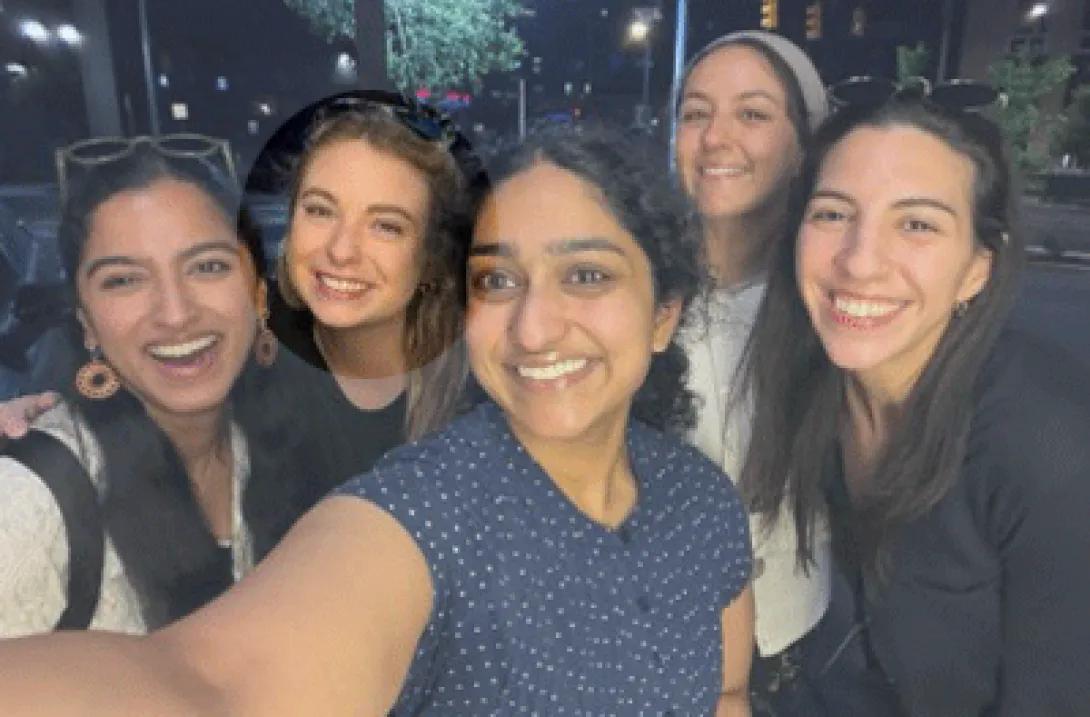
My alarm goes off sometime around 5 a.m. The first one, of course, because I actually have multiple alarms.
Unfortunately, I am not the resident who wakes up for a run and then peacefully drinks a cup of coffee (although there are actually many residents who do that…they are my idols).
I am always ready to hear what happened overnight, though. I love checking in with the night team. There is always a medically interesting story, a bizarre story, and a touching story that reminds you why you did this in the first place.
The latter is always my favorite.
A co-resident tells me at 6:00 in the morning that a lovely daughter brought her mom to the hospital with complications from cancer. They are searching for a last-ditch effort.
The most fun person I met at a bar during orientation week rattles off a differential during sign-out that I would’ve never even considered. I think, “How lucky am I to work with someone so brilliant?”
Coincidentally, she’s also the person who brought me a cake from Luca Pastry for my birthday a few months ago.
I get to love people as my best friends and put all of my faith in them as physicians. I get to tell my patients they are being cared for by the people I trust most and really mean it.
On pre-rounds, the patient’s daughter tells us she feels heard for the first time. My intern and I leave the room and immediately start talking through what else we can do. I shamelessly consult every team in the hospital, and despite TikTok tropes, they are more than happy to explore every option.
Between consults, pages, and making my way down a couple floors to bring an Einstein’s vanilla latte to my best friend on a very tough rotation, I get a message from my amazing intern wanting to clarify their ideas for a plan.
Being a senior resident is actually much different from being an intern, and I didn’t expect the transition to be so challenging initially.
I am still thinking about everyone's potassium level, wondering if we supplemented them correctly or recognized the creatinine bump. More importantly, though, I’m wondering if my intern noticed the anxious shift in the room when we started discussing the plan for discharge.
Most importantly, I’m wondering if my intern got lunch.
When I send them downstairs to grab Palm Palace, I think about how it’s a huge cliche, but when someone asks why I love this program, I really do say “the people.”
It’s impossible not to.
I think about how my best friend spent extra time in a patient’s room every day after I rotated off-service to ensure my patient made it safely home with hospice. I think about my primary care patient who was admitted overnight by one of my close friends, who made sure to check in with me about the plan. I think about one of the most difficult rapids I have ever encountered, when one of my close friends, Eli, appeared beside me and helped me think, organize the room, and take care of the patient.
That is what working here feels like.
Never because anyone is in a hurry to leave, but because our compassion extends without limits.
They also bring your favorite wine at New Year’s and bring a video camera for you to install to watch your pet on long shifts and learn about everything that you went through in the past with no judgement and infinite praise that you made it through.
And somewhere in all of that, we still manage to learn each other’s hobbies and quirks and go-to orders for doctors’ trays.
We attempt to comfort each other through impossible experiences.
And medicine is cruel, honestly.
But I’ve never felt alone, not a single time.
One of the things I love most about inpatient medicine is that you really never know what is going to happen when you walk in. A patient who looked great yesterday suddenly doesn't. The pager goes off relentlessly. Someone needs an urgent bedside evaluation. An admission arrives at exactly the least convenient moment possible. A family needs a conversation that cannot–and should never be–rushed.
Sometimes the most important thing I do all afternoon is adjust the bed up two notches. Sometimes I explain a complicated diagnosis. Sometimes I change an antibiotic after getting culture results. Sometimes I debrief with a medical student about the first patient death they’ve experienced. Sometimes I get someone's dad a cup of coffee with 1 cream, ½ a sugar. Sometimes I tell someone they have limited days left on Earth. Not one of these tasks is more important than another.
Eventually, we sign-out.
On a good day, we walk out of the hospital thinking, “We did some really great medicine today.”
On a hard day, someone sends a message to the group chat.
“Walk?”
And nobody ever questions it.
We walk through Ann Arbor. We get coffee from Hyperion or ice cream from Blank Slate. We talk about the patient we can’t stop thinking about, the interaction that made us question ourselves, the thing we wish we had done differently. We tell each other that we did great. Or, at least, that we did the best we could.
And then, eventually, we start talking about dating and families and vacations and whatever ridiculous thing happened last night.
There is not a single person here I wouldn’t trust to take care of someone I love, which may be the most important thing I can say about a residency program.
Tomorrow morning, my alarm will go off sometime around 5 a.m.
The first one, of course.
One of us will have been here all night. Someone else will be walking in with coffee. An intern will have a question. A patient will need something none of us anticipated. Someone will make us laugh at an entirely inappropriate time.
And somewhere around 6 a.m., I’ll sit down for sign-out, with some of the smartest people I know, who have also become some of the people I love most.
And I’m lucky enough to do that again,
And again,
And again.
Photo Gallery
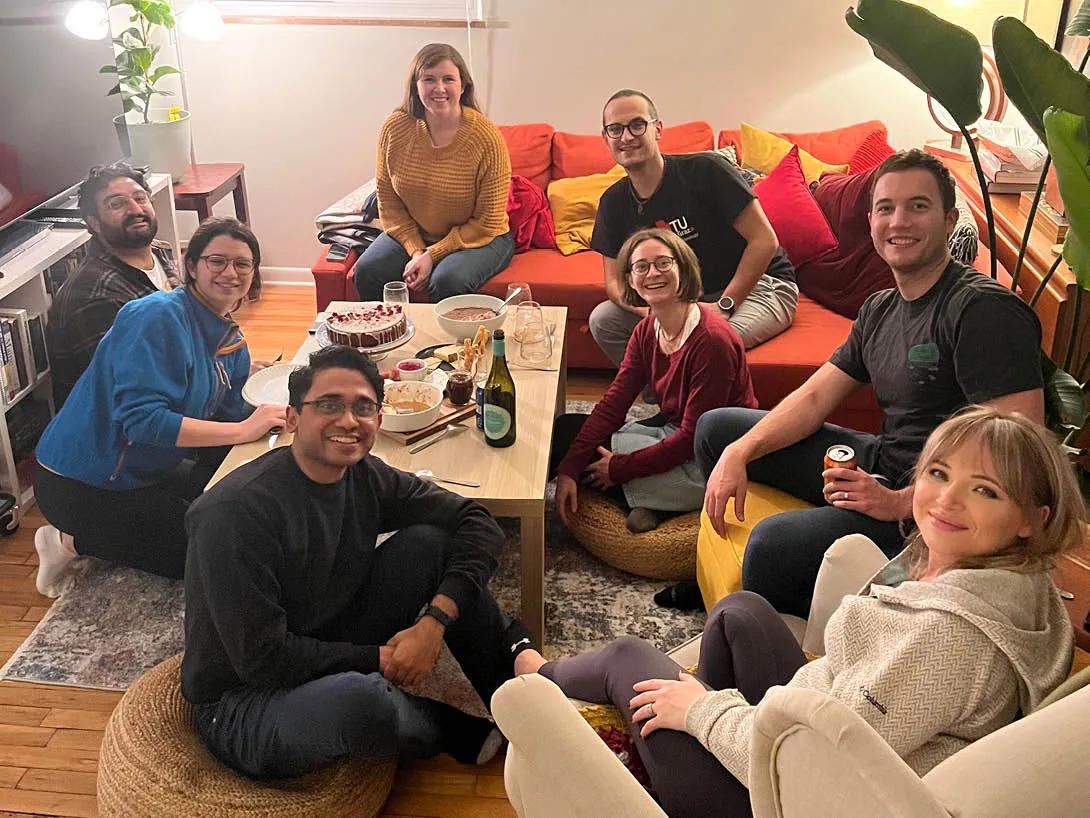
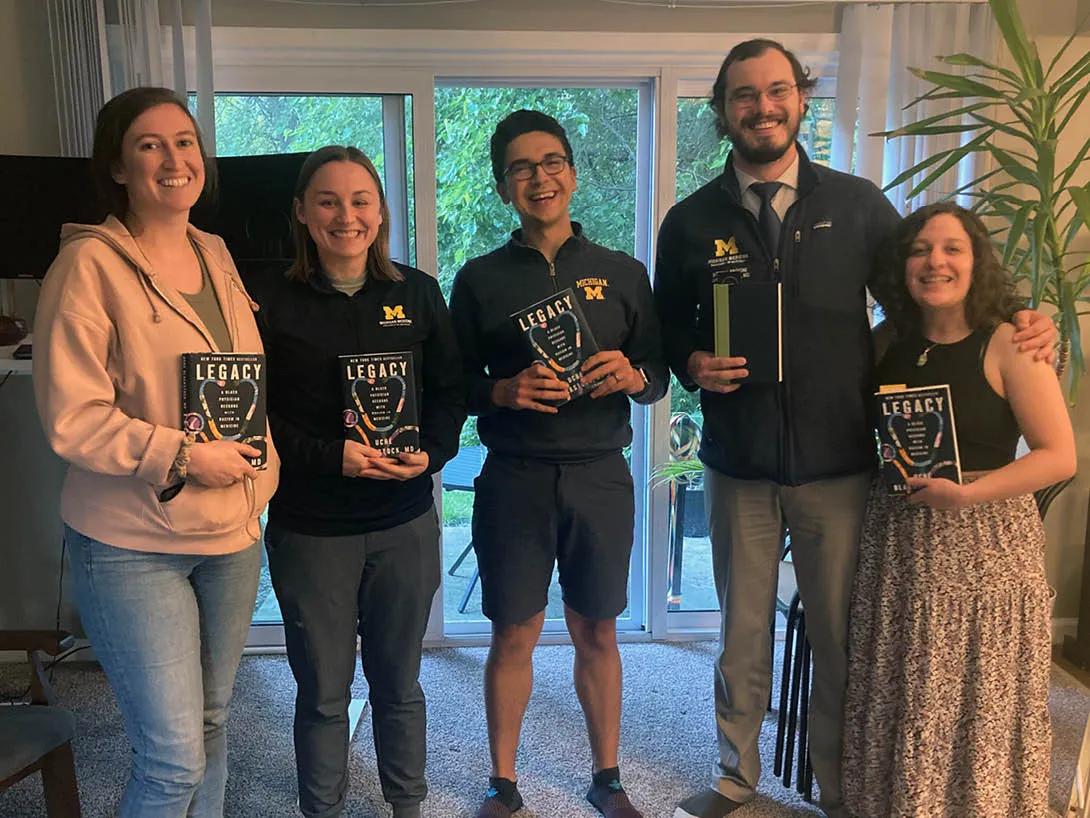
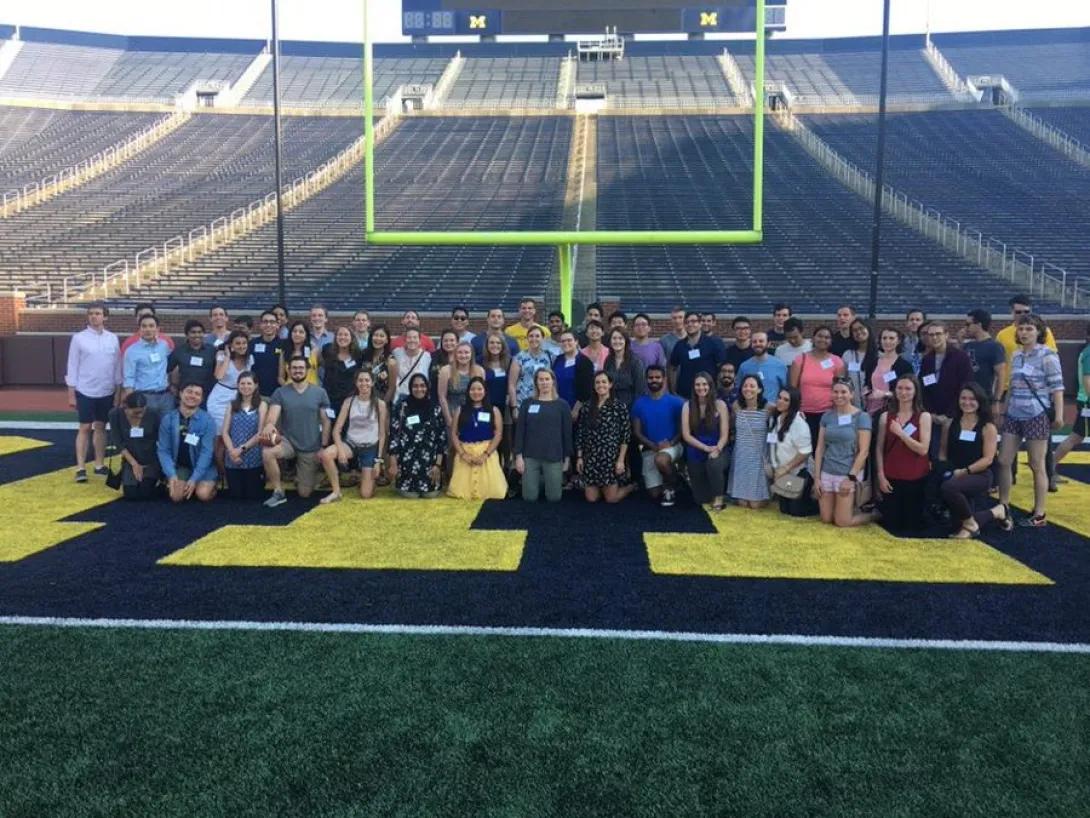
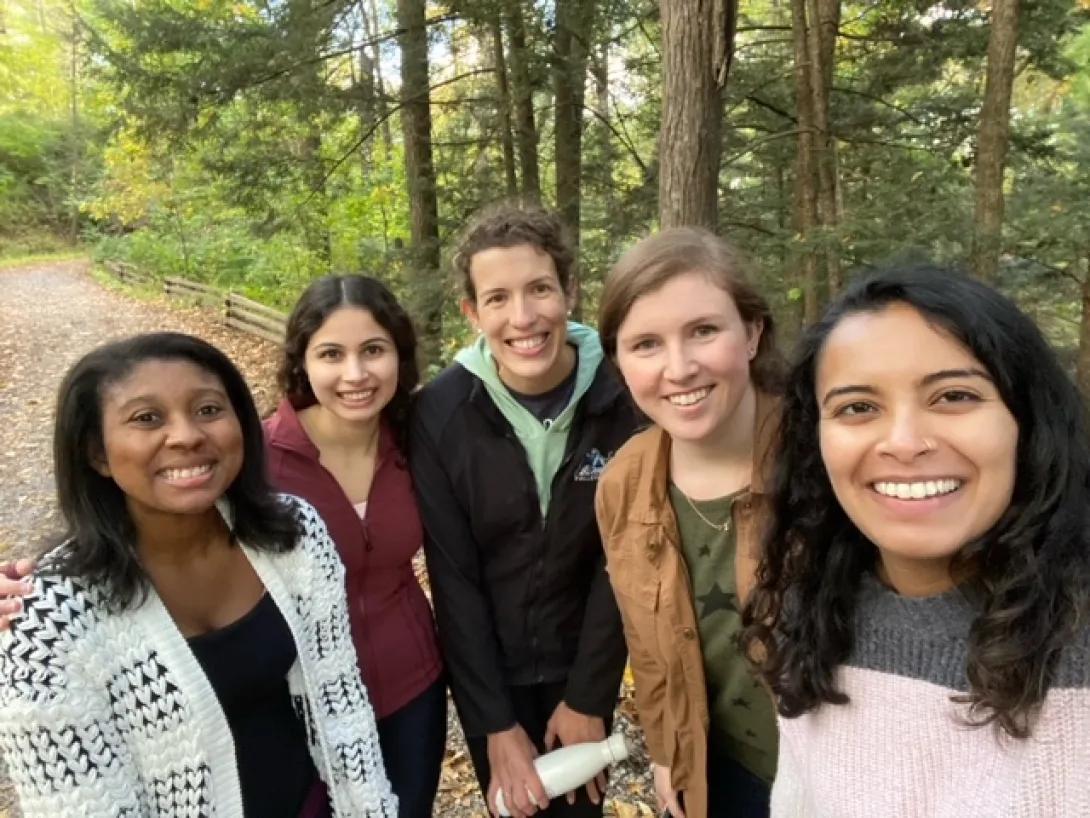
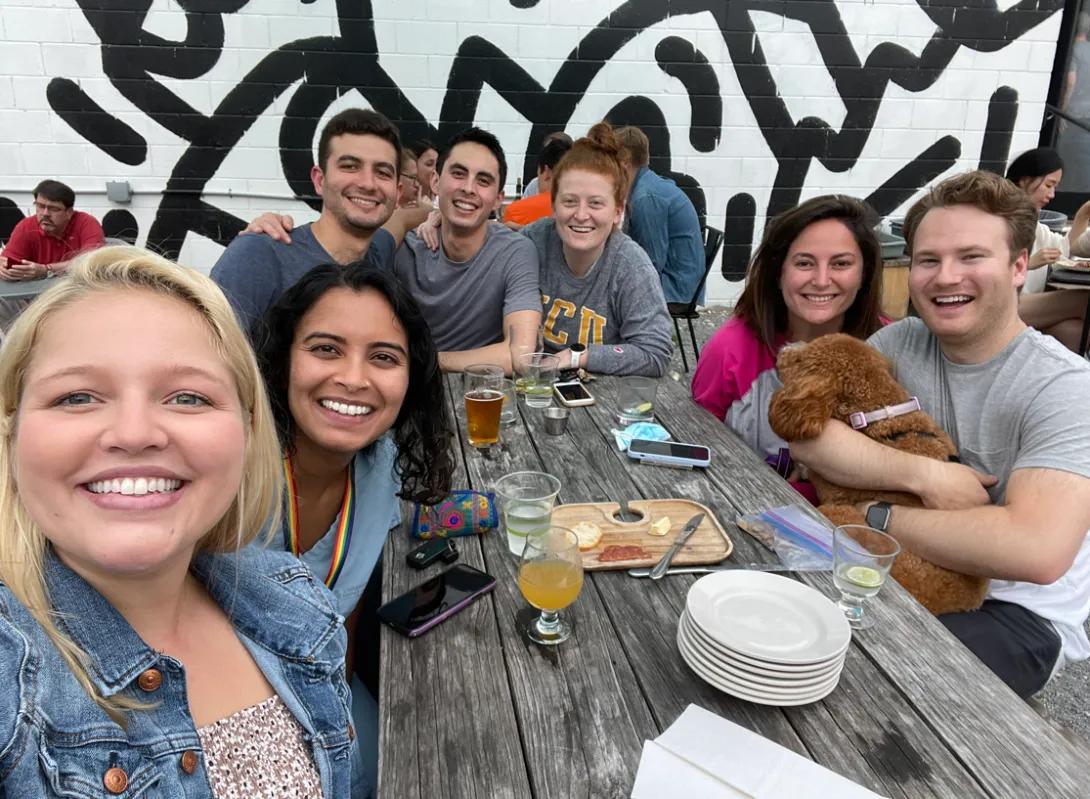
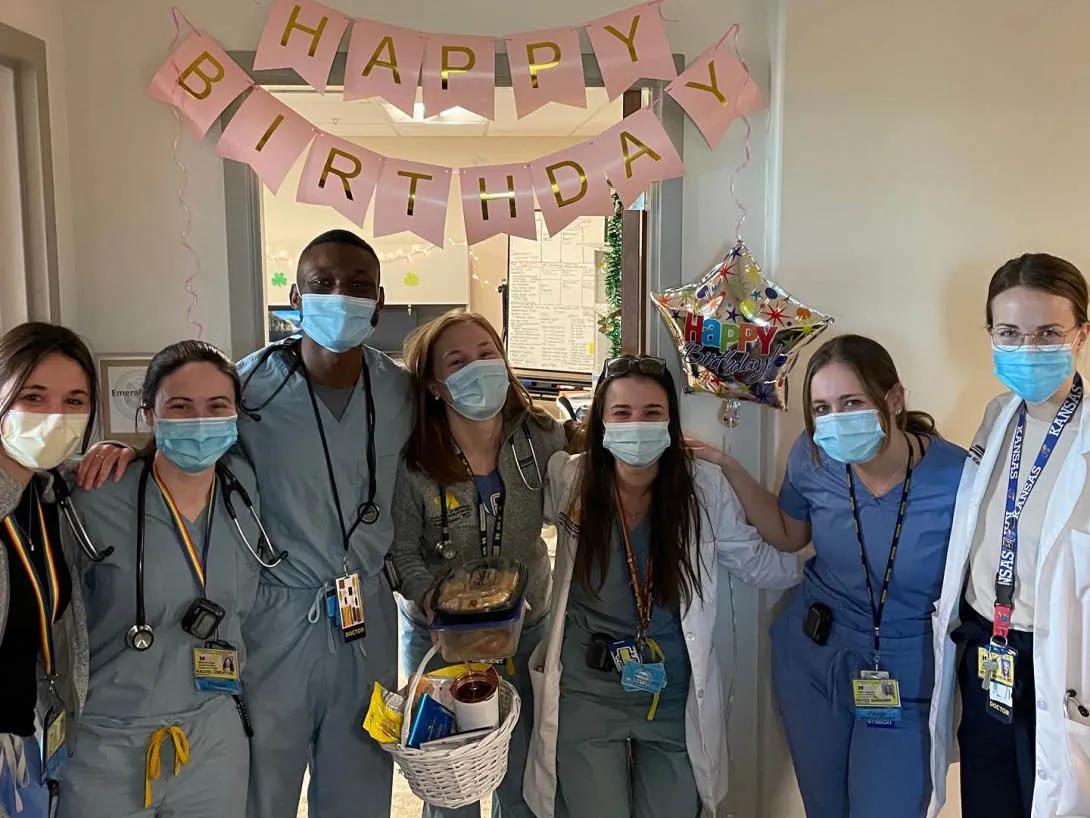
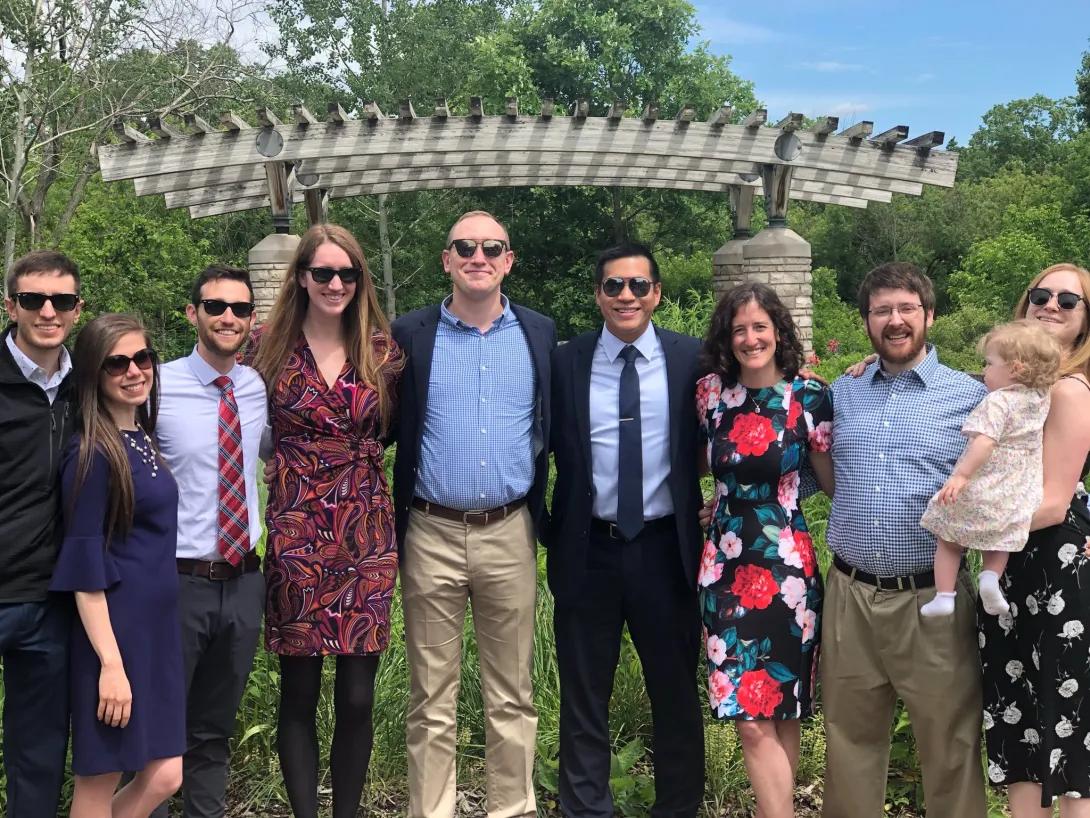

Life in Ann Arbor
We find a new reason to love Ann Arbor nearly every day — year-round outdoor activities, cultural experiences, a growing food scene, and a welcoming, family-friendly atmosphere are just a few that come to mind. Explore all that Ann Arbor and our surrounding communities have to offer.
A Day in the Life of Our Residents
Step into the shoes of our residents and experience a day filled with learning, growth, and meaningful interactions. From early morning rounds to outpatient clinic time, our residents share details about a day in their lives during Internal Medicine residency.
Medical School: University of Texas
Career Plans: GI
I LOVE inpatient time. As an intern, my room light up alarm would usually be set for 5:00am and I would hear my back up alarms go off at 5:07, 5:15, 5:22, and 5:30, just in case because I am that type of person. I then would look at my phone to check my email and open up Haiku, which is the app we can download to look at some patient information connected with our EMR, Epic. This would give me the motivation to get up to go see patients. I am a breakfast person, so I would eat something quick or bring it with me, like a smoothie, or yogurt and granola, or avocado toast, or even a protein bar or banana. Of course, I then would brush my teeth, throw on a pair of scrubs from the hospital and our comfy North Face residency program jacket, grab my pager, and other things I needed for the day, like snacks, stethoscope, my brain, the usual. In the car, I would usually play some type of pop or hype music, like Beyonce, or Lizzo, or Megan Thee Stallion, or some EDM. As I am not a coffee drinker, that time was essential for bringing my A-game to work. I usually would get to the team room by 6:15, or 6:45 on later days when I had less patients. When you arrive, you get sign out from the night team on your patients and hear about any new patients. I would then "pre-chart" looking at labs, vitals, notes, medications on the patient, prep my note, and then go see my patients.
On rotations like the GI Liver Service, or GIL, our attending comes in around 7:30 and the night team presents overnight admits. On call days, we start admitting as of 7am, though the senior usually helps manage them until after you are done rounding on your patients. Rounds are filled with focused teaching, interaction with medical students, the pharmacist, and another intern and senior resident, as well as jokes and a fun time. We round with the liver attending and lumen/panc attending separately which is helpful as there are two teams on the GIL service at a time. Usually, we are done rounding on that service by 11am, just in time to watch virtual morning report at 11:15. We make sure consults and orders are put in, work on our notes, work on our sign-outs, and if we are on-call we see new admits, evaluate them, talk them over with the senior resident, and write an H&P and sign out. For lunch, the program provides a meal a few times per week and the cafeteria is great! We also get money on our ID card to help, especially when having to stay later than 7 every four days. As interns, we never have more than 8 patients at a time as the senior would help if there were any cap busters. This would allow us ample time to respond to pages, follow up studies, have tough, heart to heart goals of care conversations with our liver patients or go comfort patients with IBD flares or even pancreatic cancer. We even get to help learn about and treat the more severe disorders of brain-gut interaction, and coordinate care with psychiatry/psychology or advanced endoscopy. We also get to do paracenteses for our patients which has been really fun!
When on late call, we stay until at least 8pm when the night team arrives and then we can sign out. Thankfully, call is every other day, so that we don't violate duty hours. On non-call weekdays, we can leave as early as 3pm, though usually would be between 3-5pm. On non-call days on weekends, you can leave as early as noon, though more realistically about 2pm. Those days are great because it leaves enough time to do something fun outside or hang out with my partner and pets. We get one day off every week which I would usually spend grocery shopping, working out, and resting. To me, the inpatient day and night blocks are where I did most of my learning. It only got better as a second and third year: senioring is fun, though busy!
Pro tip: the University Hospital cafeteria has crepes for lunch on Fridays.
Medical school: Morehouse
Career plans: Gastroenterology

As a primary care track resident, I absolutely love my outpatient clinic time. If you relate to that, you will love your ambulatory blocks. Even if you don’t find outpatient clinics as exciting, the usually free weekends (unless you have a night coverage) over the course of four weeks are a nice break from the busy inpatient schedule to catch up with family, and friends, and on some much-needed sleep!
On the ambulatory block, you have ambulatory morning report from 7:30-8:30 AM every weekday except Tuesday, which is another free hour in the morning. Ambulatory morning report is an excellent learning opportunity of the management of common conditions from various specialties you will often encounter in the primary care setting, such as headaches or chest pain. The cool part about these lessons is they are being taught by your peers who are also on the rotation with some help from a faculty expert advisor. Everyone on that ambulatory block gets a chance to teach about a topic they are interested in. You can also give a presentation on a somewhat less common yet important topic you may have a unique interest in. I gave my presentation intern year on how to be a physician advocate-a lesson I called “Advocacy 101: A Course for Primary Care Physicians.” I personally found that ambulatory morning report gave me an opportunity to showcase to my peers a topic I was passionate about and I got to make connections with a faculty member who shared my interests.
Following ambulatory morning report, it is time to head off to clinic. You have to be to your assigned clinic by 9 am each day. On ambulatory block, you will be placed in a variety of clinics, usually 2 different clinics each half day; some within your sub-specialty of interest, some primary care clinics including additional continuity clinic half days, and some specialty clinics you may have never experienced before. For example, I personally got a chance to go to Physical Medicine & Rehabilitation or PM&R clinic which is a specialty I had little exposure to in medical school, but I found interesting and helped me understand what experiences my continuity clinic patients have if I refer them there and when a referral to that clinic is appropriate. Even the additional primary care clinics can be interesting, whether you are in a clinic in at a satellite site like Northville Health Center or a private practice clinic, you will be surprised how different each clinic feels with varying patient populations and management styles of the physicians. You will likely even pick up some tips to use in your own continuity clinic. Usually, right around 5 pm, your day is done, and you have the rest of your evening free to possibly finish up notes from earlier in the day, or if you’re done, just relax!
Medical school: Geisinger Commonwealth
Career plans: Pulmonary and Critical Care Medicine
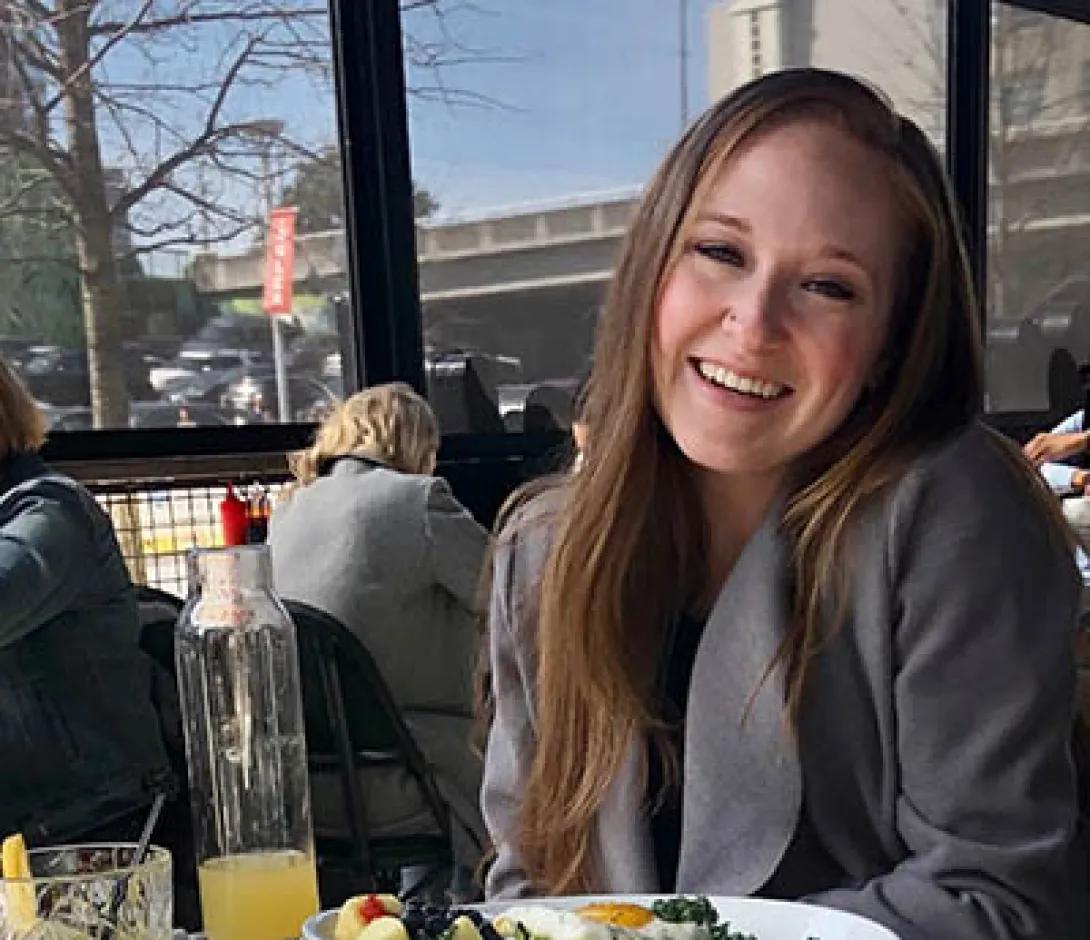
The time on my alarm clock reads 6:45 a.m. At least, that’s what I think it says through my half-open eyes as I reach for the snooze button and successfully hit it on the first try without looking (I know its location far too well). Even though this wake-up call is essentially sleeping in, compared to my usual inpatient service alarm time, I still relish the extra few minutes of sleep. And, if I’m being honest, I intentionally set my alarm 10 minutes early for this exact purpose. By the time my second alarm sounds, I force my eyes fully open and climb out of bed. The smell of coffee brewing in the kitchen on its preset timer helps pull me from the covers. I silently thank my past self for setting the automatic brew the night before, and I make a quick mental note to try to be equally proactive tonight. I turn on one of my favorite true crime podcasts and catch up on this week’s episode while I scurry around to get ready for the day – the business casual attire of consult rotations requires slightly more effort than my typical roll-out-of-bed-into-scrubs look. I grab my trifecta (white coat, stethoscope, and coffee mug), then head out to my car where I keep the podcast going for the 15-minute drive to the hospital. By the time I park, they’re just about to reveal the identity of the mystery murderer, but it’s almost 8:00 already, so that will have to wait for the drive home later.
I walk into the fellows’ work room and am greeted by the sound of the consult pager going off with our first new consults of the day. The nephrology fellow is already busy pre-rounding on everyone’s renal function panels, but she pauses to divvy up the new consults between myself and my co-resident on the service. She gives us a brief overview of each consult, reminds us of the important history points to gather (HTN, DM, NSAIDs, the works), then sends us on our way to chart review. I take a few minutes to get settled, sipping my coffee while I wait for the computer to log in. Then, I start reviewing today’s labs for the patients I have been following on the service. Once I’m up to date, I do a quick review of the new patients I’ve picked up for today. One of them is a consult for an abnormal UA with proteinuria and hematuria; before I head up to the patient’s room, I take a few minutes on Up-To-Date to refresh my memory on nephrotic and nephritic syndromes, because Step 1 was far too long ago. I have a feeling we’ll be doing some teaching on this today. When I’ve refreshed my brain enough, I leave the work room to go see my patients.
I make it back to the room in time to start some draft notes for my patients and quickly run my thoughts by the fellow before our attending joins us for 10 a.m. rounds. We start with table rounds – quick updates for the established consults, and a more thorough discussion of our new patients. We pause around 11, and my co-resident and I log-on to Morning Report while the fellow and attending head over to the dialysis unit to see a few patients. We reconvene as Morning Report finishes up, and our crew heads out to the floors to do some bedside rounds. My stomach growls in one of the patient’s rooms, and I remember that I was too engrossed in my podcast this morning and forgot to grab my protein bar. I’m grateful when we finish with the last patient, and our attending releases us to grab lunch. The fellow’s pager has beeped at least seven times in the past hour, but she graciously sends us to the cafeteria while she goes back to the room to answer all the pages. We spend the afternoon writing notes and updating the primary teams before the attending returns around 4pm to do some teaching (as suspected, today’s topic is nephrotic/nephritic syndromes). Despite my quick review earlier this morning, I’m still quite rusty, and the attending assigns me the topic of FSGS to look up and teach the group tomorrow. We’ve now made it to 5pm, and the fellow releases us from our duties.
Before I leave for the day, I glance through the list of patients on the outpatient nephrology clinic schedule tomorrow, since that’s where we’ll be starting the day tomorrow morning. My co-resident and I then head out for the day. I flip the podcast back on for the trek home. As I’m driving, I make a mental to-do list for the evening – workout (??), cook dinner, do laundry, call the fiancé, catch up on data abstraction for my research project, set the coffee pot (!!). I get home and get to work on checking off my to-do list.
As 9pm rolls around, I settle into the couch for an episode of my current show, but as I’m about to press play, FSGS somehow sneaks into my thoughts, and I realize I’ve forgotten my assignment. I crack open my laptop and peruse Up-To-Date for the second time today, scribbling down notes as I go. When I’m satisfied, I close the laptop, press play on the remote, and reward myself with a bowl of popcorn. Soon, it will be time to head to bed and set the alarm to repeat the day tomorrow. But for now, I put my medical brain to sleep and focus my attention on the episode of Friends. Any more thoughts about the kidneys will just have to wait for tomorrow.
Medical School: Western Michigan
Career Plans: Cardiology
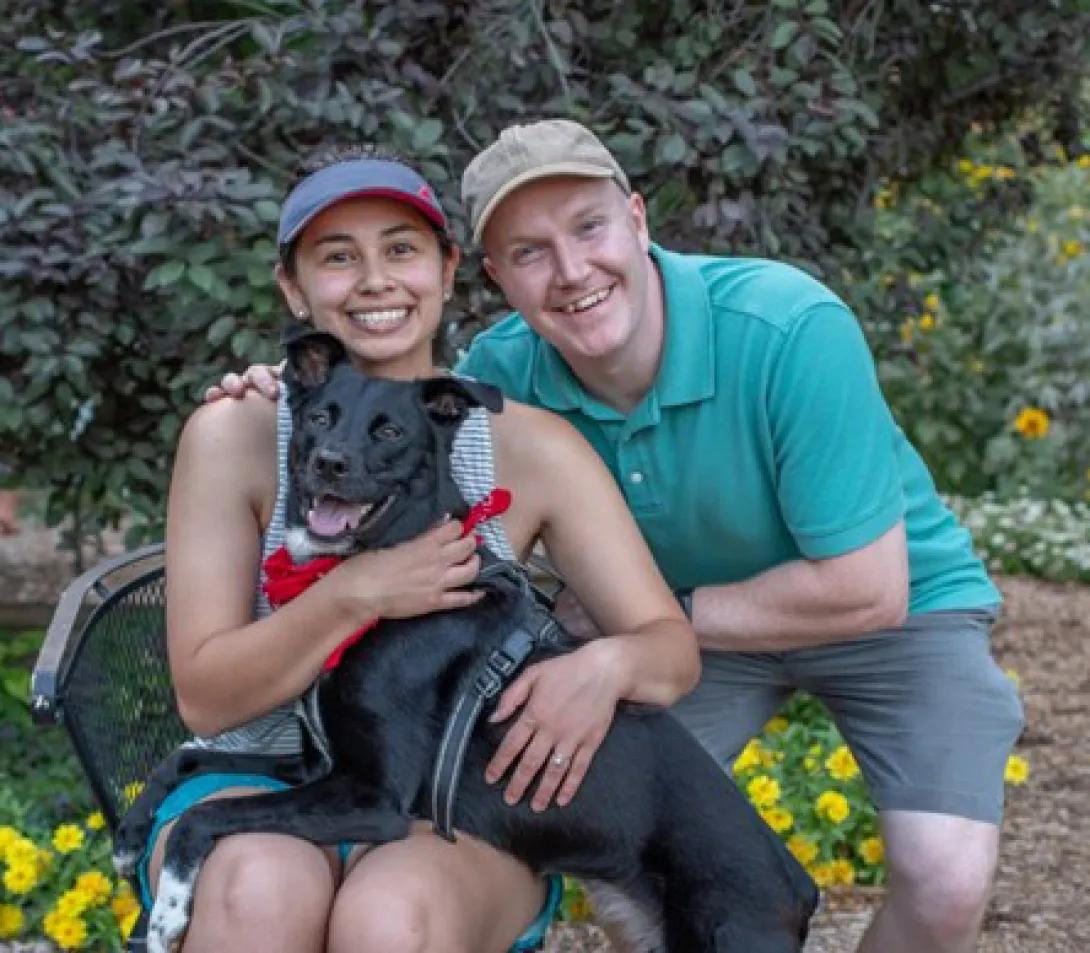
My day typically starts around 5 AM by slugging down a piping hot mug of black coffee, cracking a hard-boiled egg, and making a bowl of instant oats. I know today is “early call” (we operate on a four day call cycle: early – off – late – off) which means we will have a couple of admissions overnight that I briefly read through while eating breakfast and waking up. I arrive to the hospital around 6:30 AM, touch base with the night residents about overnight admissions (we use a night float system), check in with the rest of the team (2 interns and two-three medical students), and away we go!
Because today is early call the attending will arrive around 7:30 AM to begins rounds (other days 8:30 AM) so we are working fast! The interns and medical students are out checking in with patients while I’m in the team room wrapping up my pre-rounds chart review. We re-group a few minutes before the attending arrives to address any patient needs, develop plans for the day, and our team takes over the admission pager for new patients from the emergency department. The attending strolls in and its time to kick off rounds!
We start with table rounds on the new admissions overnight and spend a few minutes dissecting key learning points, then it’s off to the races checking in on patients the team knows well. We will frequently get our first admission during rounds, so I’ll break away from the pack briefly to get things rolling, before returning to finish rounds between 10 – 10:30 AM. We’ll run the list as a team making sure all of our orders and consults are tidied up before tuning into morning report at 11:15 AM. We swing by the cafeteria (program provides lunch money) and devour our food just in time for the second admission of the day.
From noon until 2:00 PM we divide and conquer tasks including following up with consultants, discharging patients, progress notes, and swinging down to the emergency department to evaluate new admissions. (While on early call we admit up to 4 new patients until 2:00 PM, then the late call team takes over who can admit an additional 2 patients until 5:00 PM.) The attendings makes a planned stop by the team room in the mid-afternoon for dedicated teaching about a recent case and is available to discuss any questions that arise with new admissions during the day. We wrap up our documentation, make final check-ins with patients, and head over to the late call team to sign out around 5:00 PM – they will cross cover our patients until 7:00 PM when the night residents arrive and take over.
Whew! Early call days sure can be a whirlwind but it’s nice knowing tomorrow is a non-call day with no new admissions and a more relaxed vibe!
Medical School: University of Wisconsin
Career plans: Allergy
Intern year is a truly unique and special formative time in your professional trajectory. While it is probably one of the hardest things you'll ever do as a physician, it is equally one of the most rewarding. Inpatient rotations are when you work the longest hours and experience the core of residency, as most of your time is spent in the hospital. Although the beginning is always challenging, as you adjust you'll be able to figure out a routine that works best for you. I thrive off routine and operate best when optimizing clinical preparation, so my days tend to start quite early. I also have never slept much even prior to residency so my days may look a little different than other residents.
My morning begins anywhere from 4:45-5 AM depending on how well I know my patients. I often wake up to my innate alarm clock which tells me, "check to see if you got any admits overnight!" I open up Epic on my phone and scroll through the census to see if any new patients were added. If so, I'll read the H&P to learn their stories and get a sense of what the plan is for them, so that I won't totally be blindsided when walking in in the AM. Afterwards, I roll out of bed, don a set of scrubs and the essential Apple watch, wash up, and have breakfast and coffee before leaving at around 5:40.
I arrive at the hospital and first acquire my 2nd cup of coffee (for better or for worse I drink at least 4 cups daily mainly due to taste addiction). I take the stairs up to the workroom and spend 30-40 minutes pre-rounding on patients. This includes checking on overnight events, looking at vitals, glancing through labs and noting this all on paper before I go see all the patients. Pre-rounding takes no more than 35 minutes usually, as I make sure to get back in time before 7:30-8 AM depending on what time the attending wants to start rounding. This is variable depending on how many admits you get overnight and how busy the service is. On general medicine, admits are handed off to the day team so the overnight resident doesn't need to stay to present in the morning. The attending usually has already read up on the patient so we'll just go over the plan for the overnights, as well as discuss any urgent matters with the old patients on table rounds. After table rounds, we'll go physically round on all the patients which takes a few hours. Then, commences the work grind. This includes calling consults, putting in orders, writing notes and sign out. Social work rounds often occur during this time, which is much appreciated because our social workers and care managers help to coordinate discharges as well as any needs to make the transition back home or to a facility as smooth as possible for the patient. At some point throughout the day the attending will also do teaching, which I always look forward to. If we have med students on our team, I try to squeeze some time to give them a chalk talk and teach them something throughout the day too. Pay it forward with the knowledge!
After lunch, we'll usually hear back from consultants with subsequent orders to put in, and run the list again with the attending to ensure we're on the same page and provide any updates on patients. If it's a non-call day, sign out can happen as early as 3pm if you finish all your work. Early call days end closer to 5-6pm, and late call days end around 7pm. Admittedly, I am a big napper so as long as I get home by 5pm, I'll take a 1-1.5 hour nap before working out. Exercise is followed by dinner while decompressing and watching TV, and I go to sleep anywhere around 11 to 12:30 AM (again, not endorsing this little sleep for anyone, just how I personally operate!). It is SO important to include some time for self-care/decompression after you're done with work. It may be hard on late call days when you get home late, but even something as quick and simple as a 5 minute meditation before bed, texting a good friend you haven't talked to in a while, eating your favorite meal, or reading a book before bed can really go a long way.
Social Events
While the residency program leadership team hosts a few events each year, the residents coordinate many outings outside of work. Below is a list of outings and events the residents often enjoy throughout the year.
September
- Football Season Begins
October
- Residency Sponsored Tailgate
- Detroit Free Press Marathon/Half Marathon
- HO3 Retreat
- HO3/4 Seminar
- HOA sponsored Halloween Party
November
- HO2 Seminar
- Ann Arbor Thanksgiving Day Turkey Trot
- Program Thanksgiving Lunch
December
- Fellowship Match Day
- HO1 Research Seminar
- Mid-year Intern Social
- Med-Peds Holiday Party
January
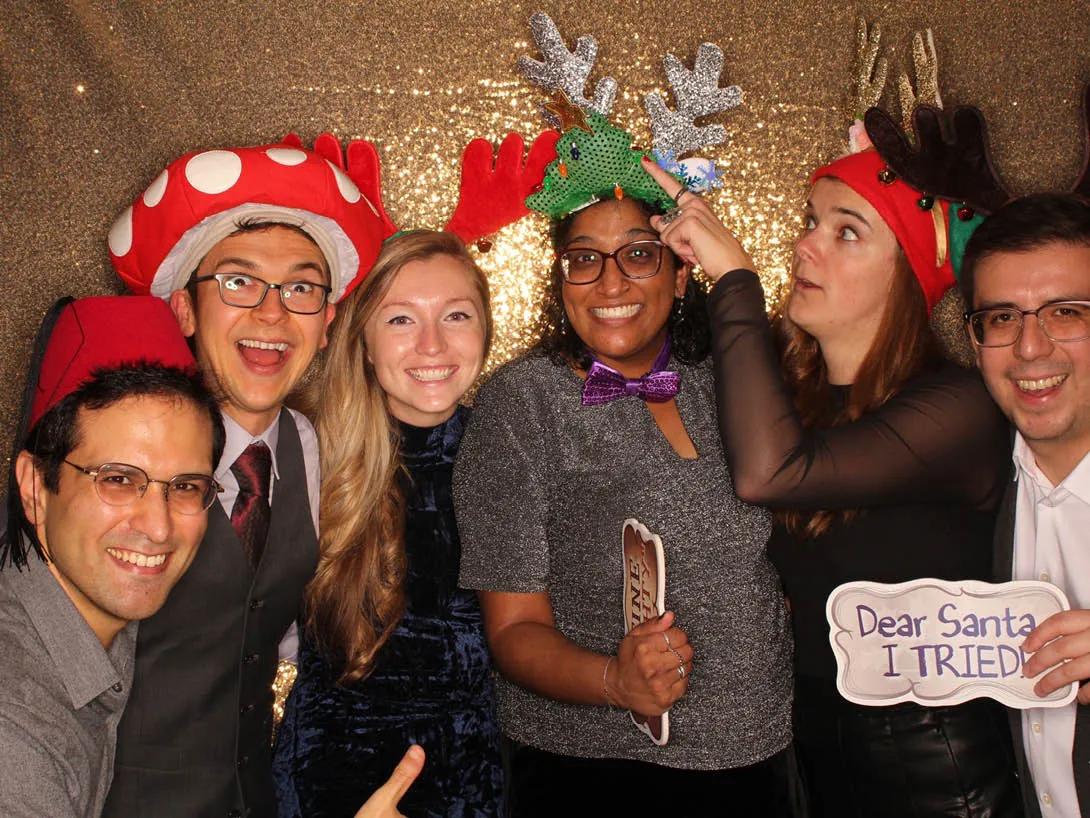
- Internal Medicine Holiday Party
March
- Residency Match Day
May
- Internal Medicine Research Symposium
- HO1 Rising Senior Spring Seminar
June
- Internal Medicine Graduation
- Med-Peds Graduation
- Ann Arbor Restaurant Week
- Intern Welcome Picnic
