Ophthalmology Research Areas
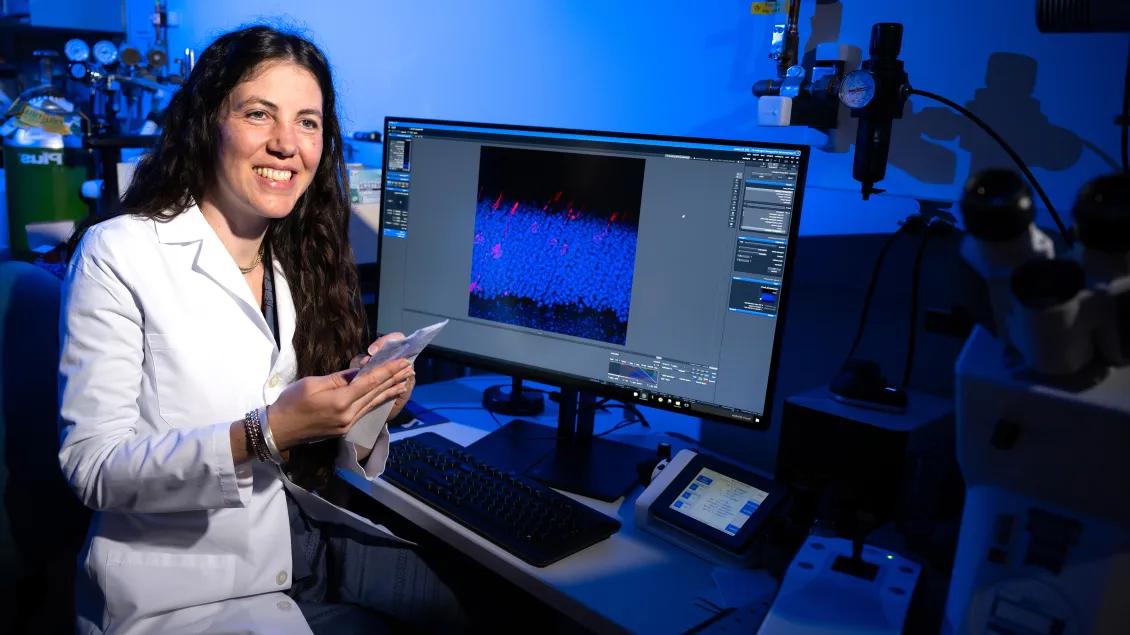
At the W.K. Kellogg Eye Center, researchers are advancing the future of vision care through discoveries in genetics, regenerative medicine, bioengineering, artificial intelligence, and clinical research. By bringing together experts across disciplines, Kellogg is transforming scientific breakthroughs into new diagnostics, treatments, and technologies that improve vision and eye health for patients in Michigan and around the world.
Explore our department’s research areas in basic and translational science, artificial intelligence, bioengineering, and population health.
Areas of Research Excellence
- Steve Abcouwer, PhD: Pathophysiology of diabetic retinopathy; mTor signaling in the retina; Retinal ischemia reperfusion injury
- Dave Antonetti, PhD: Pathophysiology of diabetic retinopathy; Blood-retinal barrier physiology and pathophysiology; Retinal vascular development
- Bertan Cakir, MD, PhD: Mitochondrial electron transport chain dynamics; Raman spectroscopy
- Dolly Ann Padovani Claudio, MD, PhD: Inflammatory control of angiogenic retinopathies
- Abby Fahim, MD, PhD: RPE cell culture modeling of choroideremia; Retinal dystrophies
- Patrice Fort, PhD: Pathophysiology of diabetic retinopathy; Crystalin function in the retina
- Roman Giger, PhD: Optic nerve regeneration
- Michelle Hastings, PhD: RNA-based therapeutics, especially anti-sense oligos, for diseases with ocular involvement
- Thahn Hoang, PhD: Retinal development and regeneration; Single-cell and spatial transcriptomics
- Shilpa Kodati, MD, PhD: Gut microbiota in uveitis; Biomarkers of treatment success and failure in uveitis; Antigen-driven immune responses in uveitic diseases
- Jason Miller, MD, PhD: Lipid handling and metabolism in the retinal pigment epithelium; Mitochondrial and peroxisomal biology; Age-related macular degeneration modeling
- Warren Pan, MD, PhD: Radiation retinopathy
- Jillian Pearring, PhD: Photoreceptor outer segment development and trafficking
- Lev Prasov, MD, PhD: Gene discovery and characterization in ophthalmic disease; Anterior segment development and physiology; Glaucoma genetics; Determinants of eye size
- Rajesh Rao, MD: Retinal development and stem cells; Retinal epigenetics; Retinal organoids
- David Turner, PhD: Retinal development, miRNAs, epigenomics
- Sebastian Werneburg, PhD: Visual pathway microglia in multiple sclerosis
- Tom Wubben, MD, PhD: Retinal cell metabolism in retinal disease; Bioenergetic profiling in retinal tissue
- Dongshan Yang, PhD: Designing CRISPR-based large animal models of inherited retinal degeneration; CRISPR-based gene therapy for retinal degeneration models.
- David Zacks, MD, PhD: Photoreceptor cell death mechanisms; Retinal detachment pathophysiology
- Nambi Nallasamy, MD: Machine learning applications in eye care, including IOL selection in cataract surgery, evaluation of resident competency in the OR, and corneal care
- Nita Valikodath, MD: OCT imaging in the OR and non-traditional settings
- Mia Woodward, MD: Utilizing AI to create personalized, low-cost point-of-care decision-aid tools to facilitate anterior segment care (with a focus on corneal ulcers), especially in low resourced settings
- Peter Zhao, MD: Site PI for SOURCE database (https://www.sourcecollaborative.org/); High resolution retinal imaging in clinic and AI-based analysis of retinal imaging
- Mark Drealos, MD, PhD: Robotic applications for optical coherence tomography imaging in the OR and non-clinic settings
- Xueding Wang, PhD: Optical Imaging Lab, with applications in the eye, including Photoacoustic microscopy of the retina and photo-mediated ultrasound ablation of retinal neovascularization
- Jim Weiland, PhD: Developing low vision aids; Retinal prostheses; Retinal stimulation
- Gary Xu, PhD: Photoacoustic imaging in the eye; Aqueous humor outflow characterization and biomechanics
- Amanda Bicket, MD: Glaucoma surgical device development; Patient reported outcomes in glaucoma
- Lindsay DeLott, MD: Improved care for ocular pain; Clinical decision-making and care of neuro-ophthalmic conditions
- Josh Ehrlich, MD: Links between vision interventions and healthy aging; Improved eye care in international settings; Global epidemiology of vision impairment
- Angela Elam, MD: Improved access to glaucoma screening and care via community interventions
- Patrice Hicks, PhD: Social determinants and risk factors for optimal eye care delivery and vision health
- Paula-Anne Newman Casey, MD: Improved self-care and medication compliance in glaucoma through technology-driven interventions
- Anne Draelos, PhD: Visual cortex response to high-dimensional visual stimuli
- Elise Savier, PhD: Probing visual circuitry in the brain using non-traditional models
Give the Gift of Sight
Your gift helps our doctors and scientists save sight and advance treatments for common and rare eye diseases. Contributions accelerate research, expand access to care, and train the next generation of eye care leaders, ensuring that we continue to improve lives both in Michigan and around the world.
Featured News & Stories
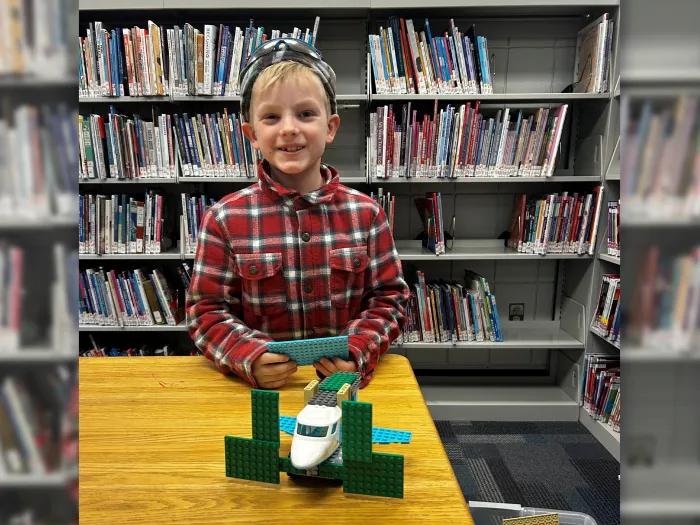
Nerf gun accident causes retinal detachment in pediatric patient
Kellogg care inspires gift to vision research

Mediterranean diet can slow progression of age-related macular degeneration
Patient with retinitis pigmentosa receives new hope at Kellogg’s low vision clinic

Medical School well-represented among Strategic Initiative Fund’s first recipients