Ophthalmology Research

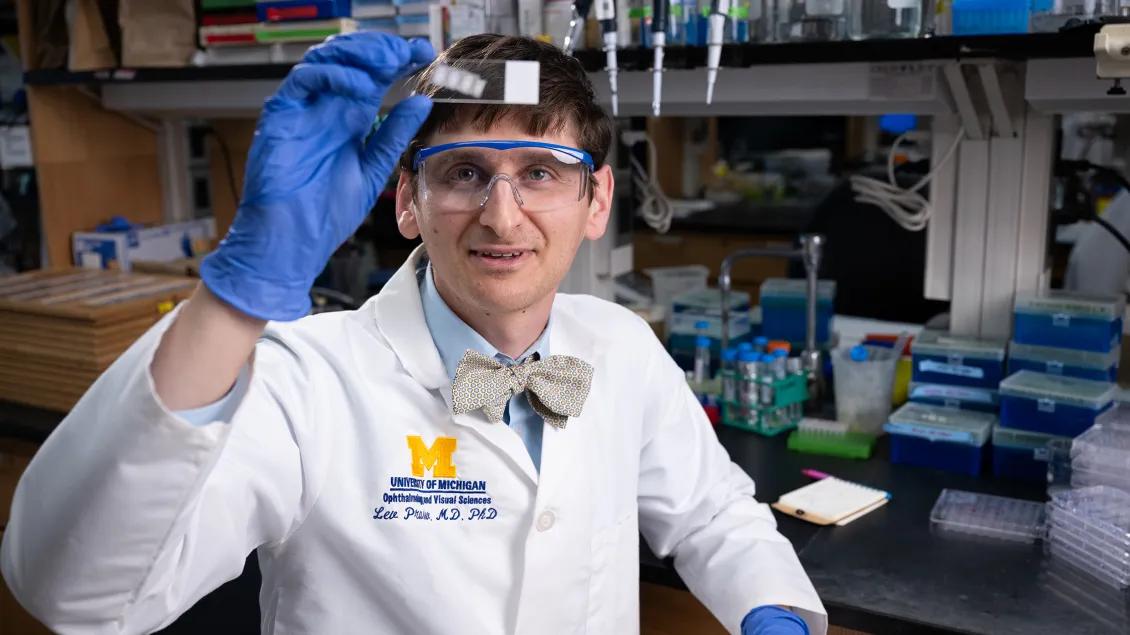
Dr. Lev Prasov looking at a glass slide with the laboratory behind him

Interdisciplinary Research

Our researchers work within the department and in collaboration with colleagues throughout the University of Michigan.

Research in the Department of Ophthalmology & Visual Sciences drives discovery that improves the prevention, diagnosis, and treatment of eye disease. Scientists and clinician-researchers work together to study the biology of vision, investigate the causes of blinding conditions, and develop new therapies that can move quickly from the laboratory to patient care. From basic science and translational studies to clinical trials, the department’s research advances knowledge while shaping the future of eye care for patients in Michigan and around the world.

Research is an essential part of training at the Kellogg Eye Center, with residents supported through a dedicated research rotation and opportunities to collaborate with world-class scientists and present or publish their work

Research Focus
Research Areas

Explore the diverse areas of research driving discoveries in vision science at Kellogg Eye Center, from basic and translational science to artificial intelligence, bioengineering, and population health.

Clinical Studies

At Kellogg Eye Center, we provide clinical care that is backed by a strong vision research program aimed at discovering cures and new treatments for eye disease, and we offer patients the opportunity to participate in the evaluation of promising new treatments.

Vision Research Training

Discover opportunities to train alongside leading investigators in an environment focused on rigorous science, mentorship, and career development in vision research. Start your vision research career at Kellogg Eye Center.

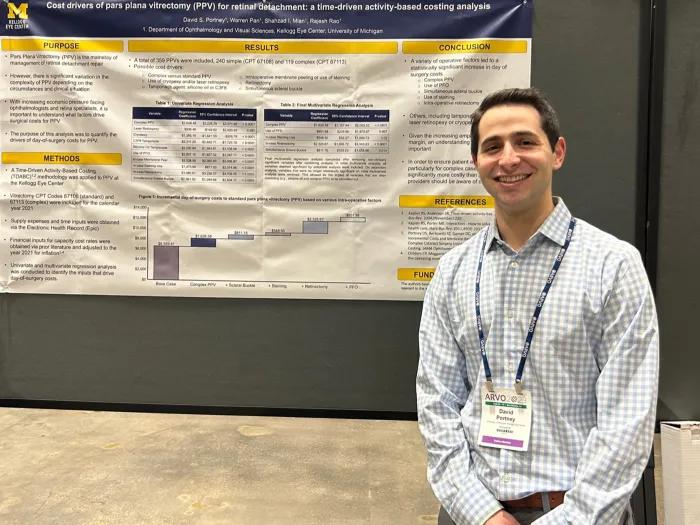
Ophthalmology resident standing in front of their research poster at the ARVO annual meeting

Resident Research Opportunities

Our residents have a strong track record of securing competitive external research funding and producing impactful scholarly work. Throughout residency, trainees have opportunities to participate in mentored research experiences that support their academic and professional development.

Learn more about resident research

Research Facilities

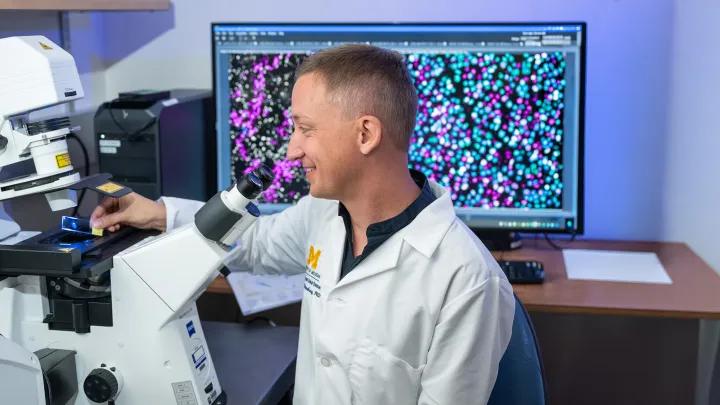
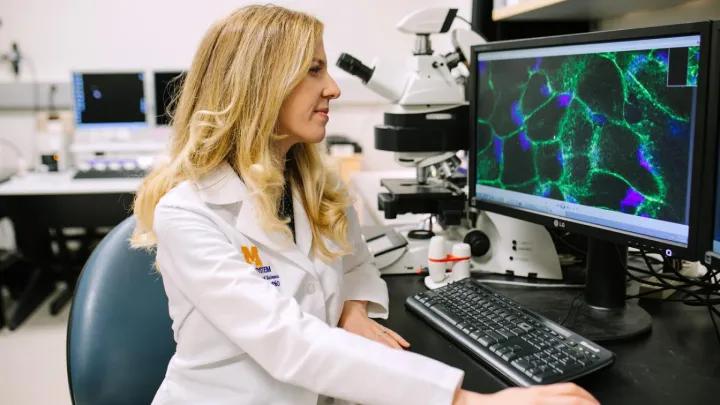
Dr. Sebastian Werneburg in front of a large microscope with an colorful research image on a monitor behind him

Vision Research Center

By providing shared state-of-the-art instrumentation, services and training, the Vision Research Center provides vision researchers with the necessary resources to pursue cutting-edge research. Access shared resources and expertise that supports innovative vision research.
  • Learn about our vision research cores
  • Researcher looking at equipment at Kellogg Eye Center

    Research Spaces

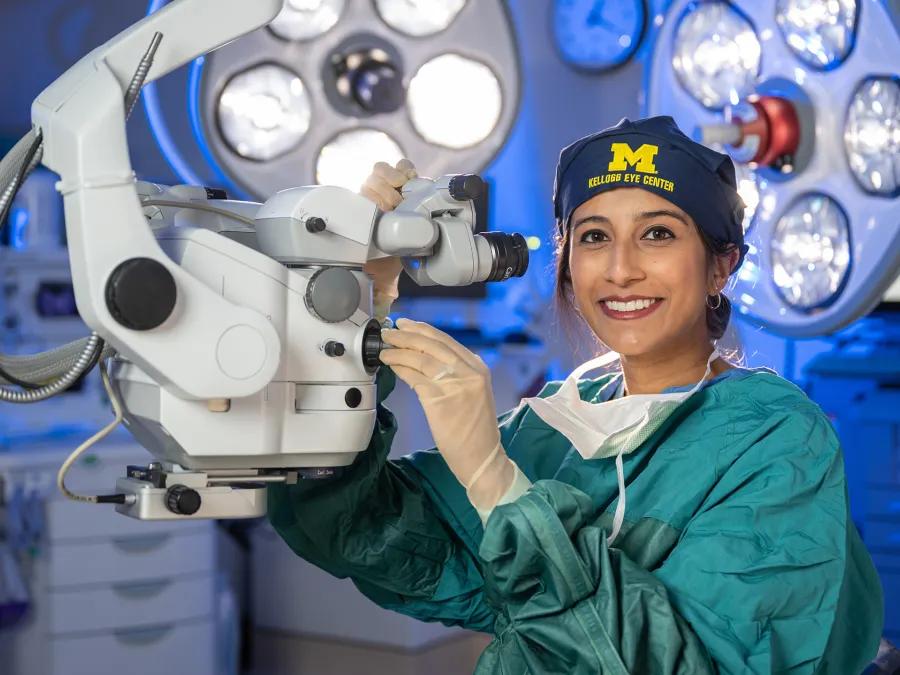
    Research is supported by specialized laboratory and clinical research spaces designed to advance vision science. Investigators use advanced technologies and shared resources to study eye disease and translate scientific discoveries into new treatments for patients.
  • See Department of Ophthalmology & Visual Sciences Research Spaces
  • Dr. Valikodath in the operating room next to large lights

    Give the Gift of Sight

    Your gift helps our doctors and scientists save sight and advance treatments for common and rare eye diseases. Contributions accelerate research, expand access to care, and train the next generation of eye care leaders, ensuring that we continue to improve lives both in Michigan and around the world.

    Learn more and contribute today

    Featured News & Stories

    See all news
    Thanh Hoang
    Medical School News

    Thanh Hoang named Pew Biomedical Scholar

    The Pew Charitable Trusts selected Thanh Hoang, PhD, as a 2026 Pew Scholar in the Biomedical Sciences. Hoang joined a class of 21 scholars nationwide.
    eye drawing yellow dots
    Department News

    UM researchers awarded grants from BrightFocus Foundation for vision research

    BrightFocus Foundation awarded $15.2M in research grants for Alzheimer’s, macular degeneration, and glaucoma, including support for Michigan Medicine researchers Jason Miller, MD, PhD, and Mark Draelos, MD, PhD, advancing new approaches to vision loss and disease detection.
    Susan Lane, wearing glasses and a dress with blue, red, black, and purple brushstroke designs, stands next to Alan Sugar, who is wearing glasses and a grey blazer with a blue tie. They are standing in a shaded courtyard area with shrubs and a brick wall behind them.
    Philanthropy News

    Susan J. Lane: Gratitude and Giving

    Susan Lane has made a transformational gift to the Department of Ophthalmology and Visual Sciences at Michigan Medicine to support corneal research and patient education.
    Health Lab Podcast in brackets with a background with a dark blue translucent layers over cells
    Health Lab Podcast

    How rescuing dying cells may help preserve vision loss

    Removal of damaged mitochondria can rescue dying photoreceptor cells.
    eye drawing yellow dots
    Health Lab

    Cell death in photoreceptor cells is reversible, study finds

    A team of researchers from the University of Michigan found functional mitochondria are key to the recovery of dying photoreceptor cells.
    Dr. Jillian Pearring in her lab
    Department News

    FFB features Jillian Pearring’s work on photoreceptors and retinitis pigmentosa

    Jillian Pearring, PhD, shares her journey in vision research, highlighting advances in photoreceptor science and hope for blinding diseases.