Training Program in Tumor Microenvironment T32
The NCI T32 Training Program in the Tumor Microenvironment (TPTM) is an interdisciplinary program whose central goal is to train exceptional junior investigators to address fundamental biological problems related to human cancer.
This program is designed for predoctoral and postdoctoral trainees and aims to develop and diversify a robust pipeline of cancer investigators who will have a significant impact on the prevention, diagnosis, and treatment of cancer.
For More Information
Program Overview
TPTM trainees will develop a strong foundation in cancer biology as it relates to the fields of genomics and epigenetics, immunology, tumor metabolism, metastasis and invasion, and drug development with the ultimate goal of directing cutting-edge research in the prevention, diagnosis, and treatment of cancer.
All trainees complete a core curriculum in cancer biology with class options for grant writing, bioinformatics, and entrepreneurship. Trainee activities include:
Mentored laboratory research experience
Seminar series focused on the TME
Faculty led interactive journal clubs
Presenting at the annual TPTM retreat
Wide range of career development opportunities
How to Apply
This interdisciplinary program is designed for both predoctoral and postdoctoral trainees to address fundamental biological problems related to human cancer with the goal of training cancer investigators who will have a significant impact on the prevention, diagnosis, and treatment of cancer.
We are particularly interested in supporting scientific projects related to the tumor microenvironment in the areas of cancer biology, genomics, immunology, tumor metabolism, epigenetics, metastasis and invasion, and drug development, although other areas will be considered. All applications are reviewed and selected by members of the TPTM Executive Committee.
Contact
The TPTM has four slots for predoctoral trainees annually. The call for applications is typically shared in early July, and all application materials must be submitted through the CompetitionSpace application by the deadline.
Appointments provide one year of funding (candidate tuition, NIH stipend, and GradCare), covering the period from September 1 through August 31. The funding is limited to one year of support and is not renewable for an additional year.
Eligibility
The TPTM is open to doctoral students who have achieved candidacy, are in one of the 14 PIBS PhD programs, the MCDB Program, or other relevant PhD program at the University of Michigan, and are working on research related to the tumor microenvironment. Applicants must be U.S. citizens or permanent residents. If an applicant plans to perform their thesis work in the lab of a faculty member who is not currently affiliated with the TPTM, the TPTM committee may require the trainee to identify a co-mentor who is affiliated with the TPTM or work with the faculty mentor to become affiliated with the TPTM.
Application Components
All application components must be submitted through the CompetitionSpace application:
Nominee’s NIH style Biosketch
Mentor(s)’ NIH style Biosketch
Mentoring Plan (including plans for training in the responsible conduct of research)
Research Plan (2 pages) written by the nominee
Applicants will be reviewed and selected by members of the TPTM Executive Committee and will be notified of a decision around mid-August.
The TPTM supports two postdoctoral trainees. Postdoctoral appointments are filled on a rolling basis, and calls for applications are issued when slot(s) become available. All application materials must be submitted through the Competition.
Appointments provide one year of funding at the NIH stipend rate, with the possibility to apply for a second year of funding.
Eligibility
Applicants must be U.S. citizens or permanent residents and preference will be given to postdoctoral applicants who are no more than one year into their training. Both MD and PhD postdocs are eligible, and the degrees must be conferred before the start date of the postdoctoral position. The nominee does not have to already be on site - this can be used as a recruiting tool.
If a nominee is planning to do a postdoc in the lab of a faculty member who is not currently part of the program, the program committee may require the trainee to identify a co-mentor who is affiliated with the TPTM or work with the faculty mentor to become affiliated with the TPTM.
Application Components
All application components must be submitted through the CompetitionSpace application:
Nominee’s NIH style Biosketch
Mentor(s)’ NIH style Biosketch
Three page research proposal, written by the nominee
Nomination letter from postdoc faculty mentor that includes their assessment of the nominee.
The mentor should also indicate their relative involvement/contributions to the writing of the research proposal
Two letters of recommendation, one of which should be from the nominee’s doctoral mentor or a thesis committee member (if the nominee holds or will hold a PhD)
Applicants will be reviewed and selected by members of the TPTM Executive Committee.
Program Requirements
TPTM trainees are expected to devote full-time effort to their educational and research programs, fulfilling all obligations required of full-time PhD students or postdoctoral fellows. Throughout their appointment, trainees are expected to actively engage in the intellectual and professional development opportunities offered by the program, including regular participation in the monthly Tumor Microenvironment Seminar Series and Journal Club, the annual TPTM retreat, and Cancer Center Grand Rounds and related events. Trainees are also encouraged to attend additional seminars and conferences, including clinically focused hematology/oncology events, to broaden their training experience.
All trainees are required to complete NIH-mandated training in research ethics and in rigor and reproducibility, if such training has not been completed within the past four years. At the U-M Medical School, these requirements are fulfilled through PIBS 503 (Responsible Conduct of Research, offered in the fall) and PIBS 504 (Rigor, Reproducibility, and Transparency, offered in the winter). In addition, trainees must successfully complete CANCBIO 554: The Science of Cancer, a core course offered during the winter term.
Mentorship
Trainees work closely with their mentors to ensure strong research progress and professional development. Predoctoral trainees are expected to make significant progress toward their dissertations and to produce a first-author publication prior to completing their doctoral training. Postdoctoral trainees contribute to the program’s educational mission by serving as teaching assistants for The Science of Cancer course during the winter term.
All trainees are expected to maintain and regularly update an Individual Development Plan (IDP), using the Science Careers platform, and to meet annually with the training grant Principal Investigator to review their progress and career goals.
Recent Trainees & Alumni
Padma Kadiyala, PhD: Postdoctoral Fellow, Pasca di Magliano and Carpenter Labs
Emily Seiden, PhD: Postdoctoral Fellow, Grohar Lab
Kathryn Buscher: Molecular and Integrative Physiology PhD Student, Shah Lab
Rachael Hinshaw: Cancer Biology PhD Student, Grohar Lab
Liddy McCulla: Cancer Biology PhD Student, Wahl and Shah Labs
Matt Perricone: Immunology PhD Student, Lyssiotis and Carty Labs
Eric Horst, PhD: Postdoctoral Fellow, Mehta and DiFeo Labs
Padma Kadiyala, PhD: Postdoctoral Fellow, Pasca di Magliano and Carpenter Labs
Erin Holcomb: Immunology PhD Student, Green and Zou Labs
Nicole Jerome: Cancer Biology PhD Student, Palmbos Lab
Paola Isabel Medina-Cabrera: Cancer Biology PhD Student, Pasca di Magliano and Allen Labs
Fjorela Xhyliu: Chemical Engineering PhD Student, Lahann and Castro Labs
Program Leadership
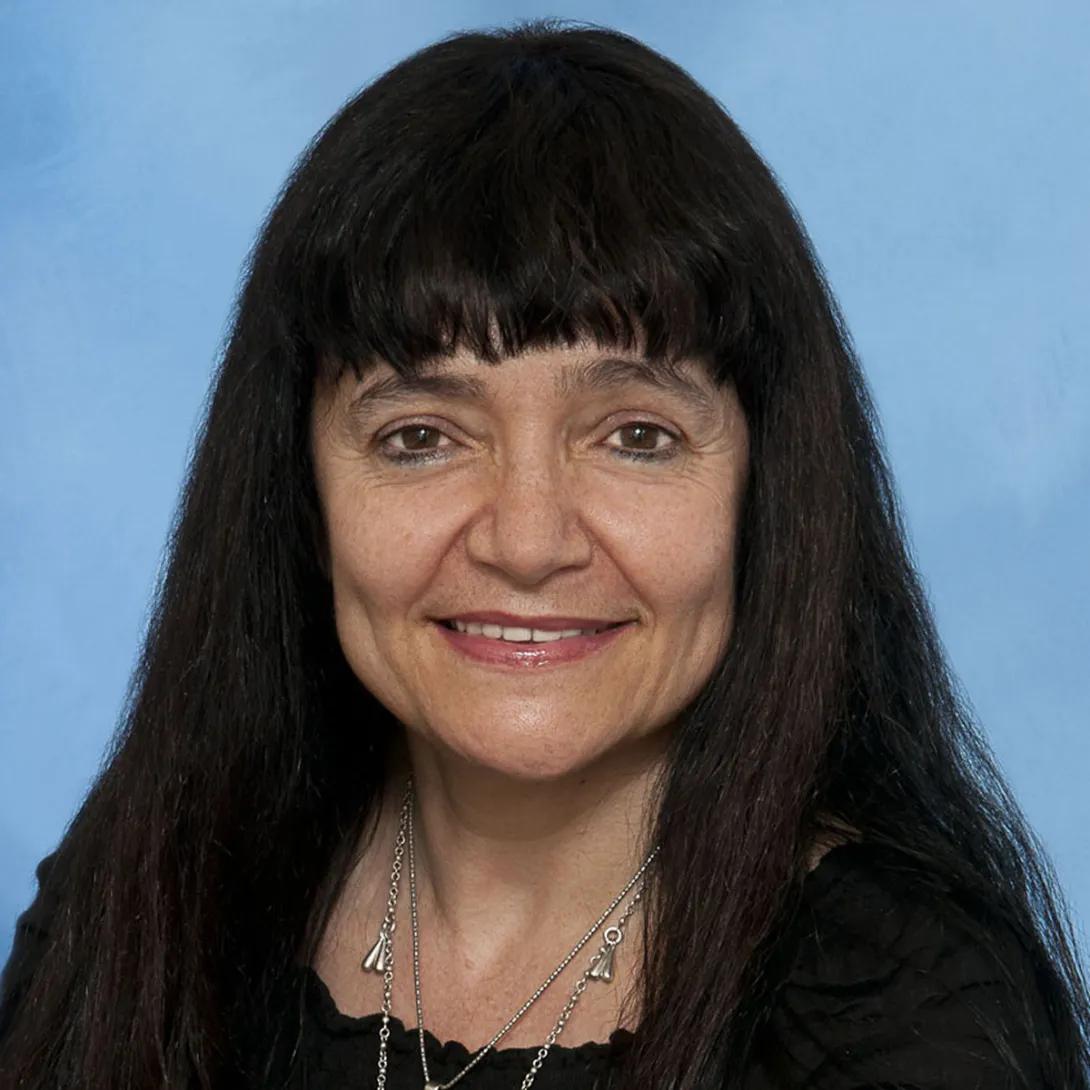
Maria Castro, PhD
Professor of Neurosurgery
Professor of Cell and Developmental Biology and Co-Director
Brain Tumor Research and Translational Neuro-Oncology Laboratories
Medical School
Analisa DiFeo, PhD
Professor of Obstetrics and Gynecology and Associate Director Academic Program
Cancer Biology Graduate Program
Medical School