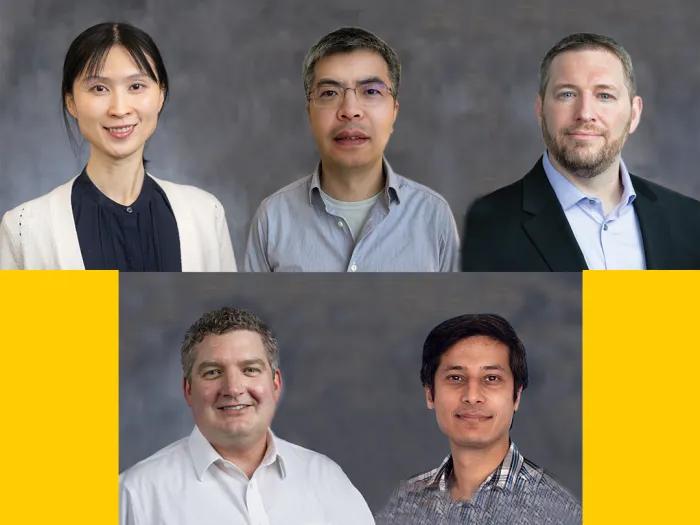
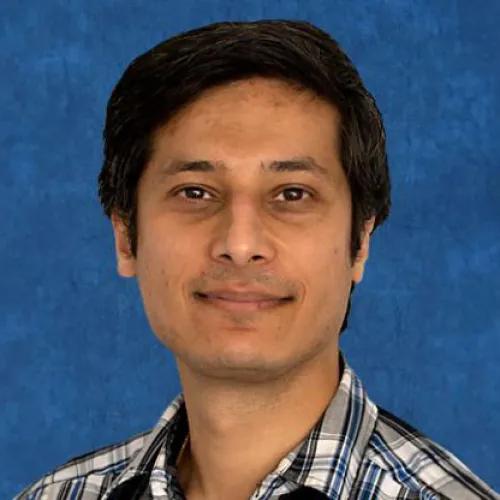
Arvind Rao, PhD
Manage Your Profile
Center Memberships
-
Center MemberAI and Digital Health Innovation
-
Center MemberCenter for Global Health Equity
-
Center Membere-Health and Artificial Intelligence Initiative
-
Center MemberRogel Cancer Center
-
Center MemberInstitute for Healthcare Policy and Innovation
Research Overview
Research theme: my group’s research has developed methodologies for the analysis and integrative interpretation of spatially-based, multi-modal, omics datasets (e.g: imaging, genomics, spatial profiling) for improved disease understanding and clinical decision making. Our work spans machine learning and statistical modeling for radiomics, digital pathology, predictive modeling, genomic data integration, and most recently spatial immunoprofiling and spatial transcriptomics.
Research:
a. Biomedical Image Informatics & Spatial Biology: In order to quantify the phenotypic aspects of disease, their relationships with outcome, and their genetic context, we have developed methods for the analysis of histopathology and radiology images, focusing on tumor heterogeneity. One direction of my group is to develop image analysis tools to delineate tumor image features from radiology data and, along with underlying genomic measurements, to develop AI-based predictive models to relate them to outcomes in low grade gliomas. Further, we have also investigated methodologies to link tumor imaging, genetics, and immune status in disease. Along these lines, we have embarked on measuring immune contexture in the tumor microenvironment, developing methods for the inference of the spatial architecture and patterns of infiltration of immune cells, based on multiplex-IHC and spatial transcriptomics technologies. Further, we have also developed methods for the analysis of multiparametric magnetic resonance imaging (MR) datasets in radiation oncology
b. Artificial Intelligence (AI) methods for Medicine: Our expertise is evidenced by two streams of work: (1) Developing statistical and machine learning (ML) methods to analyze and interpret multi-modal image/genomic data; (2) application of AI/ML formalisms for predictive models based on genomics, radiology and pathology imaging. These are used to assess disease stage, suitability for specific drug targets, molecular therapies & immunotherapies. More recently, we have been working on problems of bias, uncertainty quantification as well as auditing of AI solutions (in radiology and pathology image informatics) in healthcare.
Recent Publications
-
Bhadury S, Peruzzi M, Acharyya S, Eliason J, Di Magliano MP, Frankel TL, Ravikumar V, Krishnan S, Rao A. Scientific Reports, 2026 Dec 1; 16 (1):Journal ArticleInformed spatially aware patterns for multiplexed immunofluorescence data
DOI:10.1038/s41598-026-35341-8 PMID: 41521220 -
Henstridge AZ, Azorsa PA, Arya N, Elhossiny AM, Kadiyala P, Goldwasser M, Branch G, Sahai V, Peterson N, Machicado JD, Kwon RS, Schulman AR, Wamsteker E-J, Philips GM, Menees SB, Xia JY, Hogenson TL, Rao A, Shi J, Frankel TL, Bednar F, Pasca di Magliano M, Lyssiotis CA, Truty MJ, Fernandez-Zapico ME, Carpenter ES. Cancer Res, 2026 Sep 29;Journal ArticleLongitudinal Analysis of Matched Patient Biospecimens Reveals Neural Reprogramming of Cancer-Associated Fibroblasts Following Chemotherapy in Pancreatic Cancer.
DOI:10.1158/0008-5472.CAN-26-0823 -
Coupland SE, Rao A, Jonigk D, Bülow R, Chetty R, Rane SU, Dave S, Naresh KN. Journal of Clinical Pathology, 2026 Aug 20; 79 (9): 577 - 586.Journal ArticlePromise and pragmatism of AI in global-scale digital pathology: pan-cancer approaches for clinical practice
DOI:10.1136/jcp-2026-210720 PMID: 42431728 -
Mohan A, Griffith KA, Goff LW, Crysler O, Enzler T, Cardin DB, Gunchick V, Tsang AP, Dippman D, Young AS, Olivei AC, Mannan R, Rao A, Frankel TL, Kumar-Sinha C, Zalupski MM, Sahai V. Clin Cancer Res, 2026 Jul 23;Journal ArticleA phase 2 multicenter trial of rucaparib and nivolumab as maintenance therapy in patients with advanced biliary tract cancer: BilT-02.
DOI:10.1158/1078-0432.CCR-25-1114 PMID: 42489677 -
Wang X, Liu W, Yang J, Tien JCY, Chang Y, Mannan R, Mahapatra S, Zhou Y, Gan L, Cao X, Zhou J, Zhang Y, Shaker S, Huang Y, Qiao H, Hamadeh R, Ervine G, Wang C, Su F, Wang R, Xiao L, Sudharshan RR, Rao A, Nikolovska-Coleska Z, Stephens C, Pan L, Chou JJ, Sahu D, Stuckey J, Wang Z, Ding K, Chinnaiyan AM. Proceedings of the National Academy of Sciences of the United States of America, 2026 Jul 14; 123 (28):Journal ArticleA ligandable PNT domain establishes ERG as a directly targetable oncogenic driver in prostate cancer
DOI:10.1073/pnas.2537437123 PMID: 42412946 -
Bhadury S, Tsang AP, Ray D, Lagisetty K, Rao A. 2026 Jul 13;PreprintFunctional Depth Biomarkers Distinguish Lung Squamous Cell Carcinoma from Lung Adenocarcinoma.
DOI:10.21203/rs.3.rs-9347794/v1 PMID: 42523548 -
Audia A, Mattohti M, Ravikumar V, Garofano L, Emam A, Tang T, Huie EZ, Oizumi T, Villanueva DST, Esmaeili Anvar N, Garces AA, Vaillant BD, Rao A, Iavarone A, Katayama H, Rai K, Bhat KP. Sci Rep, 2026 Jul 10;Journal ArticleTAZ mediates enhancer reprogramming blocks neuronal differentiation in glioma stem-like cells.
DOI:10.1038/s41598-026-61249-4 PMID: 42432169 -
Bhadury S, Rao A. 2026 Jul 3;PreprintISPAT-3D: Spatially Varying Conditional Volumetric Network Estimation for 3D Tumor Imaging.
DOI:10.21203/rs.3.rs-9903140/v1 PMID: 42427839
Featured News & Stories
Joel Eliason, Ph.D., and the power of Bayesian statistics
Arvind Rao, PhD, receives a University of Michigan Global REACH Partnership Grant