
MDisability Education
Medical schools and residency programs fail to include disability health curricula, despite the high prevalence of people in America experiencing a disability.
MDisability is dedicated to filling that gap by training the next generation of family medicine providers and researchers with the following education programs.
For More Information
Explore Our Educational Opportunities
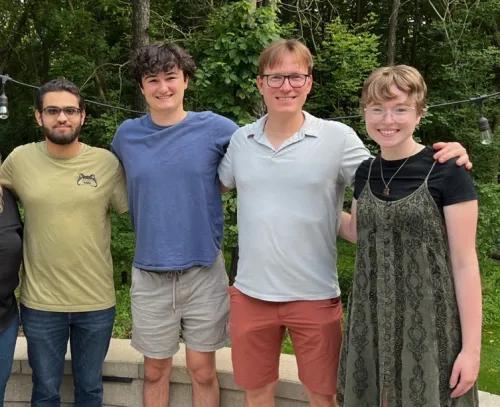
This internship is designed for upper-class level college or graduate/professional students and specializes in providing education and research opportunities in disability health. Interns gain experience and connections that put them on track to shape the healthcare landscape and provide access and equity to people with disabilities.
The MDisability Internship program is made possible through the generous support of the Philip Zazove, M.D. Disability Health Endowment Fund and the Robert J. Fisher, MD Family Medicine Fund.
The Disability Health Fellowship strives to create clinical leaders, educators, and advocates to improve the health and healthcare of individuals with disabilities. The Disability Health Fellowship is a 12-month clinical fellowship that provides fellows the opportunity to improve their clinical skills in caring for patients with physical, intellectual, or developmental disabilities, while learning about disability-relevant policy; teaching medical students and residents; engaging with the community; and doing research to advance the field.
The fellowship utilizes strong partnerships with U-M Family Medicine’s MDisability Program and Michigan Medicine’s Center for Disability Health & Wellness.
The Disability Health Elective (FAMMED 8204) is a two-week course for medical students in the various branches to rotate among different clinics specializing in disability-based care (e.g., Deaf Health, Adaptive Sports Medicine, Spinal Cord Injury, Cerebral Palsy, Low Vision, etc.). Students are introduced to elements of disability theory, clinical practice, disability law, and implications for policy. The course also incorporates small group discussions and online training with the Leadership Education in Neurodevelopmental and Related Disabilities (LEND) program. The course enables medical students to provide a person-centered approach to caring for patients who have disabilities.
This effort promises to improve the quality of care and reduce disparities in health outcomes for people with disabilities. The Disability Health Elective (DHE) is offered in January, April, and September.
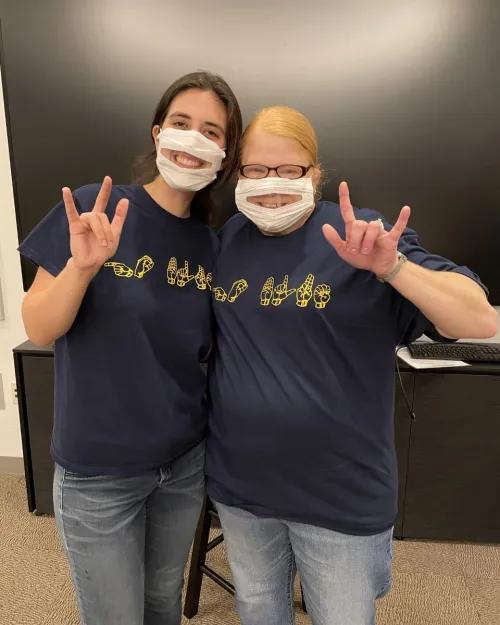
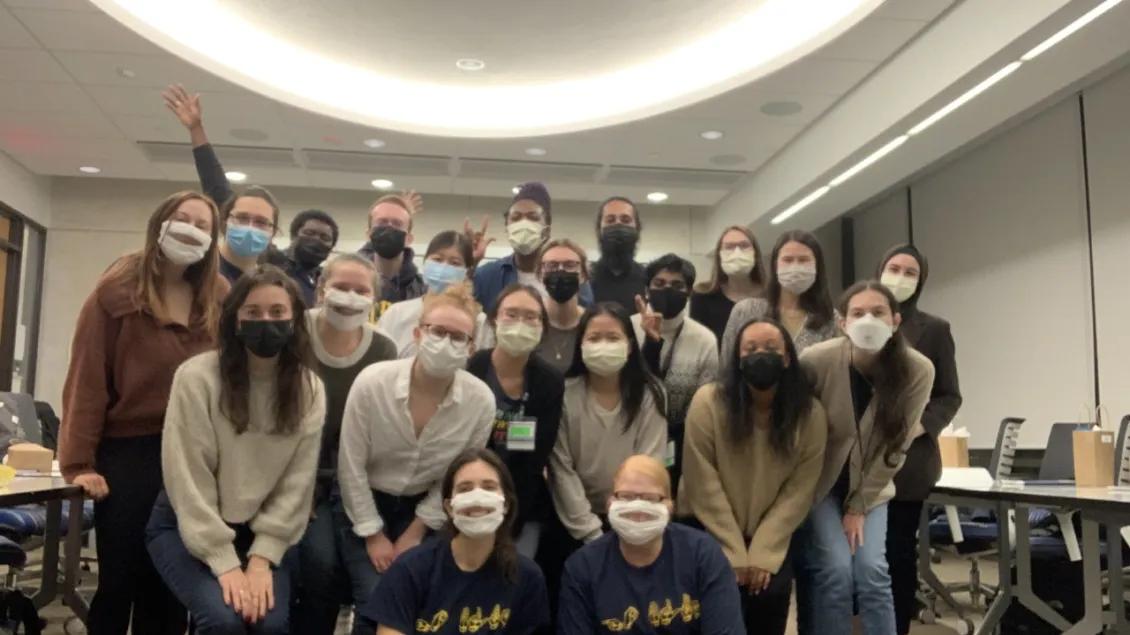
The ASL Medical School Elective, a 10-week course (FAMMED 5970) that meets twice weekly in person, provides first-year medical students an introduction to American Sign Language (ASL) and its use in the medical setting. Students learn hundreds of ASL ‘signs’ – from the alphabet to common words and clinical terms. The course also includes an introduction to Deaf culture and the experiences of individuals who are Deaf or hard of hearing in the medical setting.
Students get the opportunity to learn about the inequities that Deaf and hard of hearing people face in medical encounters. The course includes a panel of deaf individuals who share their own experiences.
Students also learn from Michigan Medicine Medical ASL Interpreters about their experiences interacting with patients at Michigan Medicine’s healthcare facilities.
MDisability collaborates with Partners in Deaf Health for the Deaf Health Talks, an accessible, community-based platform where the public can learn more about different health topics. These talks include American Sign Language services. See the YouTube playlist
MDisability Provider Webinar Series
The MDisability Provider Webinar quarterly series is hosted by and for primary care medical professionals who take care of or want to learn how to care for patients with disabilities. Webinars provide educational and clinical care insight, tools, and resources, and cover diverse topics about caring for people with physical, sensory, intellectual, and developmental disabilities. They are delivered by experienced primary care providers who care for people with disabilities. Some of these providers are also caregivers for a person with a disability or who may have a disability themselves. The Robert J. Fisher, MD Family Medicine Fund generously contributes support for the webinars and for real-time captioning. Webinars are free of charge.
