-
Education Hub -
Medical Student Programs -
Residency -
Fellowships -
Cancer Genetics & Breast Health -
Complex Benign Gynecology -
Complex Family Planning -
Global Women's Health -
Gynecologic Oncology -
Hospitalist -
LGBTQ+ Reproductive & Sexual Health -
Maternal Fetal Medicine -
Pediatric & Adolescent Gynecology -
Reproductive Endocrinology & Infertility -
Urogynecology & Reconstructive Pelvic Surgery -
Women's Health
-
-
Opportunities -
Facilities & Spaces
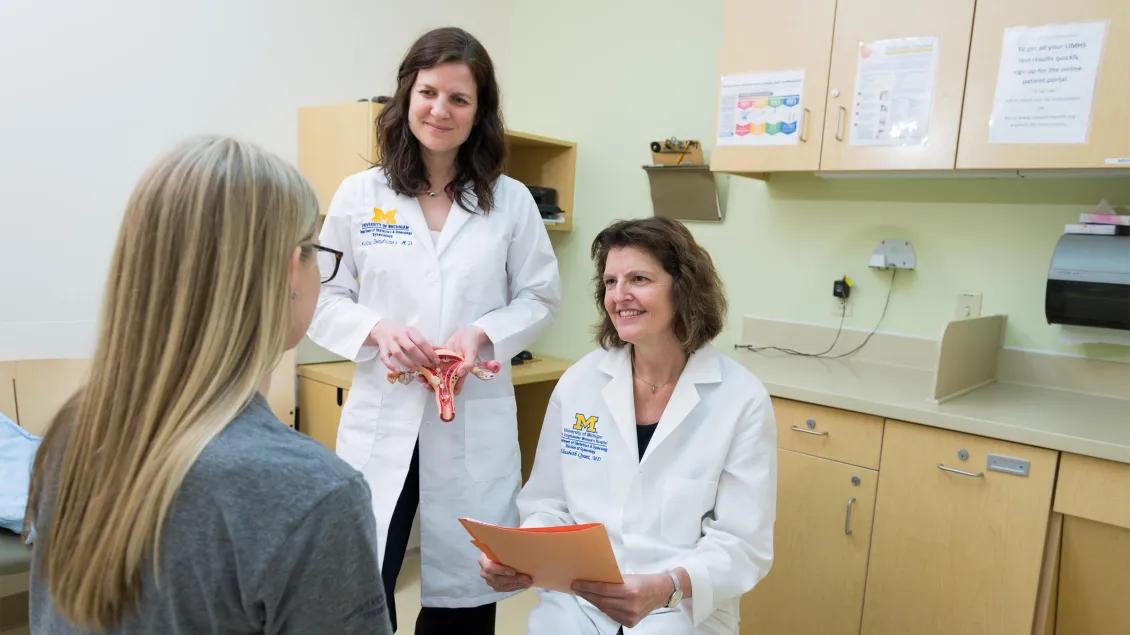
Pediatric & Adolescent Gynecology Fellowship
The goal of the Pediatric and Adolescent Gynecology Fellowship is to train outstanding clinicians, teachers, and research contributors.
Learn more by jumping to the sections below:
For More Information
Program Overview
The University of Michigan’s fellowship in Pediatric and Adolescent Gynecology (PAG) is a two-year program in which trainees develop the gynecologic expertise to evaluate and treat patients from infancy and childhood through adolescence and young adulthood.
Our trainees have access to faculty members with outstanding clinical and academic experience, who are passionate about teaching fellows in the operating room, clinic, and in their research endeavors. The clinical educational objective of the training program is to provide trainees with the necessary knowledge, skills, and experience to independently manage and serve as a consultant for children and adolescents with medical and surgical gynecologic conditions, including congenital anomalies. The trainee is expected to educate students and residents and perform clinical or basic science research.
Core Program Components
The clinical experience includes several times weekly general PAG clinics, monthly Differences in Sexual Development (DSD) clinic, and several times per month peds/hematology clinics. The trainee participates in PAG surgeries, inpatient adolescent consults, and GYN consults in the Pediatric Emergency room. The trainee will also participate in managing DSD conditions in children and teens in a multidisciplinary setting through patient care and management conferences. Our trainees rotate through several other pediatric subspecialties, including Pediatric Urology, Pediatric Endocrinology, Adolescent Medicine, and Pediatric Genetics. Other rotations, by trainee preference, may include the Pediatric abuse team, Transgender clinic, and Reproductive Endocrinology, which includes an ovarian preservation program.
The trainee will have an adult gynecology clinic and is expected to take general Gynecology call several times a month, (home call) as well as some OB (if desired).
Trainees will participate in the education of both residents and medical students in the clinic, the operating room, and in conferences. U-M Medical School has a wide array of training spaces, including a large simulation center to help with educational endeavors. In addition, advanced trainees participate in a monthly journal club.
Trainees will have an opportunity to expand their research skills and conduct research - either clinical or in the laboratory - depending on the trainee’s skills and interests. Trainee research often leads to publication and presentations at national conferences.
The PAG trainee is expected to participate in all departmental conferences (twice weekly), and a monthly journal club. Special conferences include conferences with the DSD team and monthly conferences with Adolescent Medicine, sometimes led by the PAG trainee.
Fellowship Core Curriculum
The Department is home to 10+ Board-certified and non-Board-certified clinical and research fellowships in obstetrics and gynecology. To promote cross-specialty collaboration, all trainees take part in our didactic curriculum. These are ½ day educational seminars on numerous topics relevant to clinical research and academic leadership.
Topics include research design and implementation, identifying funding opportunities, manuscript timelines and preparation, how to be an effective teacher and employment opportunities. In addition, the department sponsors social events for fellows across all specialties to further encourage collaboration and to help fellows build both a professional and personal network.
Ongoing Educational Opportunities
The U-M Medical School Department of Obstetrics and Gynecology is committed to the ongoing development and education of our faculty, staff, and learners. Each year, we provide over 100 CME activities for physicians and healthcare professionals to enhance learning and improve patient outcomes.
Application Information
Minimum Requirements
- Completion of a residency program accredited by ACGME
- USMLE/COMLEX scores
Due to Department of Labor prevailing wage regulations, we cannot consider applicants with any type of visa.
We do not review CREOG scores in our assessment of applicants. Score reports are not required.
How To Apply
Applications are available through NASPAG. The application deadline for an August 2027 start date is July 5, 2026. The virtual interview date will be August 28, 2026.
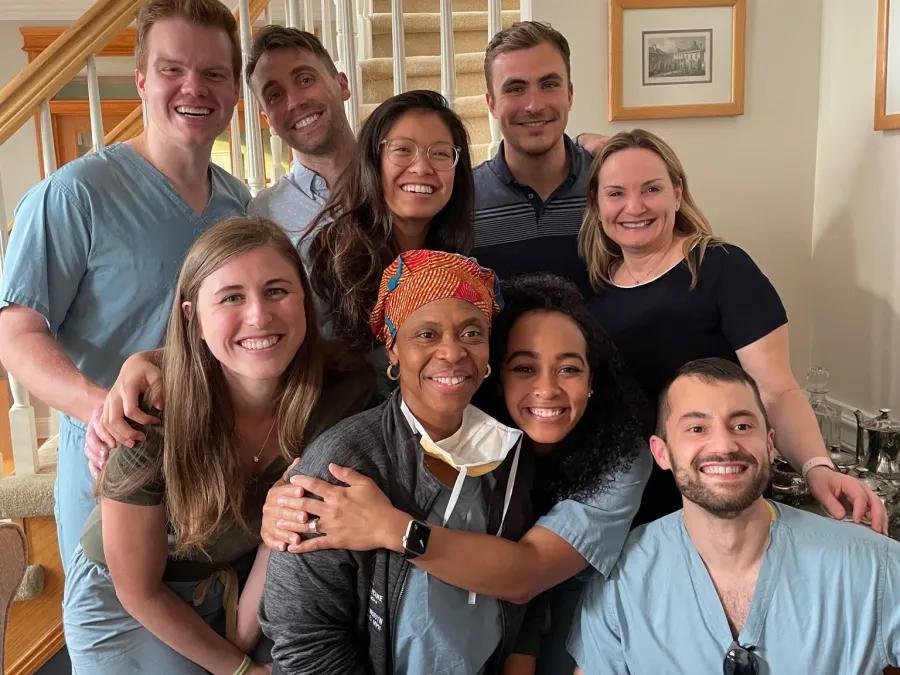
Salary & Benefits
The University of Michigan offers highly competitive salaries and generous benefits to our fellows and residents. Trainee salary will be commensurate with that of a House Officer at an equivalent level of training based on the HOA contract.
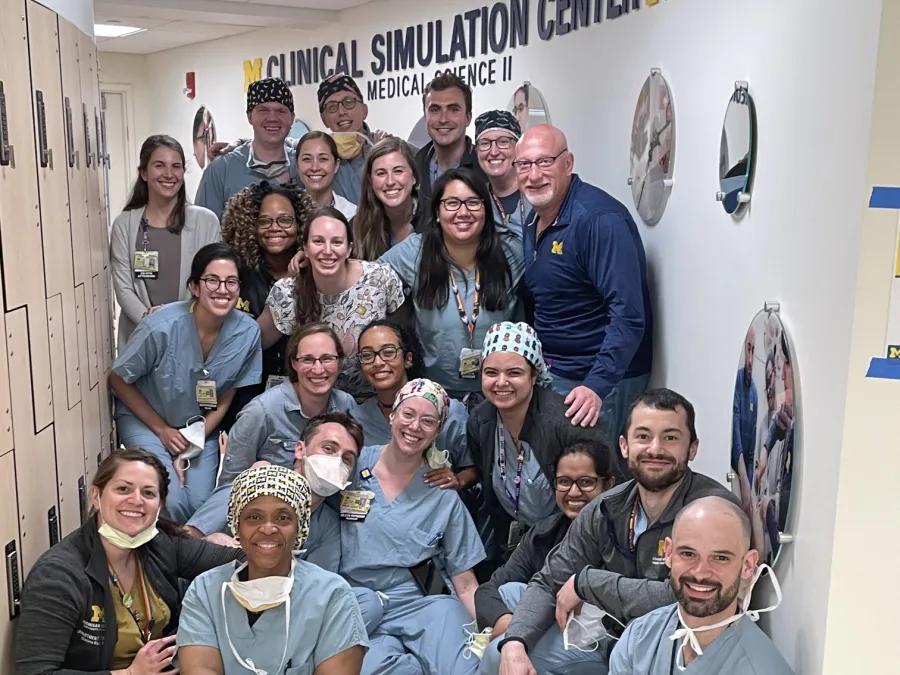
Current Trainees
Current Pediatrics & Adolescent Gynecology fellows are developing skills to succeed as clinically skilled, compassionate obstetrician-gynecologists. We emphasize teamwork, excellence, and leadership.
Recent Graduates
- Rebecca Richardson, MD
2024-2026 Pediatric and Adolescent Gynecology Fellow
First Position after Training: Pediatric and Adolescent Gynecology Faculty, University of Southern California - Erin Isaacson, MD
2023-2025 Pediatric and Adolescent Gynecology Fellow
First Position after Training: Pediatric and Adolescent Gynecologist, Cleveland Clinic - Kathleen O’Brien, MD
2022-2024 Pediatric and Adolescent Gynecology Fellow
First Position after Training: Faculty, University of Wisconsin
- Mina Farahzad, MD, PhD
2021-2023 Pediatric and Adolescent Gynecology Advanced Trainee
First Position after Training: Gynecologist, Cook County Hospital, Chicago, IL - Olivia Winfrey, MD, MPH
2020-2022 Pediatric and Adolescent Gynecology Advanced Trainee
First Position after Training: Baylor College of Medicine
Program Leadership

Dee E Fenner, MD
Chair, Department of Obstetrics and Gynecology
Professor of Obstetrics and Gynecology and Professor of Urology
Medical School

Melina L Dendrinos, MD
Medical School

Maeve Sullivan
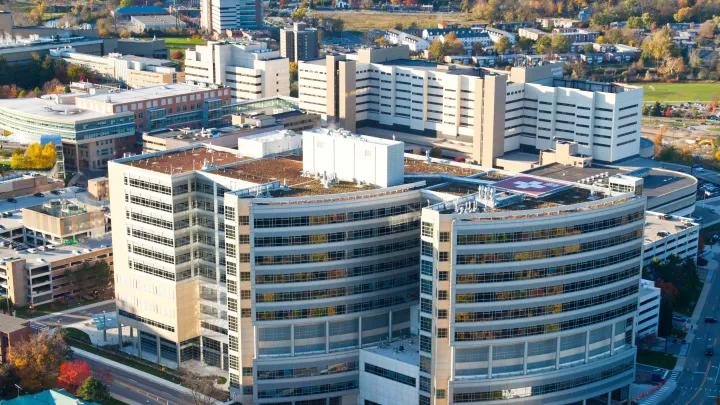
See Where Training Takes Place
Nationally-recognized physicians provide patients with a full spectrum of pregnancy and childbirth care, as well as gynecologic care before and after pregnancy. For high-risk pregnancies, U-M Medical School’s Fetal Diagnosis and Treatment Center offers comprehensive fetal services, utilizing the latest technological advances in diagnostics, minimally invasive surgeries and open surgeries.

Life in Ann Arbor
We find a new reason to love Ann Arbor nearly every day — year-round outdoor activities, cultural experiences, a growing food scene, and a welcoming, family-friendly atmosphere are just a few that come to mind. Explore all that Ann Arbor and our surrounding communities have to offer.
Featured News & Stories
Better prenatal care data could help prevent maternal complications, experts say

Who’s at risk for painful periods?

A tragedy and a trial shine a spotlight on new moms’ mental health

Medical School well-represented among Strategic Initiative Fund’s first recipients
Learning about the Life Loaf: My Experience Working in OBGYN Research