Psychiatry Research
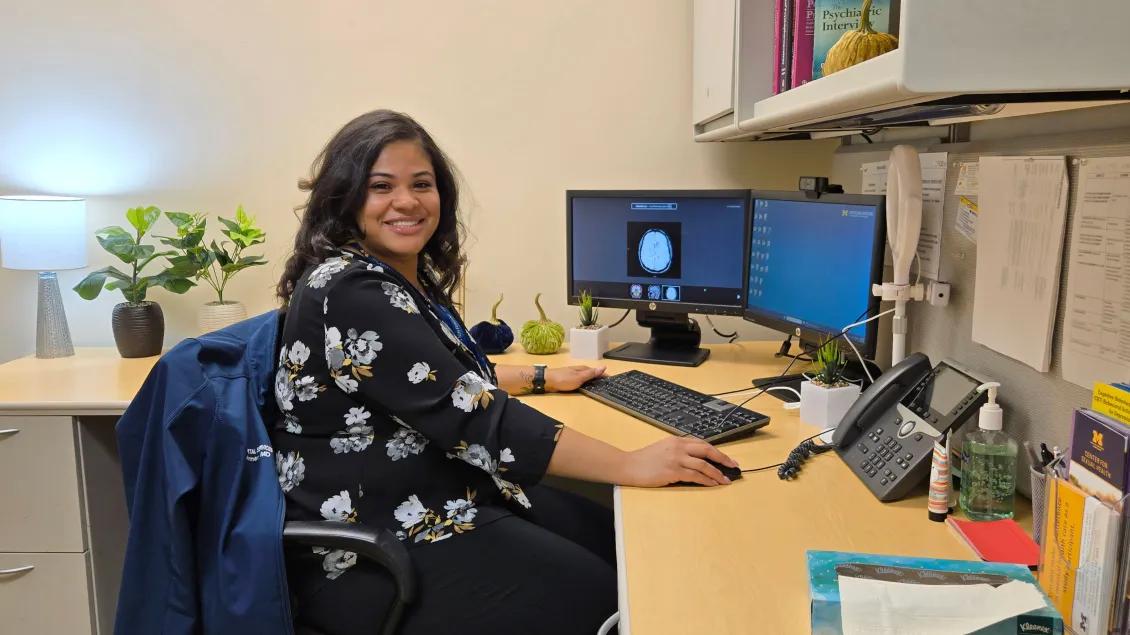
Accelerating Discovery
Our experts focus on producing impactful research that promotes positive mental health.
Leaders in Mental Health
The U-M Medical School Department of Psychiatry consistently ranks in the top 10 in NIH research funding, and we are home to a diverse faculty across a variety of disciplines and interests dedicated to improving mental health across the life-span.
Our research spans a wide array of focus areas and methodologies. We have a number of well-established, motivated programs seeking to learn more about their respective interests and explore how their findings play a part in better understanding psychiatric health as a whole. These programs are comprised of experienced faculty, and they also benefit from strong partnerships with researchers across the university. The Department of Psychiatry is uniquely situated to take advantage of the multidisciplinary focus offered by Michigan Medicine including affiliated Centers and Institutes that link researchers to schools and departments across Michigan Medicine and the University of Michigan community.
Every day, our researchers work toward novel discoveries within the domains of basic, clinical and policy research with the goal of improving mental health care for all. We offer research and training opportunities for highly-motivated individuals across many disciplines and levels.
Get Involved in Research
We need you to partner with our researchers. Research is critical to increasing our knowledge of mental illness and addiction.
Our Research Areas
Michigan Mental Health Integration Partnership (Medicaid Match)
The Michigan Mental Health Integration Partnership (MIP), a collaboration between the U-M Medical School and the Michigan Department of Health and Human Services (MDHHS), works to improve mental health across Michigan by implementing and evaluating innovative, integrated care programs. Recognizing the high prevalence and complexity of mental illness, MIP connects U-M clinical experts with community partners to expand best practices, particularly for lower-income and Medicaid-eligible populations.
Since 2005, MIP has supported multidisciplinary projects through matched funding from mostly non-federal sources, supporting initiatives such as school-based CBT training, integrated mental health in primary care, trauma treatment in health centers, perinatal programs, and adolescent behavioral health capacity-building. In FY22 alone, 17 projects received over $7 million in funding.
MIP provides guidance and administrative support for new projects, including help with proposals, budgeting, and compliance, and coordinates project submissions throughout the year. Projects must focus on implementing or evaluating behavioral health service delivery (not experimental treatments), benefit mainly Medicaid recipients, and use non-federal match funding. For more information or to submit a project, contact [email protected].
Educational Opportunities
We are committed to the development of the next generation of research scientists. The U-M Medical School is ranked among the top medical schools in the country, and we recognize the strength and contributions of our trainees. The Department of Psychiatry offers many unique research training opportunities that span across multiple levels and disciplines. Opportunities are also available with individual researchers. These can include independent studies, clinical research master-level social work internships, clinical psychology research activities for PhD candidates and multidisciplinary postdoctoral opportunities.
- Undergraduate Research:
- Graduate Research:
- Resident Research:
- Postdoctoral Fellowships:
Get Involved in Research
Research is critical to increasing our knowledge of depression, bipolar, anxiety disorders, addiction/substance abuse and other brain conditions. Medical advancement can't happen without clinical research. Without this important scientific research, the advances made to date would not have happened and future advancements would not be possible.
Our research can't move forward without the support of our volunteers. We are grateful to those who participate in research to help advance knowledge and speed the pace of innovation. Clinical research depends upon the involvement of patients and/or healthy people, and is at the heart of the Michigan approach to mental health and wellness.
There are many different types of research studies:
- Observational studies to identify illness patterns or disease and health progression
- Risk evaluation and prevention studies to identify risk factors and utilize various approaches to prevent occurrence and improve outcomes
- Clinical treatment trials to test or compare methods that may involve devices, drugs or behavioral approaches
- Quality improvement to measure and improve health services
Whether or not you actively participate in a research study, your care will be positively impacted by the questions we’re asking—and answering—behind the scenes. The Department of Psychiatry offers several research opportunities. Some studies may offer compensation and/or treatment.
Featured News & Stories

Drugs are widely used to sedate dementia patients. Her sons wanted to keep her off them. - Dr. Lauren Gerlach is quoted in this NPR article
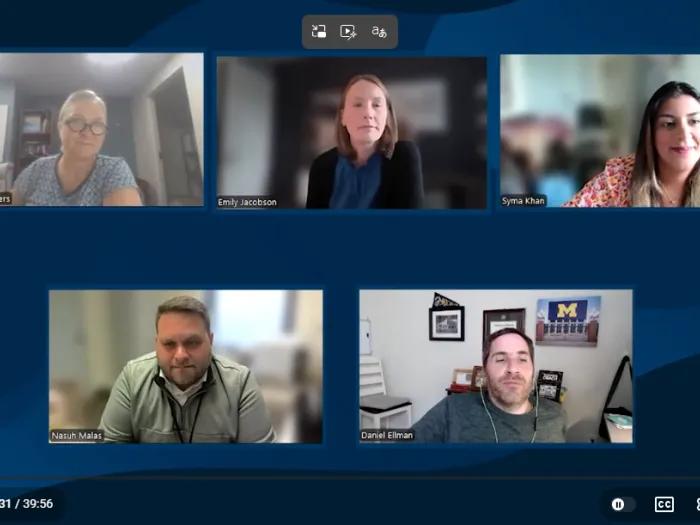
Youth Suicide Prevention Initiative at the forefront of vital mental health care

Families Weigh Risks and Rewards of Life Online - Dr. Jane Harness interviewed by WJR

Stephan Taylor, M.D., quoted in Ars Technica story, "Man told ChatGPT he was feeling delusional. ChatGPT insisted he was Jesus"

Foundation gift inspires additional gifts to strengthen youth mental health care