
Psychiatry Patient Care

Expert Care
Our department provides both inpatient and outpatient clinical services, supporting patients during critical periods of psychiatric need.
About Us
Our diverse team of healthcare professionals is devoted to supporting patients during critical periods of psychiatric need. Our primary services focus on thorough evaluation and consultation. After assessment, we offer treatment recommendations and guidance on where to access appropriate care. Often, this means referrals to providers outside U-M Health.
Our Approach to Patient Care:
- Comprehensive care
Psychiatric illnesses can affect overall health. Our model of care looks after the whole person. Because the effects of these illnesses are rarely limited to the individual who receives the diagnosis, we strive to care for both patients and their families. - Community care
Our clinicians work in partnership with community providers so that whenever possible, you can receive your care closer to home. After an initial consult and treatment recommendation, our goal is to return you to your primary care doctor or other experts in your community who can monitor and manage your treatment. - Care within a research institution
Patients can choose, if able, to participate in clinical research. In doing so, they benefit from the very latest health science, have access to treatments not otherwise routinely available, and contribute to our understanding of brain illnesses. - Multidisciplinary care
Your clinical team is supported by other professionals from U-M Health and from nearly every school and college within U-M. The result is a unified approach to diagnosing, understanding, treating, and eventually preventing the illnesses we treat. - Care within a teaching institution
It is our mission to prepare the next generation of healthcare professionals to meet the unique challenges of mental health care. We will ensure that tomorrow’s providers are skilled in the latest procedures, treat patients and families with compassion, and remain relentless in their search for better ways to conquer psychiatric illness.

Psychiatry Services
Find mental health resources and more information on our areas of care at University of Michigan Health.
Webinars & Podcasts
Tune in for practical tips from our mental health experts and lived experience individuals.
Featured News & Stories

Minding Memory
Antipsychotic Use in Nursing Homes: Balancing Medication Safety, Policy, and Dementia Care
In this episode, Lauren Gerlach and Matt Davis speak with Theresa Shireman, PhD, Director of the Center for Gerontology and Healthcare Research and a Professor of Health Services, Policy and Practice and Epidemiology at the Brown University School of Public Health. Dr. Shireman’s research focuses on pharmaceutical policy, pharmacoepidemiology, health services research, and medication use among vulnerable populations.
Dr. Shireman discusses her recent study, "Impact of Federal Antipsychotic Use Policy in Nursing Homes on New Diagnoses for Approved Indications in Dementia Residents," published in the Journal of the American Geriatrics Society. The study examines whether federal policies designed to reduce antipsychotic use in nursing homes were associated with increases in new diagnoses of conditions, such as schizophrenia, that exclude residents from publicly report antipsychotic quality measures. Using an interrupted time-series design, the researchers examined changes following the 2012 National Partnership to Improve Dementia Care and the 2015 addition of antipsychotic use to the Nursing home Five-Star Quality Rating System. They found that neither policy was associated with an increase in new exclusionary diagnossees, challenging concerns that nursing homes were increasingly assigning these diagnoses to circumvent restrictions on antipsychotic use.
The conversation also explores the benefits and risks of antipsychotic medications for people living with dementia, including the potential for serious adverse effects such as sedation, falls, stroke, and increased mortality.
Dr. Shireman discusses how public reporting and financial incentives can influence prescribing practices,the limitations of using a single quality measure to evaluate nursing home care, and the importance of balancing medication safety and residents’ individual needs. The discussion highlights the need for shared decision-making among clinicians, nursing home staff, residents, and families, as well as greater investment in staffing, resources, and nonpharmacological approaches to improve quality of life for people living with dementia. The transcript for this episode can be found here.

Department News
Fall 2026 Addiction Center Newsletter
Fall 2026 Addiction Center Newsletter

Health Lab
Many older adults make Medicare decisions quickly and most don’t change plans, poll finds
Sixty percent of older adults spend less than an hour choosing their Medicare coverage during Open Enrollment, a new poll finds.

Health Lab
What’s the latest on 7-OH and kratom availability and addiction care?
The United States Drug Enforcement Agency has announced it will place non-botanical products containing 7-OH on Schedule I, joining three other synthetic opioids, effectively removing them the market, leaving natural leaf kratom available amid a shortage of addiction treatment providers.
Health Lab
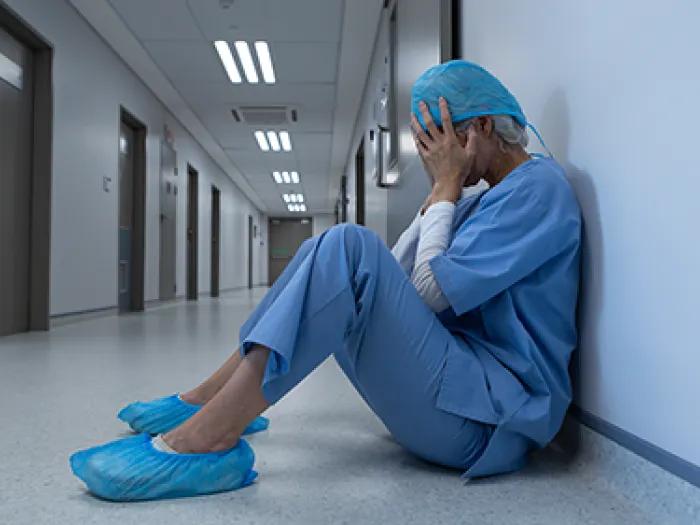
Depression in OBGYN residents needs more attention, study suggests
New onset depression in obstetrics and gynecology residents in their intern year is common and often untreated, and linked to depression history, higher work hours and less sleep.

Department News
Youth Suicide Prevention Initiative Fall 2026 Newsletter
Youth Suicide Prevention Initiative Fall 2026 Newsletter
