
More articles about: Basic Science and Laboratory Research

Health Lab
Interplay between key proteins could serve as a target for cancer treatment
University of Michigan researchers have identified that the balance between two proteins—STAT3 and STAT5—is important for making tumors vulnerable to immune checkpoint therapy, and targeting STAT3 degradation is a potential novel cancer immunotherapy strategy.

Health Lab
Bile duct injury rates higher from robotic assisted cholecystectomy
Robotic-assisted cholecystectomies produce a higher risk of bile duct injuries than laparoscopic cholecystectomies for patients at all types of risks.

Health Lab
Cerebral palsy medications given to adults may not match needs
Prescribing medications that treat the most obvious parts of adult cerebral palsy pain and symptoms without examining for the underlying cause is a common experience for adults with cerebral palsy. This means that proper treatment is being overlooked and these medications can cause further complications later in life.

Health Lab
Studying interventions to help type 2 diabetes patients avoid hospitalizations
Research from University of Michigan will be looking at the way social determinants of health can have an impact on the health of people living with type 2 diabetes.

Health Lab
Planarian worms can regenerate into a more youthful version of themselves
Study finds planarian worms can regenerate into a more youthful version of themselves.

Health Lab
Battle of the sex chromosomes
A study from University of Michigan researchers has uncovered the mechanism behind the arms race for mouse X and Y bearing sperm to fertilize an egg.

Health Lab
Decoding mechanisms of photosensitivity in autoimmune diseases
Photosensitivity is a common occurrence in patients with autoimmune disorders, especially lupus and dermatomyositis. The only treatment for this currently is diligent sunscreen use, but research is leading to new insights in how photosensitivity is created on a cellular level.

Health Lab
After daughter’s brain surgery, mom sells art to raise money for cancer research
Nearly four and half years after her daughter’s lifesaving surgery to remove a glioma, a Michigan artist continues to raise money towards research for the treatment of cancerous brain tumors by selling her work.

Health Lab
Medicare reimbursement codes for hernia procedures have small impact on patients
A change to Medicare reimbursement coding for hernia procedures states that hernias must be three centimeters or larger for full reimbursement. Researchers at University of Michigan examine the impact this has had on reported hernia sizes.

Health Lab
Are robotic hernia repairs still in the “learning curve” phase?
As robotic hernia repairs grow in popularity, patients may be at a higher risk for hernia recurrence.

Health Lab
Sleep health may impact mobility for women with chronic conditions
Women diagnosed with chronic conditions, such as osteoarthritis, multiple sclerosis and diabetes, experiencing poor sleep are at a higher risk of needing mobility aids sooner in life. Addressing sleep issues in these women may be crucial to better mobility.

News Release
Eight U-M teams picked for virtual tournament of science
Teams studying liver cancer, brain tumors, obesity medicine, CMV, sleep and memory, cancer immunotherapy aortic aneurysms and bipolar disorder are competing in STAT Madness

Health Lab
Scientists track pneumonia-causing bacteria as they infect the blood stream
Using an innovative barcoding-style system, a team labels bacteria with short snippets of DNA in mouse models and uses computer analysis to track the movement of K. pneumoniae throughout the body.

Philanthropy News
Fellowship in pharmacology to continue the legacy of outstanding scientist and educator
Emily Jutkiewicz, Ph.D., pioneering pharmacologist and beloved educator, to be honored through graduate fellowship supporting groundbreaking research.
Health Lab
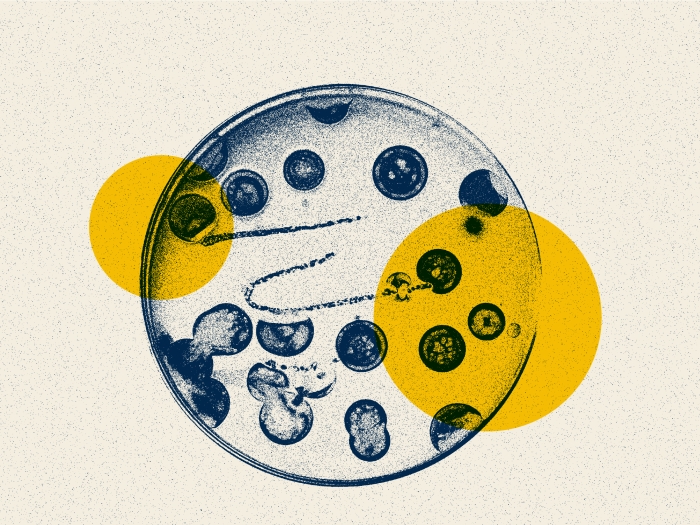
More clues reveal how gut bacteria works
Research from the University of Michigan uncovers a unique way the bacteria Bacteroides, which make up nearly half of the gut microbiome, synthesize the proteins needed to degrade carbohydrates.
