Bridging the Gap: Integrating Electronic Health Record (EHR) Training into Medical Education
Time Spent on the EHR? More Than Clinical Visits. Here’s How We Can Prepare Better.
The American Medical Association published an article back in January 2024 highlighting a study that revealed just how much time providers spend on electronic health records (EHRs) — a staggering 36 minutes per patient visit. The findings drew attention to the significant role EHRs now play in clinical practice, as well as their connection to higher rates of provider burnout.
For medical providers, the reliance on EHRs is obvious. But for medical students like me, it wasn’t — at least, not until I reached my clinical year.
A Reality Check in My Clinical Year
On a walk home from clinic, I found myself deep in conversation with fellow students, reflecting on the massive shift we’d experienced during our clinical rotations. So much of clinical care — patient notes, lab orders, billing, chart reviews — happens entirely within the EHR. It was striking to realize how little exposure we had to it during our preclinical (M1) year.
M1 year is typically packed with lectures, small group discussions and labs covering the “science of medicine.” We practice history-taking and physical exam skills through the Doctoring Course, a module designed to mimic real patient encounters. But when it came to the tool that dominates medicine’s day-to-day practice — the EHR — there was a glaring gap in our training.
If most clinical practice occurs within the EHR, shouldn’t we be learning how to navigate it earlier? That question stuck with me.
Bringing the Idea to Life
This shortcoming turned into a spark. I started talking to medical school faculty and peers about the possibility of integrating EHR training into the M1 curriculum. The more conversations I had, the clearer the need became — but so did the challenges.
Where would I even begin? How could I design an effective intervention? And how could I rally support and resources to make this happen? I was a second-year medical student — not exactly someone with institutional clout or experience in curriculum development.
Then came a stroke of luck. One day, while I waited for a hospital computer to load, I caught a flash of an advertisement for RISE.
RISE — short for Research. Innovation. Scholarship. Education. — is an institutional resource that supports new ideas in teaching and learning that lead to changes in practice and health outcomes. Within RISE is the Innovator Development Program, a year-long initiative designed to support individuals (students, faculty, staff and clinicians) who want to bring creativity, critical thinking and innovation to health science education. For someone like me, it was the perfect opportunity to have support to develop my idea into an actual pilot.
Becoming a RISE Innovator
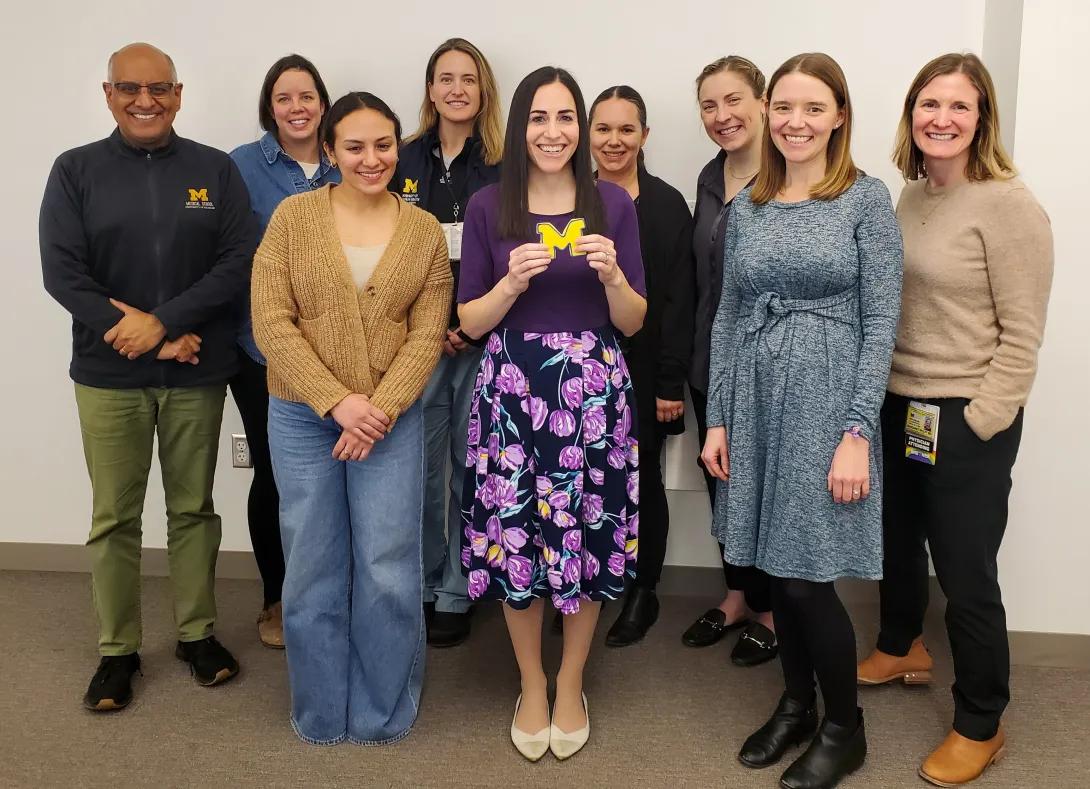
This past year, I had the privilege of being a RISE Innovator. Alongside a diverse group of fellow participants — physicians, medical educators and students — I attended monthly experiential workshops, received one-on-one coaching from RISE core leadership and engaged in hands-on skill development. The program is equal parts collaborative and introspective: we brainstorm, experiment, refine ideas and build leadership skills in ways that traditional medical education rarely emphasizes.
Through RISE, I had space to refine my idea and develop a pilot curriculum that integrates EHR training into M1 coursework. Specifically, the curriculum teaches students how to use the EHR in tandem with learning how to approach a patient presenting to clinic — a skill that will help bridge the preclinical and clinical divide.
The feedback I received from faculty and RISE leadership was invaluable. I can’t stress enough how important it was to workshop my ideas with people who’ve spent years thinking about health science education innovation. Their perspectives helped me anticipate challenges I hadn’t considered and refine my approach to ensure the pilot curriculum is not just practical but also impactful.
The Leadership Lessons RISE Taught Me
Being part of RISE has taught me so much more than how to build a curriculum. It has taught me what it means to be a team leader.
Through formal workshops, feedback sessions and peer collaboration, I’ve learned to embrace creativity, take intelligent risks and work collaboratively with members in the health education space to bring ideas to life. These skills are applicable far beyond medical education — they are foundational to any leadership role I’ll take on in the future.
For any medical student, educator or clinician interested in creating something new — whether in health care systems, education or patient care — programs like RISE are a gift. They provide the tools, mentorship and community needed to innovate with intention and impact.
Unlocking Creativity: Facilitating the Next Step Forward
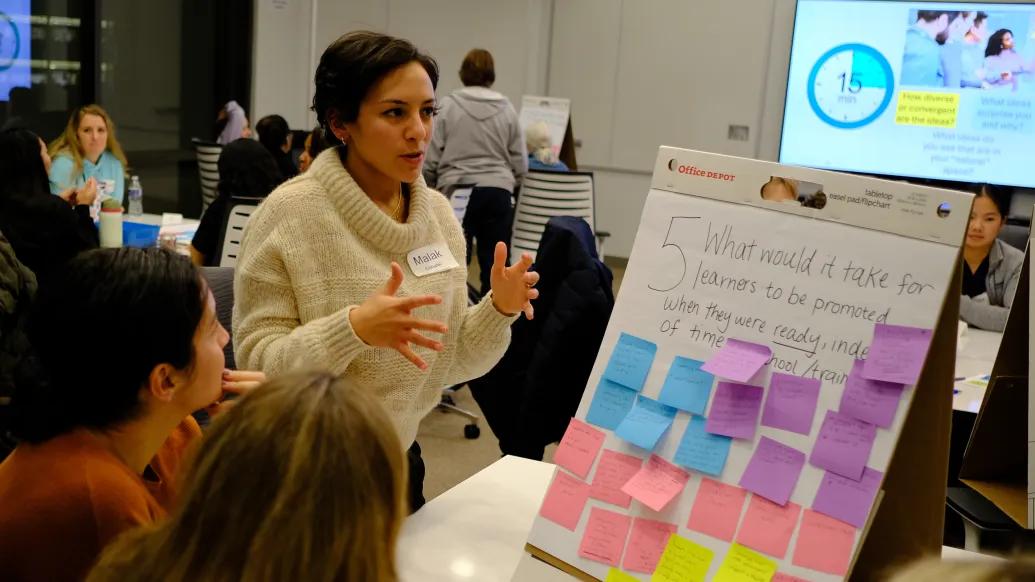
As my RISE year unfolded, I also had the opportunity to help spread the program’s lessons to others. On December 2, 2024, I co-facilitated the Unlocking Creativity Workshop, an event co-hosted by RISE and the Academy of Medical Educators.
The workshop, led by Dr. Raj Mangrulkar — one of RISE’s visionary founders — and Dr. Emily Abdoler — co-Director of the Academy of Medical Educators — focused on innovative problem solving in health care and health education. Dr. Mangrulkar’s presentation on the four types of creative thinking from the Harvard Business Review — splitting, figure-ground reversal, distal thinking and integration — laid the foundation for the evening’s activities.
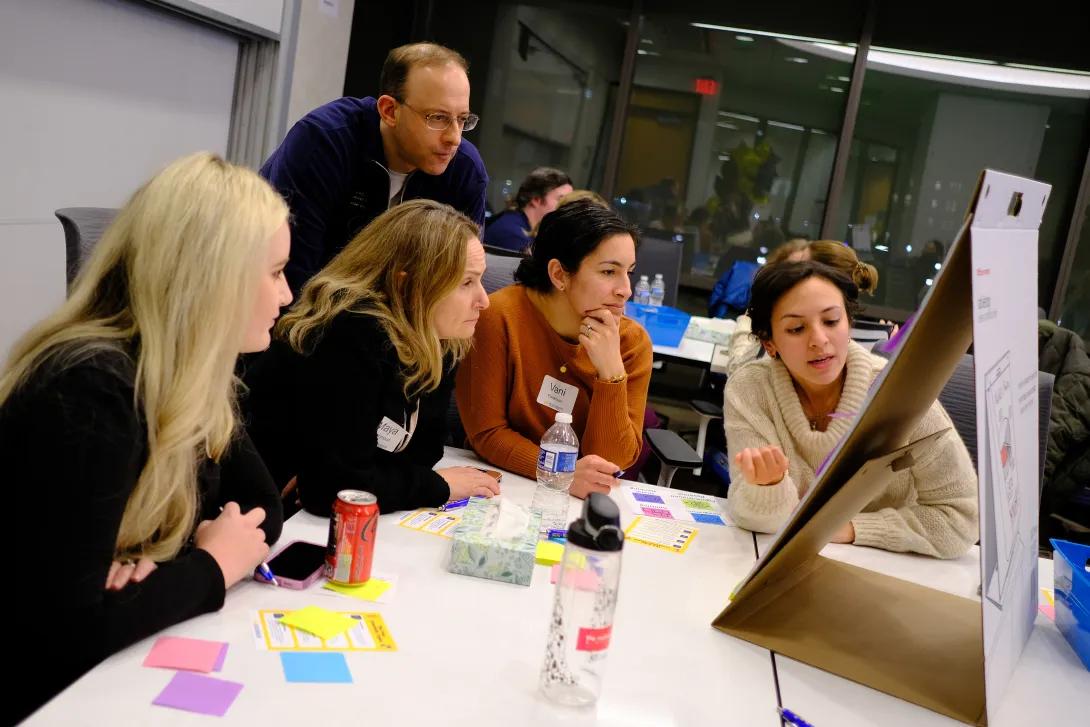
Working alongside Dr. Rachel Gottlieb-Smith, Dr. Meg Wolff and Dr. Paula Thompson, I facilitated small group brainstorming sessions where participants explored various forms of creative thinking to envision innovations in medical education. The energy in the room was contagious. People from different health professions came together, shared ideas and walked away with new ways to approach the overarching problems in health education.
The workshop marked the beginning of a new series of RISE and Academy of Medical Educators events aimed at promoting creativity and collaboration in health science education innovation. For me, it was another example of how transformative RISE can be — not just for participants but for the broader medical education community.
Looking Ahead
I, along with a newly formed team, are near the final stages of preparing a pilot EHR curriculum. It’s surreal to look back and see how far this idea has come. What started as a previous gap — "Why didn’t we learn this earlier?" — has turned into a concrete curriculum that could better prepare future medical students for clinical practice.
This experience has also raised broader questions for me:
How can we better prepare students to adapt to the rapidly changing tools and systems that define modern clinical practice?
What other gaps exist in our training that we haven’t yet identified?
If you’re a medical student, educator or anyone passionate about transforming how we train the next generation of health care providers, stay connected with RISE and the groundbreaking innovations in health science education. By embracing opportunities to innovate, we not only enhance medical training but also elevate the quality of patient care.
Paper cited: “System-Level Factors and Time Spent on Electronic Health Records by Primary Care Physicians,” JAMA Netw Open. DOI:10.1001/jamanetworkopen.2023.44713

Malak Elshafei, currently between her third and fourth years at the University of Michigan Medical School, is on a leave of absence to pursue a Master of Public Policy. Passionate about driving systems-level change, she focuses on improving medical education and advancing impactful health policies. Malak is also a recent graduate of RISE’s fourth cohort.
Media Contact
MD Admissions
University of Michigan Medical School
Featured News & Stories
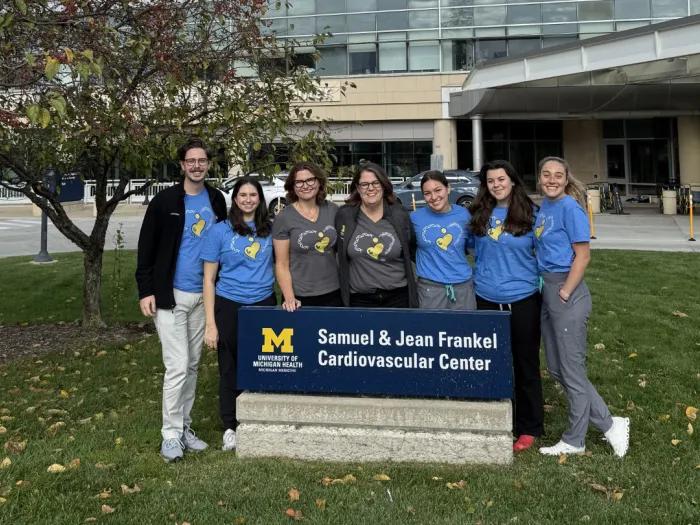
Learning about the Life Loaf: My Experience Working in OBGYN Research
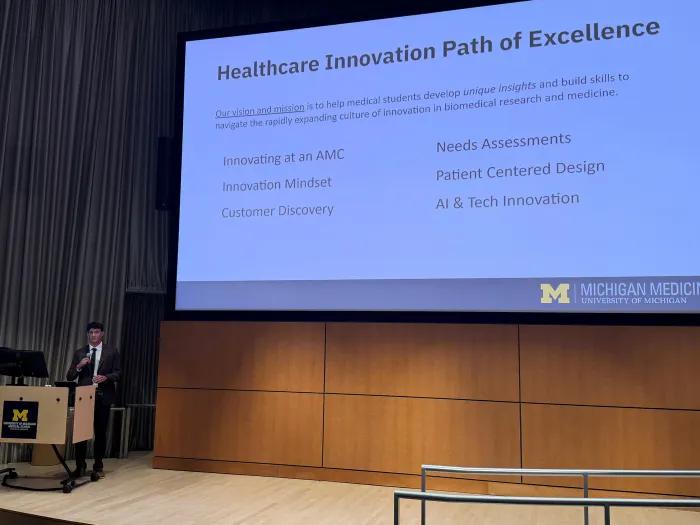
Medical students develop novel technological solutions for unmet patient needs
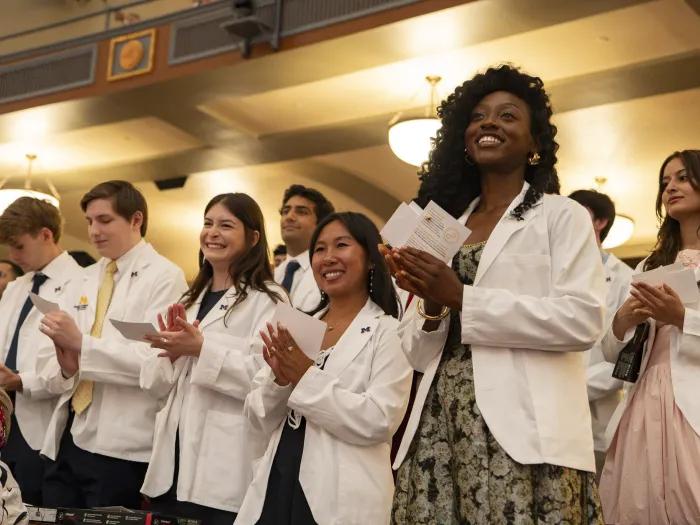
White Coat Ceremony marks start of medical school journey for incoming M1s
Get ready to welcome new medical students at White Coat Ceremony on July 26
Human connection takes center stage at Medical School Commencement