Faculty Spotlight: Jacqueline Madison Advances Care for Patients with Autoimmune Disease
For Jacqueline Madison, MD, a career in rheumatology began with an early lesson in the power of long-term, relationship-centered care.
During the first week of clinical rotations in medical school, Dr. Madison was assigned to work with a Med-Peds rheumatologist who would become an important mentor. The experience offered an early glimpse into what would ultimately become a defining focus of Dr. Madison’s career: helping patients navigate complex autoimmune diseases while building relationships with them throughout their lifetime.
“I was inspired by her ability to improve the quality of life of her patients, solve diagnostic mysteries, and continue care for her patients throughout their lives,” Dr. Madison recalls.
That experience, combined with an interest in the challenges of systemic autoimmune disease, led Dr. Madison to pursue Med-Peds residency and ultimately a career in rheumatology. Today, that dual perspective informs both her clinical practice and her growing research program focused on antiphospholipid syndrome (APS) and lupus.
Advancing Care for Patients with APS and Lupus
Dr. Madison’s research centers on clinical research and clinical trials for APS and lupus, with a particular focus on translating scientific discoveries into meaningful advances for patients.
During fellowship, Dr. Madison began working with the University of Michigan Antiphospholipid Syndrome Program, directed by Dr. Jason Knight and Dr. Ray Zuo. While Knight and Zuo focus heavily on translational science, Dr. Madison has developed expertise on the clinical side of that equation—helping bring discoveries from the laboratory to the bedside.
One area of particular expertise is pediatric-onset APS. Dr. Madison is among a relatively small number of researchers in the country studying this population, an area that has become an important niche within the broader APS research community.
Her work also extends to adult patients. At Michigan, Dr. Madison is helping establish the institution as one of a select group of APS centers able to offer clinical trials and investigate potential new treatments.
For patients with APS, the long-term goal is especially meaningful: moving beyond anticoagulation to treatments that address the underlying autoimmune processes driving the disease.
“Many patients with APS also have lupus,” Dr. Madison explains. “So, it was a natural extension to additionally work with the Lupus Program under Dr. Michelle Kahlenberg and now direct its clinical trials program.”
Through this work, the goal is to bring cutting-edge therapies to patients with lupus and APS while helping advance treatment options that could ultimately benefit much larger patient populations.
Exploring New Approaches to Autoimmune Disease
Among the research projects generating excitement is Dr. Madison’s first NIH-funded grant, which will evaluate the effects of colchicine in patients with APS.
Colchicine is an inexpensive, widely available medication. If the study demonstrates that it can reduce markers of inflammation and neutrophil activation in patients with APS, it could provide an important new addition to a relatively limited set of treatment options.
The project was developed with support from the Michigan Institute for Clinical & Health Research (MICHR) Clinical Trials Academy, including Dr. Anna Lok and Dr. Peter Higgins.
“I’m so excited to move forward with conducting the trial,” Dr. Madison says.
Another area of growing interest is cellular therapy. Working with industry partners and University of Michigan experts in cellular therapies, including Dr. Monalisa Ghosh, Dr. Madison is exploring whether emerging cellular therapy approaches could fundamentally change the treatment of systemic autoimmune disease.
Early studies of CAR-T cell therapy in lupus have produced striking results, but larger studies and investigations of different cellular therapy products are needed to better understand their safety and effectiveness.
“I am cautiously optimistic that for the right patient, this treatment modality could change lives,” Dr. Madison says.
The clinical trials program currently has an open study for patients with lupus nephritis, with additional cellular therapy opportunities for lupus potentially on the horizon.
A Patient-Centered Approach to Discovery
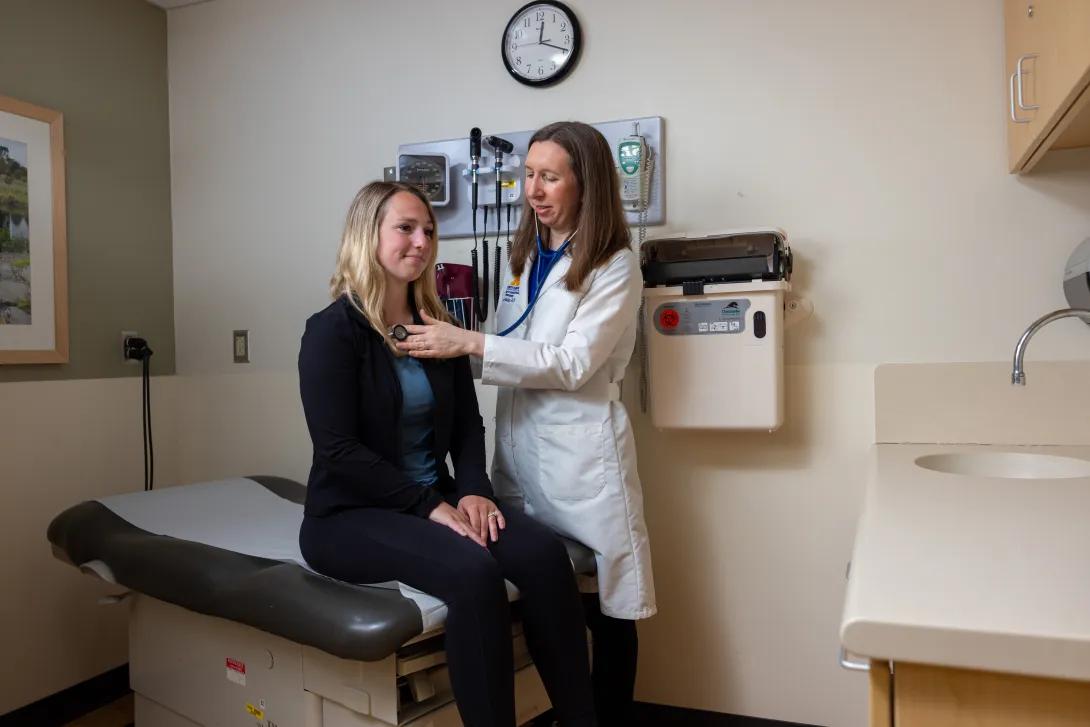
For Dr. Madison, research and clinical care are closely connected. The most meaningful measure of progress is ultimately what happens to patients.
A recent patient encounter offered a powerful reminder of why that connection matters.
The patient had initially presented with blood clots—including deep vein thrombosis and pulmonary embolism—and dangerously low platelet counts despite treatment for both conditions. Drawing on an approach developed through experience in the University of Michigan APS Program, Dr. Madison confirmed the diagnosis of APS and adjusted the patient’s medication regimen.
At subsequent visits, the patient’s platelet counts normalized, markers of autoimmune disease decreased, and she experienced no additional blood clots.
Most importantly, she was able to return to a full life without restrictions.
Today, that patient is also an enthusiastic participant in APS research studies, eager to contribute to research that may help others living with the same diagnosis.
For Dr. Madison, the experience is a powerful reminder of why clinical care and research go hand in hand. The patient’s recovery shows the impact that specialized expertise can have on an individual’s life. Now, by participating in APS research studies, she is helping Dr. Madison and her colleagues learn more about the disease and work toward better treatment for future patients.
Caring Across the Lifespan
The Med-Peds perspective remains central to Dr. Madison’s work.
One of the most rewarding aspects of caring for pediatric rheumatology patients is watching them grow into adulthood and eventually transition to adult rheumatology care.
“These patients go through major life stages during young adulthood,” Dr. Madison says. “Helping support their health and quality of life can be so much fun.”
That continuity can mean being present for some of life’s biggest moments, from graduations and weddings to pregnancy, which can present unique challenges for people living with systemic autoimmune disease.
It is a model of care that mirrors what first drew Dr. Madison to rheumatology: not simply diagnosing and treating disease but developing relationships that allow physicians to support patients through the many stages of their lives.
Building The Next Generation of Med-Peds Rheumatologists
That same philosophy extends to mentorship and academic medicine.
Dr. Madison is enthusiastic about encouraging other Med-Peds physicians who are considering careers in rheumatology, particularly those who hope to combine clinical care with research.
“Balancing these interests across the Departments of Internal Medicine and Pediatrics can be challenging”, Dr. Madison notes, making strong institutional support especially important.
Dr. Madison credits Rheumatology Division Chief Dr. John Varga and Pediatric Rheumatology Division Chief Dr. Erin Janssen for supporting clinicians who want to make research part of their careers while maintaining a practice that spans both disciplines.
For Dr. Madison, that support creates an environment where clinicians can pursue questions that emerge directly from patient care—and then bring the answers back to the patients and communities they serve.
Life Beyond Medicine
Outside the clinic and laboratory, Dr. Madison enjoys spending time with her spouse and children, traveling, and being outdoors as much as possible.
Michigan’s Great Lakes are a particular favorite. While Lake Huron holds a special place, she enjoys visiting all the lakes.
A former competitive college rugby player, Dr. Madison has traded competitive athletics for somewhat more relaxed pursuits: stroller jogging, bike rides and, occasionally, what she jokingly describes as a “terrible game of tennis.”
That balance—family, outdoor adventure, clinical care, mentorship and research—reflects the same values that have shaped Dr. Madison’s career: curiosity, connection and a commitment to helping people live fuller lives.
As research into APS, lupus and emerging cellular therapies continues to evolve, Dr. Madison is helping advance that work at the University of Michigan—while keeping the individual patient at the center of every discovery.
In This Story
Jacqueline Madison, MD
Clinical Associate Professor
Featured News & Stories
New Certificate in Global Health Program welcomes first cohort of residents, fellows
What Should We Actually Do With Daylight Saving Time?

Into the Current: Dr. Nate Hunt Brings Specialized Water Rescue Expertise Back to Michigan Medicine
Karsten Bartels, MD, earns Gladys Sessler Outcomes Research Consortium Award
Learning Together: Making Space for Growth at Work