Neuroscience Graduate Program

Make Your Mark, Leave a Legacy

As the longest-standing Neuroscience PhD program in the country, we have a history of training leaders in the field. Join our multidisciplinary program and begin to forge your future of excellence.
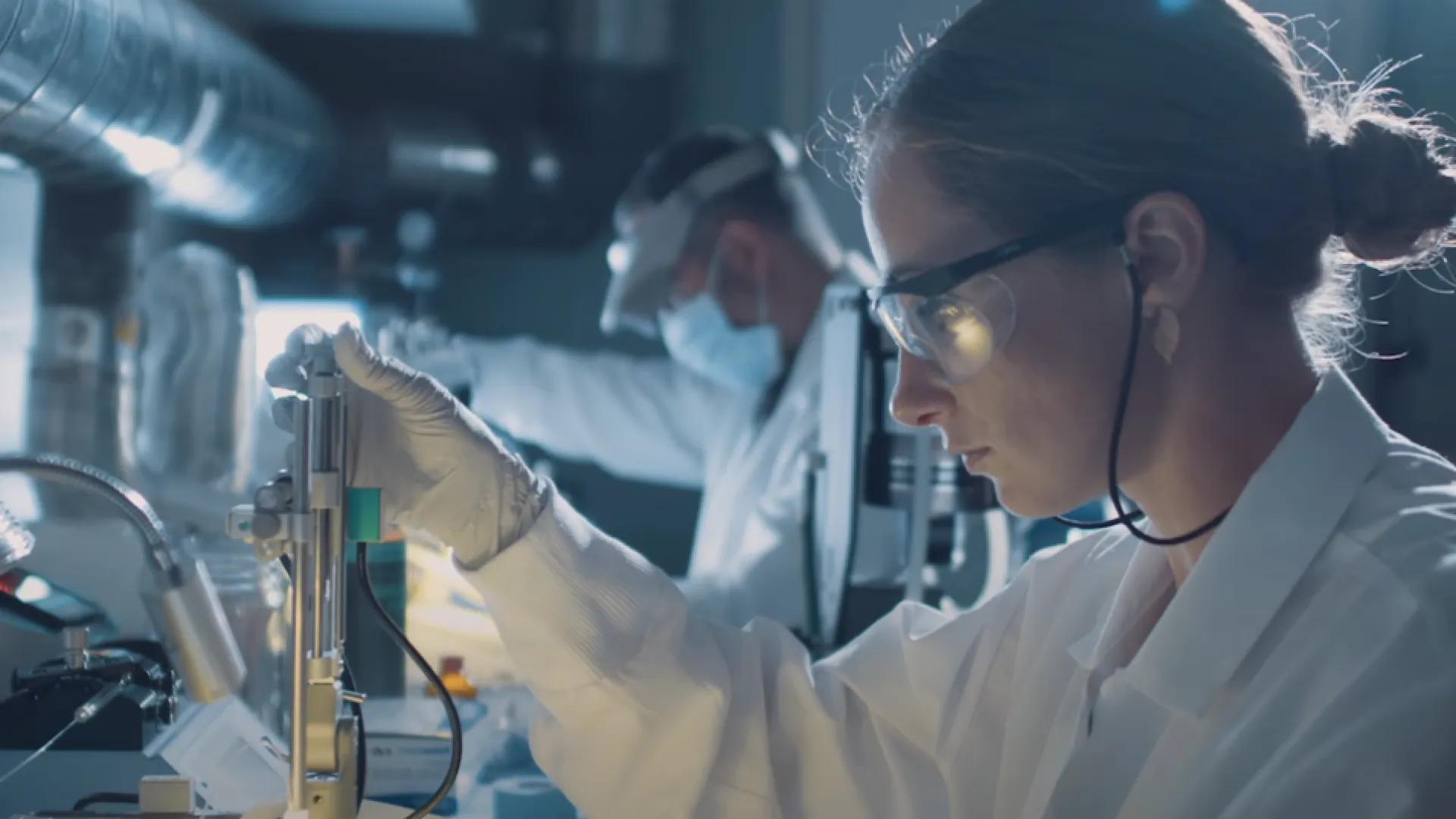
An NGP researcher works with equipment

Our Unique Approach

The country’s first of its kind, U-M Medical School’s interdisciplinary Neuroscience Graduate Program was launched in 1971 and continues to lead scientific advancement today.

Our difference is rooted in our interdisciplinary and interdepartmental approach, with more than 150 affiliated faculty members distributed throughout our institution. We are a collegial and interactive group that performs research across the breadth of the neuroscience field. 

Our faculty includes members of the National Academy of Sciences, National Academy of Medicine, past presidents of the Society for Neuroscience, fellows of the AAAS and Highly Cited Researchers in their fields.

Contact Us

Neuroscience Graduate Program
4137 Undergraduate Science Building (USB)
204 Washtenaw Ave. 
Ann Arbor, Michigan 48109-2215
Phone: 734-763-9638

About Us

Learn more about the leading Neuroscience PhD program and its history.

Education

Diverse students and world-class faculty make us an international leader in Neuroscience research and education.

Faculty

Learn more about the faculty in and behind our incredible program.

Outreach & Community Groups

Connect with fellow students and the broader community for a purpose.

Students

Access our directory of students.

Summer Research Opportunities

Join us for two unique ten-week summer research opportunities.

A glimpse into NGP

University of Michigan Neuroscience Graduate Program

Watch and learn what it’s like to immerse yourself in the Neuroscience Graduate Program at the University of Michigan Medical School.
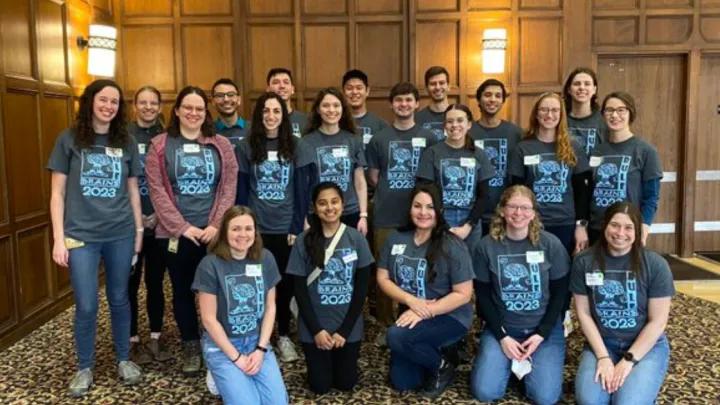
Outreach program group photo wearing matching shirts

Giving to NGP

Your partnership will support our world-class, neuroscience graduate student training. Explore opportunities to support our important work and further our goals.
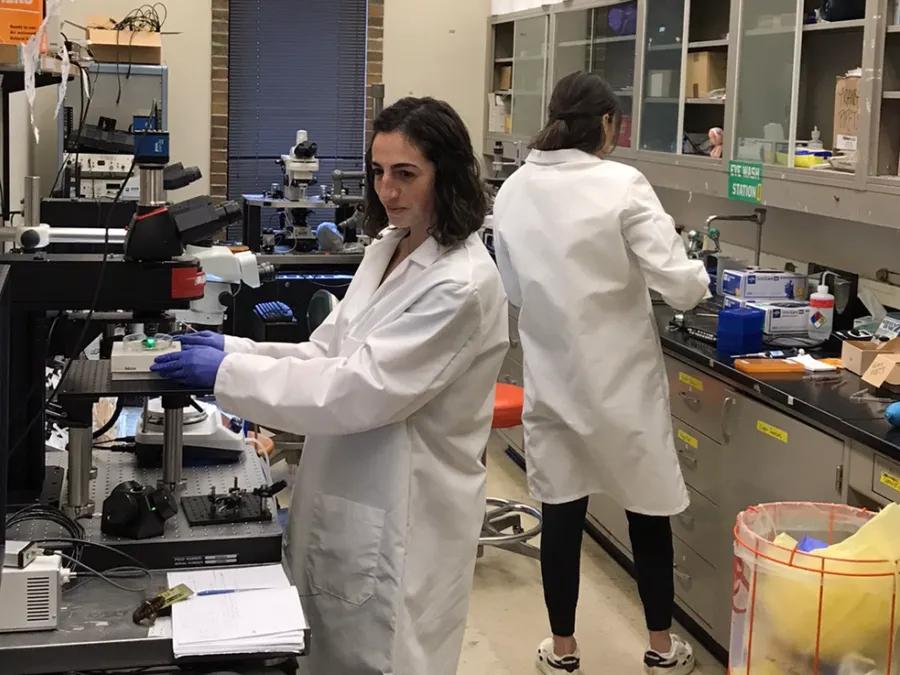
  • Explore ways to give to NGP
  • NGP Students working in lab

    Train with Leaders in Neuroscience Education

    The Neuroscience Graduate Program offers a rigorous, interdisciplinary curriculum that prepares students for impactful research careers.

    Explore our Graduate Program

    As an alumna of the Neuroscience Graduate Program, I am honored to lead the program in the years ahead. I look forward to building on its strong tradition of excellence by fostering outstanding training, a supportive community, and continued success for our students throughout graduate school and beyond. Welcome, and Go Blue!

    Neuroscience Graduate Program Director
    Dr. Shelly Flagel

    Featured News & Stories

    See all news
    Health Lab Podcast in brackets with a background with a dark blue translucent layers over cells
    Health Lab Podcast

    Major Changes to Medicaid

    With eligibility rules for people with lower incomes changing in every state, it’s important to stay up to date, seek trustworthy sources and not fall for misinformation. Read the full article here. The article this episode showcases was originally published Sept. 30 and updated Nov. 6 of 2026. The article will be kept up to date as more details become available, and the link to the full article will be included in the episode description.
    Minding memory above a microphone on a blue background
    Minding Memory

    Giving Voice to Lived Experience in Dementia Research
    In this episode, Lauren & Matt talk to Brenda Roberts and Steven Barbieri from the National Council of Dementia Minds. The National Council of Dementia Minds is the first national not-for-profit organization founded and governed by people living with dementia. Its work focuses on education, advocacy, peer support, and changing public perception of what it means to live with dementia. Brenda and Steven talk about the National Council of Dementia Minds, the importance of peer support and education for people living with dementia. They focus on how better understanding the lived experiences of people living with dementia can help shape research, policy, and advocacy.
    2026 Faculty and Staff Awards
    Medical School News

    Nine from Medical School honored as part of annual Faculty and Staff Awards
    Michigan Medicine recently announced its 2026 Faculty and Staff Awards. This year’s recipients include nine winners with Medical School appointments, including seven faculty and two staff members. This year’s Faculty and Staff Awards ceremony will be Dec. 3 at the Jack Roth Stadium Club in Michigan Stadium
    UMich Med Mosaic on blue background with colorful geometric shapes
    UMich Med Mosaic

    Beyond the White Coat: Disability, Neurodiversity and Advocacy in Medical School
    In this episode of UMich Med Mosaic, host Mackenzie Kay sits down with medical students Jill Maudlin, Sarah Renberg and Bella Johnson to discuss their experiences as disabled and neurodivergent trainees at the University of Michigan Medical School. They reflect on the personal journeys that led them to medicine, the challenges and strengths that accompany living with disabilities and chronic health conditions and the importance of representation within the medical profession. The conversation explores how disability shapes their approaches to patient care, advocacy and teamwork, as well as the role of the Medical Students for Disability Health Advocacy (MSDHA) organization in creating community and advancing accessibility initiatives. They also discuss Michigan’s accommodations in medical education, efforts to improve disability-related curriculum content and the importance of building a culture where disabled and neurodivergent students can thrive.
    Minding Memory with a microphone and a shadow of a microphone on a blue background
    Minding Memory

    Antipsychotic Use in Nursing Homes: Balancing Medication Safety, Policy, and Dementia Care
    In this episode, Lauren Gerlach and Matt Davis speak with Theresa Shireman, PhD, Director of the Center for Gerontology and Healthcare Research and a Professor of Health Services, Policy and Practice and Epidemiology at the Brown University School of Public Health. Dr. Shireman’s research focuses on pharmaceutical policy, pharmacoepidemiology, health services research, and medication use among vulnerable populations. Dr. Shireman discusses her recent study, "Impact of Federal Antipsychotic Use Policy in Nursing Homes on New Diagnoses for Approved Indications in Dementia Residents," published in the Journal of the American Geriatrics Society. The study examines whether federal policies designed to reduce antipsychotic use in nursing homes were associated with increases in new diagnoses of conditions, such as schizophrenia, that exclude residents from publicly report antipsychotic quality measures. Using an interrupted time-series design, the researchers examined changes following the 2012 National Partnership to Improve Dementia Care and the 2015 addition of antipsychotic use to the Nursing home Five-Star Quality Rating System. They found that neither policy was associated with an increase in new exclusionary diagnossees, challenging concerns that nursing homes were increasingly assigning these diagnoses to circumvent restrictions on antipsychotic use. The conversation also explores the benefits and risks of antipsychotic medications for people living with dementia, including the potential for serious adverse effects such as sedation, falls, stroke, and increased mortality. Dr. Shireman discusses how public reporting and financial incentives can influence prescribing practices,the limitations of using a single quality measure to evaluate nursing home care, and the importance of balancing medication safety and residents’ individual needs. The discussion highlights the need for shared decision-making among clinicians, nursing home staff, residents, and families, as well as greater investment in staffing, resources, and nonpharmacological approaches to improve quality of life for people living with dementia. The transcript for this episode can be found here.
    Well-Being at Michigan Medicine with Dr. Elizabeth Harry
    Well-Being at Michigan Medicine

    Learning Together: Making Space for Growth at Work

    What if well-being starts with how we learn together? On this episode of Well-Being at Michigan Medicine, Elizabeth Harry, M.D., is joined by Rajesh Mangrulkar, M.D., FNAP, Executive Director of U-M’s Center for Interprofessional Practice and Education (IPE), Executive Director of Michigan Medicine RISE (Research. Innovation. Scholarship. Education), and primary care physician of internal medicine whose work focuses on organizational leadership and innovation, and Johnny McGraw, M.A., Marketing & Communications Specialist for both RISE and IPE, about building teams through human connection, psychological safety and learning. They discuss a meeting practice, why leaders shape culture and how investments in collaboration can help health care teams work without asking people to carry everything alone.