
More articles about: Cancer (Oncology)
Health Lab
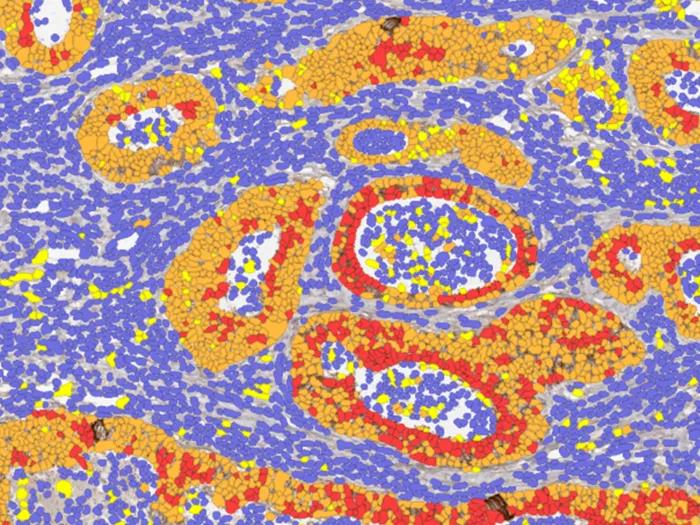
Study explains how colorectal cancer cells maintain high iron levels
How colorectal cancer cells maintain high iron levels, according to Michigan Medicine research.

Health Lab
Receiving personalized treatment for a rare neuroendocrine tumor
Danielle Schuldt was diagnosed with a rare endocrine tumor and underwent surgery as part of her treatment. She now undergoes regular surveillance to monitor for cancer recurrence.

Health Lab
Helping an employee-turned-patient overcome a brain tumor
A patient with a brain tumor talks about their experience being an employee receiving care at Michigan Medicine.

Health Lab
Stopping Ewing sarcoma relapses where they start
Research on stopping Ewing sarcoma relapses through Michigan Medicine.
Health Lab
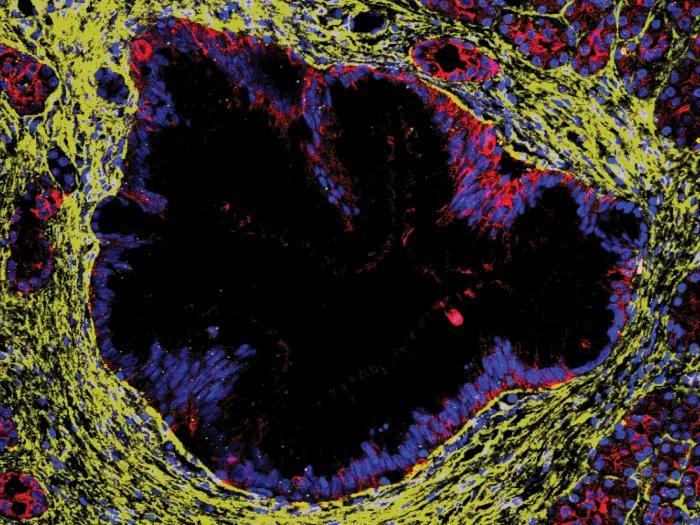
Study sheds light on how early pancreas lesions become cancerous
Why many precursor lesions never develop into pancreatic cancer, according to findings from Michigan Medicine.

Health Lab
Teenage patient receives treatment for papillary thyroid cancer
Teen hockey player Gavin Hewitt was diagnosed with papillary thyroid cancer and underwent surgery and radioactive iodine treatment.

Health Lab
Phase 1 trial of alrizomadlin shows promise in targeting metastatic salivary gland cancers
University of Michigan researchers, in partnership with Ascentage Pharma, developed a drug known as alrizomadlin, or APG-115, to target metastatic salivary gland cancers.

Health Lab
New dual-target drug may help overcome immunotherapy resistance in pancreatic cancer
U-M researchers developed a new strategy to improve immunotherapy treatments for pancreatic cancer.

Health Lab
First U-M patient receives newly FDA-approved stem cell therapy for sickle cell anemia
Elijah Dottery, diagnosed with sickle cell anemia as a baby, becomes the first U-M patient to receive the newly-approved FDA therapy which involves using mesenchymal stem cells.

Health Lab
Researchers identify new therapeutic target for neuroendocrine tumors in the gastrointestinal tract
University of Michigan researchers have identified a new target that can suppress tumor growth. Their findings may lead to new treatment methods for gastroenteropancreatic neuroendocrine tumors.
Health Lab
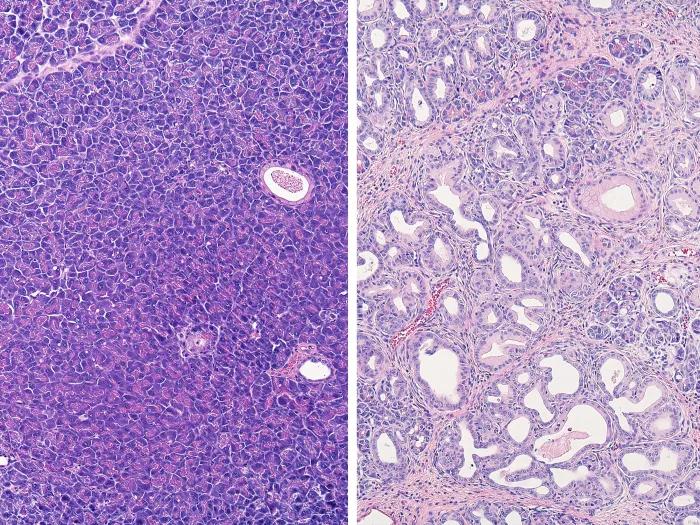
Researchers identify cellular pathways that drive precancerous lesions to form pancreatic tumors
Researchers identify cellular pathways that can influence metabolic changes when cells progress from metaplasia to cancer

Health Lab
Thriving after a rectal cancer diagnosis
Kyle Kipke was diagnosed with rectal cancer and received chemotherapy and radiation as treatment at Michigan Medicine.

Health Lab
An online intervention can help cancer patients share genetic testing results with family
Katz and colleagues developed a web-based intervention to educate people with cancer about the impact genetic variants can have on their family.
Health Lab
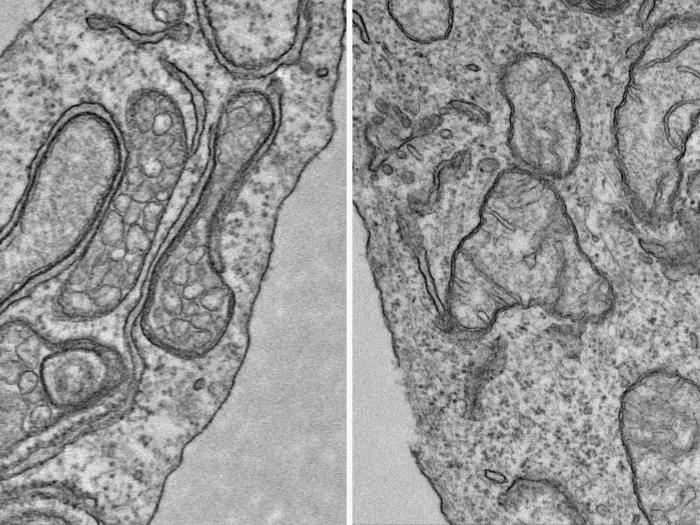
FDA-approved cancer drug fedratinib reshapes how cell organelles communicate, providing new therapeutic avenues
University of Michigan researchers found that the FDA-approved drug fedratinib can lead to endoplasmic reticulum and mitochondria contact site formation, providing a potential therapeutic avenue.
Health Lab
Glucose drives STAT3 activation in colorectal cancer cells, leading to tumor growth
University of Michigan researchers have shown that glucose levels sustain the increased STAT3 activation in colorectal cancer cells. Their findings suggest that targeting glucose metabolism could inhibit STAT3, leading to novel therapeutic strategies.
