Capturing cancer cells from blood could help doctors choose the right breast cancer treatment
Some women undergo unnecessary mastectomy and chemotherapy, but a ‘labyrinth in a chip’ could reveal which cancers need aggressive treatments
5:00 AM
Author |
This story was originally published by Michigan Engineering News.
Doctors may be able to spare patients unnecessarily aggressive breast cancer treatments by collecting and testing cancer cells in patients' blood, research from the University of Michigan and the University of Kansas suggests.
Of the 2.3 million women with breast cancer today, around a quarter are diagnosed at an early stage where cancer hasn’t spread, called ductal carcinoma in situ, or DCIS.
While these patients tend to have a good prognosis, the cancer can become invasive in 10% to 53% of untreated cases.
With such high stakes, and no accurate way to predict what will happen for any single patient, clinicians recommended that all women with ductal carcinoma in situ receive treatment, which can include lumpectomy or mastectomy.
Radiation therapy is recommended for patients that get a lumpectomy, and patients that test positive for hormone receptor-positive DCIS can also receive anti-hormonal therapy.
“Since early detection can save lives, physicians are now recommending mammograms at younger ages, so more young women have to make some life-altering choices,” said Sunitha Nagrath, the Dwight F. Benton Professor of Chemical Engineering and a co-corresponding author of the study published in Science Advances.
“Currently, patients are often presented with treatment options without adequate information regarding which choice may be most effective based on their individual risk factors.”
Some patients may receive aggressive treatments although their cancer might not have spread. For others, treatment might not be aggressive enough.
Cancer reoccurs within 10 years for around 10% of cases treated with surgery alone, research suggests.
To find methods for discovering the right approach, the National Institutes of Health partly funded the research.
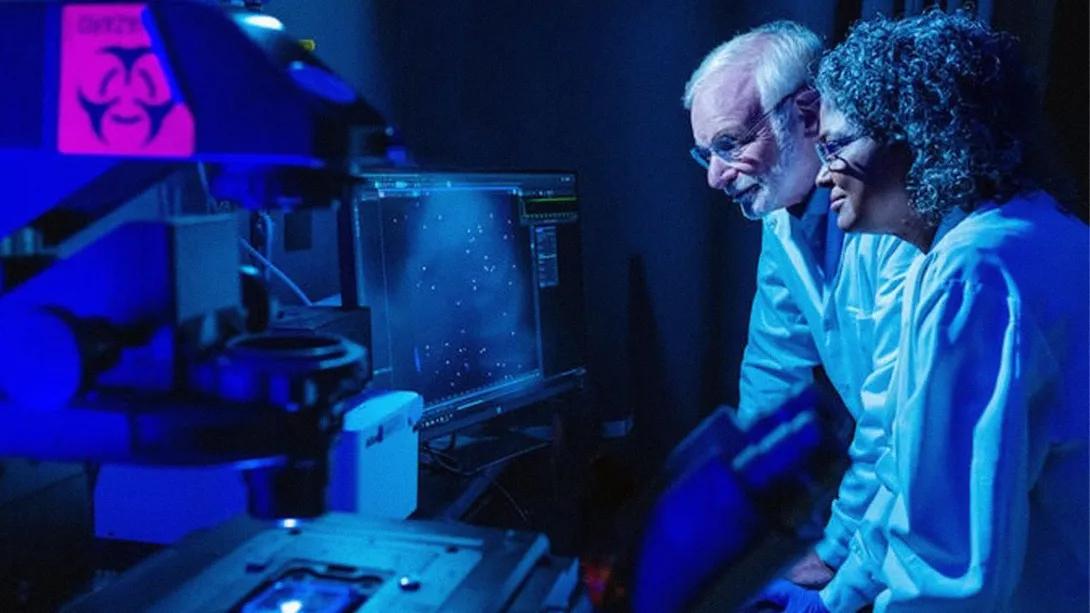
“Our goal is to identify biomarkers that distinguish patients who would benefit from aggressive interventions, including surgery, radiation, and anti-hormonal therapy, from those who may require only surgery or could safely forgo treatment,” said Fariba Behbod, professor of pathology and laboratory medicine at the University of Kansas Medical Center and a co-corresponding author of the study.
Patients’ blood may contain the markers of a progressing disease—cancer cells that shed from tumors and circulate below the detection levels of common lab techniques. Such cells may go on to seed new tumors.
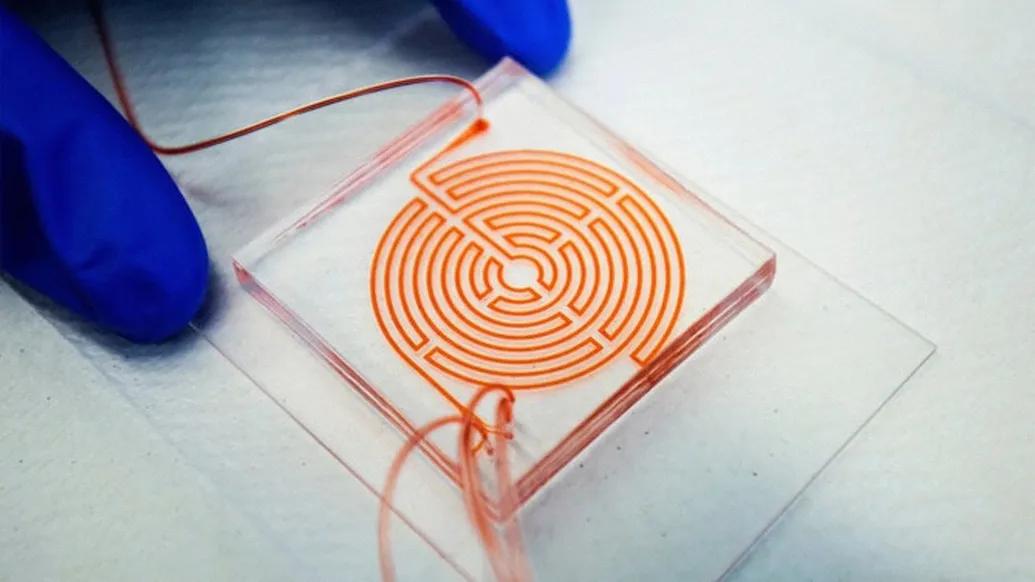
To find them, Nagrath launched a “labyrinth chip” in 2017 with Max Wicha, the Madeline and Sidney Forbes Professor of Oncology and professor of internal medicine at the U-M Medical School.
Pushing a blood sample through the chip’s maze-like channels separates the larger cancer and white blood cells into a separate stream from smaller blood cells.
After processing a few milliliters, researchers can obtain enough cancer cells for diagnostic testing.
In the study, the researchers used the labyrinth chip to collect cancer cells from the blood of 34 patients with ductal carcinoma in situ at the University of Kansas Medical Center.
They then determined what genes were turned on in individual cancer cells circulating in the blood, as well as in the cancer cells collected from breast tissue in the same patients.
The cancer cells from the tissue biopsies could be classified into four subtypes based on their active genes, two of which were found in blood at significant levels.
Those types had active genes associated with disease progression, chemotherapy resistance and platelet binding, which some research suggests could be a way for cancer cells to escape the immune system.
Other genes active in the cancer cells may help them avoid detection by immune cells.
“That helps us narrow down what could have been indicative that these cells would circulate,” said Neha Nagpal, a U-M doctoral student in chemical engineering and the study’s first author.
The six Black patients who participated in the study tended to have more cancer cells in their blood than white patients as well as more immune suppression, which aligns with a higher breast cancer mortality in Black patients.
As race is not a biologically meaningful designation, the disproportionate cancer signatures are likely due to environmental factors.

“In the future, we plan to identify which of these cell types and biomarkers are able to get to a secondary site and stay there,” Nagpal said.
The researchers are gathering that data by transplanting cancer cells from their patients into mice.
After four months, the mice had elevated cancer cells in their blood, which the researchers collected for gene sequencing.
They also plan to track the disease progression in the mice and human patients.
The research was also funded by the U-M Forbes Institute for Cancer Discovery, Kansas University Cancer Center and the Kansas Institute for Precision Medicine.
The research was funded by the U-M Forbes Institute for Cancer Discovery, Kansas University Cancer Center, Kansas Institute for Precision Medicine and National Center for Advancing Translational Sciences’s Clinical and Translational Science Awards Program.
The Labyrinth chip was built in the Lurie Nanofabrication Facility, which is operated and maintained with support from indirect cost allocations in federal grants. RNA sequencing was performed at the U-M Advanced Genomics Core.
U-M startup Bloodscan Biotech, which launched with the help of Innovation Partnerships, licensed the labyrinth chip. Nagrath and the University of Michigan have financial interest in Bloodscan Biotech.
Nagrath is also a professor of biomedical engineering, co-director of Liquid Biopsy Shared Resources for U-M’s Rogel Cancer Center and a member of the U-M Biointerfaces Institute.
Paper cited: Circulating Tumor Cells as Predictive Biomarkers in the Risk Stratification of DCIS: Evidence of Early Dissemination

Health Lab
Explore thousands of health news & research stories by visiting the Health Lab homepage for more.
Media Contact

Public Relations
Department of Communication at Michigan Medicine
Stay Informed
Want top health & research news weekly? Sign up for Health Lab’s newsletters today!
Featured News & Stories

Patients are opting in for 10 years of breast cancer treatment

Rare cancer diagnosis inspires community of support

Who’s at risk for painful periods?
Identifying avoidant, restrictive food intake disorder in gastroenterology patients

Talent show brings joy to kids at children’s hospital