Facing Your Own Fears First: Training Clinicians to Deliver the Anxiety Treatment They've Been Avoiding
Author |

For youth struggling with anxiety or obsessive-compulsive disorders (OCD), exposure therapy is among the most effective treatments available. And yet, it remains one of the least commonly delivered, with clinician hesitancy being one of the primary reasons cited for infrequent use.
"Treatment methods like exposure therapy are the kinds of things that can give clinicians pause," says Dr. Emily Bilek, clinical associate professor in the Department of Psychiatry at Michigan Medicine. "They don't want to cause their patients to feel undue anxiety, and they aren't confident enough in the method to trust that it is, in practice, as effective and ethical as the research suggests."
As a participant in Cohort 5 of the RISE Innovator Development Program, Bilek developed and piloted an experiential training curriculum. The goal of the curriculum is to build clinician confidence and competence in delivering exposure therapy to youth with anxiety and OCD. The approach is as intuitive as it is novel: to truly understand exposure therapy, clinicians experience it themselves.
Facing Your Own Fears First
Led by Bilek, the ACCESS (Advancing Community Competency in Exposure Skills & Strategies) Lab developed a 6-hour interactive, exposure and response prevention (ERP) training session for clinicians treating anxiety and fear-based disorders. The session integrates cutting-edge research on adult education, implementation science, and ERP.
"What's unique about our training is that we are actually having clinicians face some of their own fears," Bilek explains. “Rather than simply role-playing how they might guide a patient, clinicians work through their fears in real time, experiencing the process from the patient's perspective.”
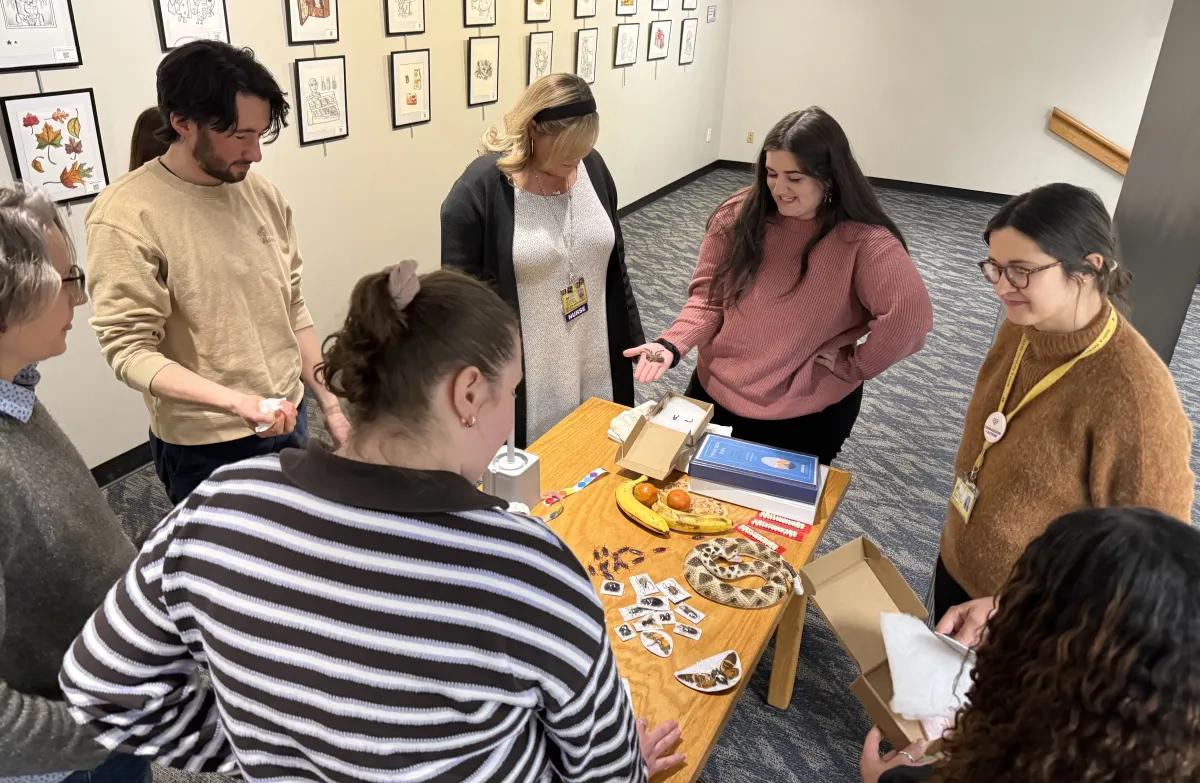
The training operates on the premise that everyone has a fear that they avoid. Props, such as taxidermy insects and toilet brushes, are frequently used for exposure therapy, with participants working through their own anxieties in real time. The goal is for clinicians to experience firsthand that the anxiety that exposure therapy provokes is both manageable and purposeful. “The most common feeling patients have after a well-executed exposure,” Bilek notes, “is pride.”
Turning Anxiety Into Confidence
Since launching the training, Bilek and her team have been collecting data from participants along the way. Early findings show improvements across the domains most closely tied to clinician delivery of exposure: knowledge, confidence, and beliefs about the treatment. Participants also report stronger intentions to use exposure with their patients, a promising early indicator of real-world impact.
One moment from the first training captured everything Bilek hopes the curriculum can do. During a live demonstration, a volunteer from the audience, clearly anxious but willing, agreed to be led through an exposure to a taxidermied spider. By the end, he was holding it with both hands. "That is so meaningful when you see someone challenge themselves in the way they had hoped, and then move beyond," she says.
For another participant, the experience was immediately transformative. "The concepts and skills were introduced clearly, and all of the hands-on practice gave me the confidence to implement exposure and response prevention with my patients," said the trainee, who called it “the best clinical training of [their] doctoral program.”

How the Innovator Development Program Helps Shape the Curriculum
Of the Innovator Development Program overall, Bilek is unequivocal: "It was the single most valuable and enjoyable professional development I have done in my career." The training would look considerably different, Bilek says, without the Innovator Development Program. Early on, one of the deeper dive sessions that focused on team-building prompted her to expand her team to include people with key skills that would enhance the training. She did just that by bringing on Elena Pokowitz, a PhD student in the Department of Psychology with expertise in adult learning and instructional design. The collaboration transformed the project's scope and rigor. "I cannot imagine how different and limited in scope this training would be if I hadn't found such a great team member," she says of Pokowitz.
The IDP also shifted how Bilek sees her own trajectory. "It gave me a window, a potential belief, that I could make this work a big part of my job in the future," she says. "It ignited a passion, or almost a need, to make this part of my work." She is now collaborating with Michigan Medicine colleagues to build a rural training collaborative, a sustainable infrastructure for delivering evidence-based mental health training to clinicians across Michigan, starting with exposure therapy and expanding from there.
Looking Ahead
Moving beyond southeast Michigan, a training is scheduled for clinicians in Michigan's Upper Peninsula, a region where, when she first began this work, no clinicians trained in exposure therapy for children could be found. She sees it as an early step in something more ambitious.
What began as a pilot has grown into training with reach and momentum. Bilek envisions a future where evidence-based exposure therapy is no longer a specialty skill available only in select urban centers, but a standard part of how clinicians across Michigan are caring for young people with anxiety and OCD.
Stay up to date on the latest innovations in medical education at U-M with the RISE monthly newsletter.
In This Story

Emily L Bilek
Clinical Associate Professor
Featured News & Stories

Depression in OBGYN residents needs more attention, study suggests
Hear From the RISE Curriculum Director: October 2026
Teaching Ultrasound at the Bedside

Dr. Adam Rodman to deliver Woolliscroft Endowed Lecture on November 17
Jacob Mack: Helping Trainees Take the Next Step