
Kara Gavin
Research and Policy Media Relations Manager
Gavin draws on more than 25 years of experience in communicating about science, medicine and health policy. She focuses mainly on the health services research done by members of the U-M Institute for Healthcare Policy and Innovation, who work to understand and improve the safety, quality, equity and affordability of health care. As part of the Michigan Medicine communication team, she has lead responsibility for primary care and mental health topics. Contact: [email protected]; Twitter: @Karag

Health Lab
"Deprescribing" medicines for older adults: Patient-provider dialogue needed
Stopping or reducing doses of prescription medicine, also called deprescribing, is something many older adults would like to do, and some have already done without medical guidance. Medication reviews could help.
Health Lab
When pills and talk therapy aren’t enough, these options may help
Interventional psychiatric care involving brain stimulation and infused or inhaled medicine can offer different options for patients.

Health Lab
Education and peer support cut binge-drinking by National Guard members in half
Alcohol overuse by members of the National Guard was reduced by a targeted intervention of web-based education and phone-based peer support.

Health Lab
How one state beat national surgery opioid trends
Medication guidelines for post-surgical opioid prescribing were associated with a lower rate of long-term opioid use and much lower amounts of opioid prescription fills in Michigan compared with the rest of the U.S.

Health Lab
Loneliness is down, but still high, among older adults
Older adults are less likely to feel isolated now than at the height of the pandemic, but levels of loneliness are still high.

Health Lab
History saved lives in this pandemic. Will society listen next time?
The success of efforts to “flatten the curve” in the COVID-19 pandemic relied on University of Michigan research on the 1918 influenza pandemic.
Health Lab
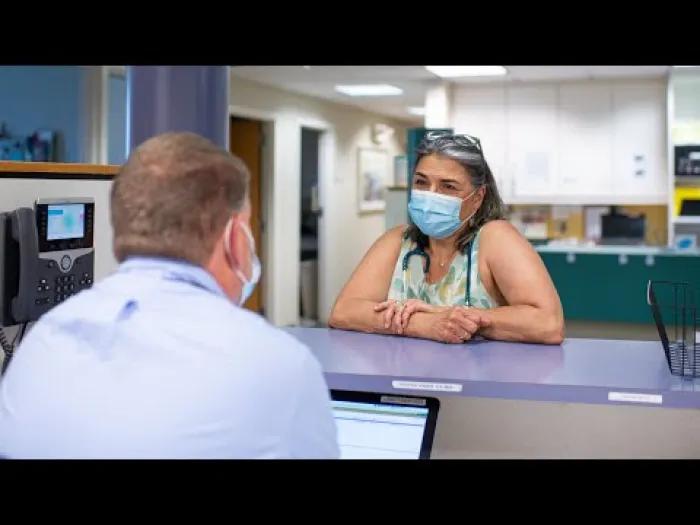
A ‘game changer’ for mental health
The MC3 program provides psychiatric expertise on-demand to primary care providers in Michigan as they manage mental health conditions in young or pregnant patients

Health Lab
1 in 8 Americans over 50 show signs of food addiction
Highly processed foods can act on the brain in ways that spark cravings, emotional reactions and signs of addiction, and a new poll shows how many older adults experience this.

Health Lab
Support from others in stressful times can ease impact of genetic depression risk
Stress can interact with genetic vulnerability to depression, and with added or lacking support from friends and family, to affect depressive symptoms.

Health Lab
Stressed at work? A recent study focused on new doctors finds depression risk rises with hours worked
Depression and high numbers of duty hours worked by first-year doctors, called interns, are linked closely, with higher PHQ-9 screening scores among those working the most hours.

Health Lab
Studies show special mental health risks for certain groups of new doctors
First-year surgery residents, and first-year medical residents in all fields who are members of sexual minorities such as LGBTQ+, are more likely than others to develop depression during the stressful training period.

Health Lab
ECMO offers sickest COVID patients a chance to survive, but a slimmer one than previously thought
ECMO life support can save the lives of about half of the critically ill COVID-19 patients who are placed on it by their ICU teams.

Health Lab
What happens when preventive care becomes free to patients?
Preventive services such as mammograms, birth control, immunizations and colonoscopy have no out-of-pocket costs under the Affordable Care Act.

Health Lab
Most Young People Eager for COVID-19 Vaccine, Poll Shows
Teens and young adults are increasingly eager to get vaccinated against coronavirus but a minority, including many Black teens, express the same vaccine hesitation as older adults.

Health Lab
ECMO: Last-Resort Life Support Option Helped Majority of Critically Ill COVID-19 Patients Survive, Global Study Shows
Survival rates for COVID-19 patients on ECMO life support is similar to that for other ARDS causes, a new study finds.
