Global Health, Common Ground: A CMB Fellowship Experience in Beijing
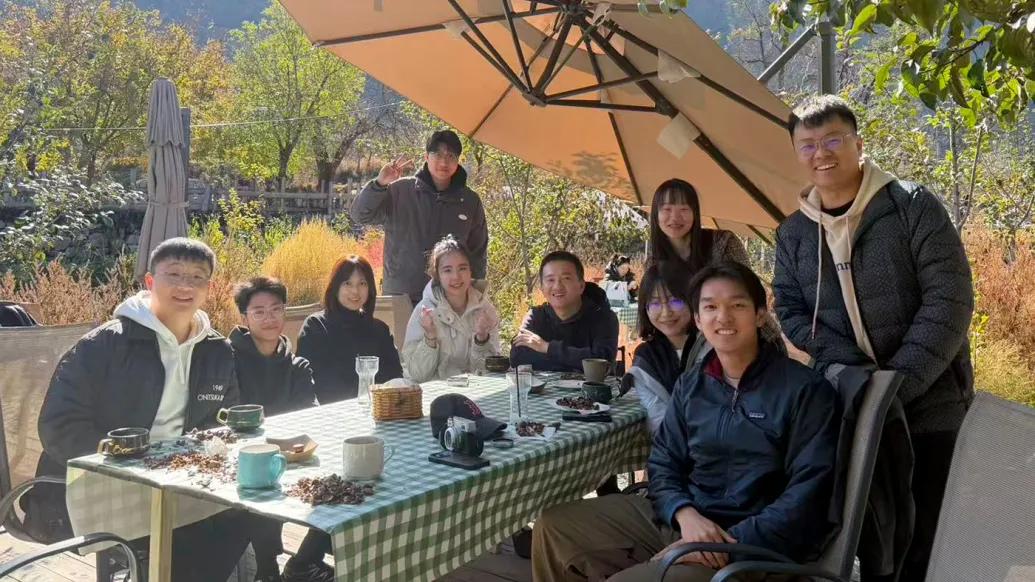
When I first arrived in Beijing, my Chinese research mentor assigned a fellow MPH student to help me settle in and complete my required administrative tasks. He was the same age as me but had spent his entire life on the other side of the world. As we ran our errands, the initial conversations were choppy, perhaps due to a mix of my jet lag, my lackluster Mandarin, as well as mutual awkwardness. At the end of the several days, I offered to treat him to dinner. Afterwards, we walked back to campus continuing an awkward staccato conversation. It was only after we began talking about the differences among the various health care systems around the world that we settled into a flowing rhythm. As we rounded the corner to our dorms, we bonded over recounting similar health care payment reforms our two countries had attempted and what had worked for each.
I have always believed health to be a connector of people, and my experience as a CMB Foundation Global Health Research Fellow at the Peking University Health Science Center, in Beijing, only served to reinforce that notion. As I connected with friends, colleagues and mentors, I often found myself noting the health care issues and goals that China and the United States had in common despite the countries’ political, linguistic and cultural differences. On a train rocking towards Inner Mongolia, a curious conductor paused to talk with me in the dining car, sharing that many rural Chinese residents relied on trains to travel long distances into the cities to access care. The following week, I attended a U.S.-China surgical conference where an American surgeon noted having to travel many miles outside of Chicago to provide follow-up care to her patients. Another time, I attended a lecture where a speaker from China’s National Health Commission commented on China’s increasingly aging population with looming funding issues for government-funded health insurance, reminding me of similar challenges facing Medicare.
I toured some of China’s most advanced hospitals where they showcased artificial intelligence tools used to streamline electronic medical records and record conversations between patients and doctors to help with documentation. During several conferences between U.S. and Chinese groups, they highlighted emerging technologies like AI tools or remote robotic surgeries to assist their clinicians and increase access to care for patients. My own research was largely focused on studying hospital payment reforms and their impacts on surgical delivery systems. The U.S. and China face similar issues with rising health care costs, and one area aimed at tackling this issue is the development of payment models to ensure care quality and reduce costs. With my mentors, Dr. Jin Xu from Peking University China Center for Health Development Studies, and Dr. Melanie Sion, from Yale School of Medicine, we conducted a systematic review of the different payment reforms adopted by low- and middle-income countries and their impacts on surgical outcomes.
Of course, while in China I also heard a rhetoric of fear and competition from both sides. But overall, my experience there strengthened my belief that people share more commonalities than differences—particularly in our desire to live healthy, meaningful lives. I was repeatedly reminded of home, whether it was my first time hanging out with my research group where we played “werewolf” (a game that I enjoyed throughout my childhood and in college, but we had called it “mafia”); enjoying meat skewers after a long shift at the hospital with medical students and residents, discussing similarities and differences in our educational systems and training timelines; or having conversations with older locals as part of public health surveys assessing their experiences with their community health center. Regardless of the political situation, I choose to still believe that there will always be opportunities to progress global health’s mission of improving the health of people through collaborations across communities that span the globe.
Michael Zhu is a medical student at Tufts University School of Medicine and was among the first participants in the CMB Foundation’s Global Health Research Fellowship Program, a collaboration between UMMS, Yale, and The University of North Carolina. The three partner schools work together to connect prospective fellows with mentors in the US and China that align with their research interests. The program is now accepting applications.
Featured News & Stories
Human Rabies Exposures Growing Across the Country
Continuing the legacy of a doctor’s doctor
New Certificate in Global Health Program welcomes first cohort of residents, fellows
Karsten Bartels, MD, earns Gladys Sessler Outcomes Research Consortium Award