
Devices 101
Creation and Implementation of a Medical Devices Curriculum
CFI project lead: Bailey Coursen
CFI advisor: Michael Maile, MD, MS, Clinical Associate Professor of Anesthesiology
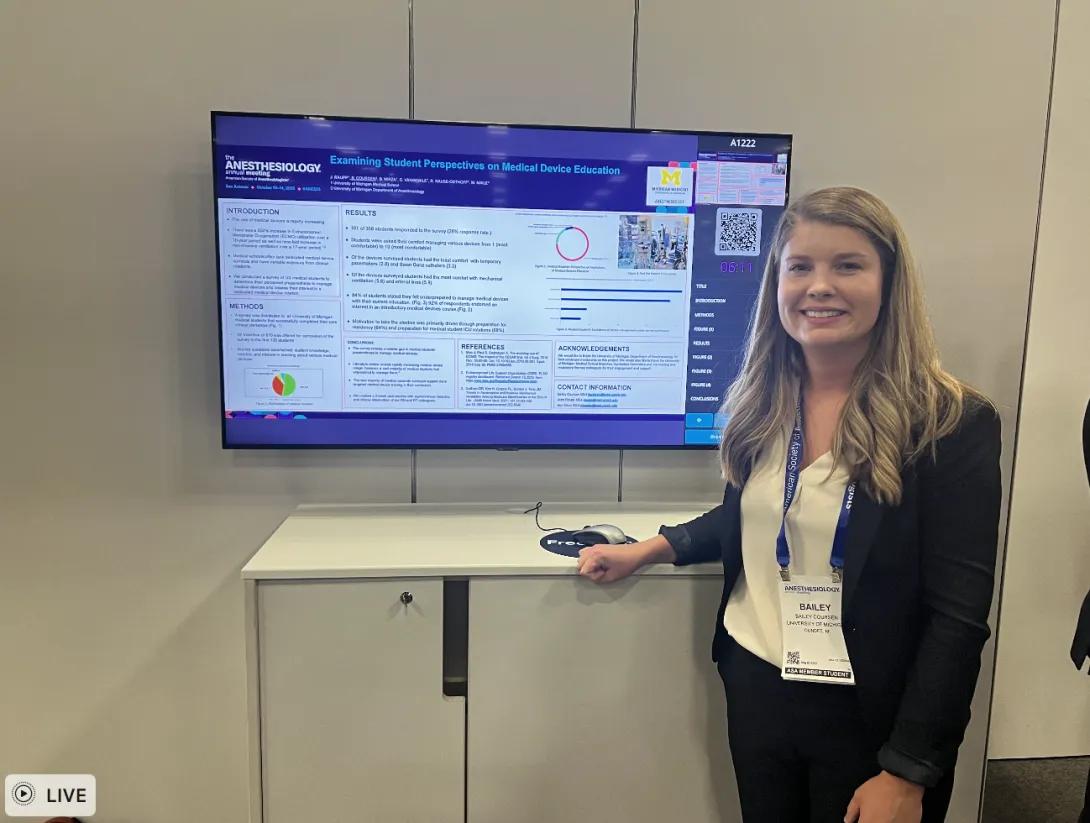
Critically ill patients are often surrounded by complex medical devices, which can make the bedside environment overwhelming and difficult to understand for learners. This project grew out of a moment during a medical school presentation on Extracorporeal Membrane Oxygenation (ECMO), when a classmate noted that an image of an infant patient was so crowded with machines that the patient was hard to recognize. That observation highlighted a gap in medical education: students need more structured exposure to the devices they will encounter during clinical training and residency.
To address this need, a two-week elective course was created for third- and fourth-year medical students preparing to enter a wide range of medical and procedural specialties. The course combines asynchronous online learning with in-person clinical observation. Online modules, housed in Canvas, cover six major categories of medical devices: general and enteral access, vascular access, mechanical circulatory support and miscellaneous devices, respiratory devices, renal devices and neurological devices. Course materials include videos, textbook chapters, journal articles, quizzes and case-based questions designed to reinforce key concepts.
A central feature of the elective is interprofessional learning. Students complete 12 hours of clinical observation alongside nurses, respiratory therapists and ECMO specialists in intensive care settings such as the PCTU, PICU, Neuro ICU, SICU or CVICU. This allows students to see how different team members manage medical devices and contribute to patient care in real time.
To date, 16 students have completed the course, with additional students enrolled. Post-course surveys show increased comfort with a broad range of medical devices and greater appreciation for the expertise of nurses, respiratory therapists and other clinical team members. By combining device education with bedside observation, the course aims to improve students’ readiness for sub-internships, residency and caring for critically ill patients.
Topic areas: Technology and Innovation, Quality Improvement
Q&A with Bailey Coursen
In what ways did this project influence your academic or career goals?
This reaffirmed an interest in medical education and mentorship. This also allowed me to focus my residency search on programs with shared interests and capacity to support this sort of curriculum development at their institution.
What challenges did you face during your CFI project, and how did you address them?
Our main challenge was integrating into the various ICU's for clinical observation. Despite countless unanswered emails, we were persistent and ultimately made contact in person during our CVICU rotations with both nursing and respiratory therapy leadership. Once we were able to share the project with them more and they recognized the value, they were eager to help us collaborate with other ICU's and helped to support us ultimately in integrating to five ICU's (PICU, PCTU, NeuroICU, SICU and CVICU) as well as the pediatric and adult respiratory therapy departments that support these units.
What skills did you develop while working on your project, and how might these skills benefit your future career?
We learned the value of communication, teamwork and persistence. These skills will be invaluable throughout my time as a resident and anesthesiologist as I will often be working in large care teams to provide the best care possible to our patients.
What was the most rewarding aspect of your CFI project, and why was it meaningful to you?
The student feedback after the course regarding the enhanced knowledge they have after enrolling in the course as well as their new appreciation for the contributions to patient care from nursing and respiratory therapy colleagues was particularly meaningful. As a former physician assistant, these are two things that drew me to a career in medicine and being to make an impact this early in my career reaffirmed my interests.
If you could repeat your CFI project, what would you change to improve the outcomes or process?
Ideally, I would have made this process more streamlined to minimize the administrative burden on student leads. For example, the scheduling process within the various ICU's can be very cumbersome when working with multiple departments and scheduling limitations as well as working as the middleman. Ideally, we will be able to convert our course to one where students initiate contact with their unit of choice, and all students are required to complete two 6-hour shifts to ensure a variety of exposures.
What advice would you offer to future students starting a CFI project, based on your experience?
Start early and work with others. I thought of this during M1 year but did not get it off the ground until the beginning of M3 year. It could have been a much more impactful project had I sought out support from other classmates and faculty mentors early. Having multiple students on the project also enhanced the final product and allowed us to share the administrative burden at times.
