
The ‘Jild’ Guild
Making Dermatological Care Accessible to Arabic-Speaking Patients
CFI project lead: Mohamad Awada
CFI advisor: Maya Aravind, MD, Clinical Assistant Professor of Dermatology
Additional participants: Mohammed Hamid, Mahdi Mazeh
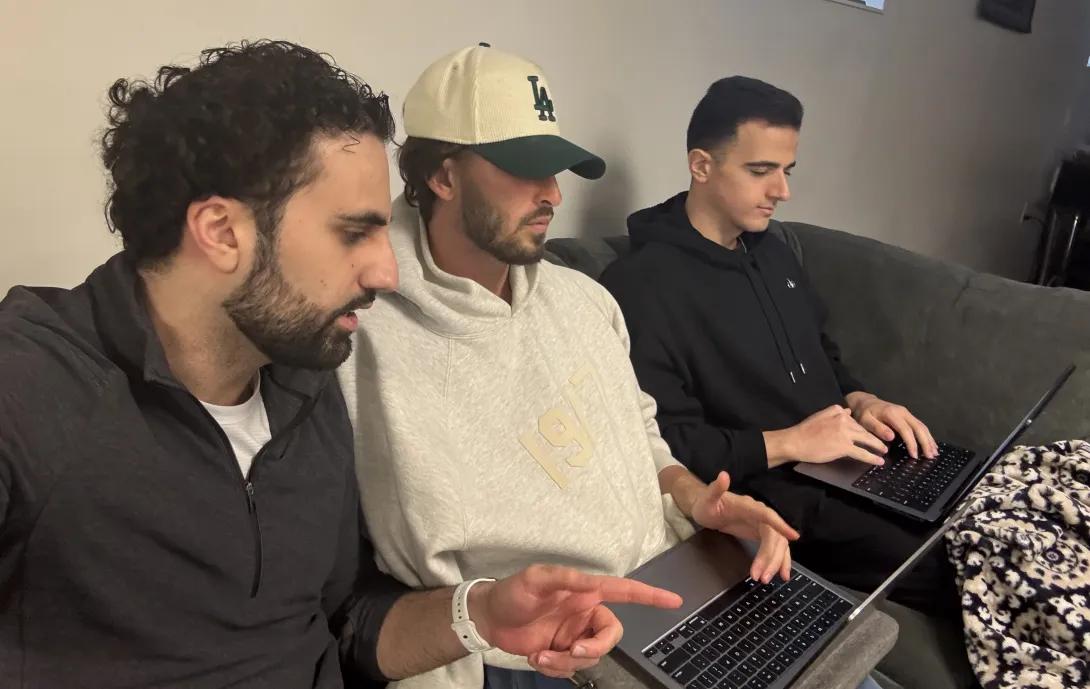
In Dearborn, Michigan, home to the largest Arab community outside the Middle East, health care disparities, especially language barriers, contribute to inequitable care. Recognizing this need, this project aims to improve access to dermatological care for Arabic-speaking patients at Michigan Medicine.
The students identified the most common dermatology post-visit instructions and translated them into Arabic using a combination of technology and bilingual expertise. By providing these instructions in Arabic, they help ensure patients can better understand their care at home, leading to improved treatment adherence, better health outcomes and a more comfortable experience when seeking care.
The goal is to foster greater health care equity and satisfaction among Arabic-speaking patients across southeast Michigan.
Topic areas: Global Health, Public Health, Health Equity
Q&A with Mohamad Awada
In what ways did this project influence your academic or career goals?
Working on this project has centered my career goal for wanting to work with diverse populations and hopefully bridging the gap in health care inequities that exist.
What challenges did you face during your CFI project, and how did you address them?
Initially we attempted to use google and ChatGPT translations to assist in English to Arabic translations, but we noticed that this did not always align well and there was some inaccuracy. We decided to manually translate aspects of these dot phrases which helped moving forward.
What skills did you develop while working on your project, and how might these skills benefit your future career?
Working on this project has helped develop both my language skills and cultural competency from a broader scope. Reflecting on my project, I am grateful to see this work being used to help patients better understand their health and communicate with providers, and I feel hopeful that these skills will benefit me in my future career.
What was the most rewarding aspect of your CFI project, and why was it meaningful to you?
It was extremely rewarding to see this work used in clinical practice and helping Arabic-speaking patients better understand their health from this perspective. It was particularly meaningful to me as it reminded me of my parent's experiences as they faced language barriers during their health care appointments.
If you could repeat your CFI project, what would you change to improve the outcomes or process?
Perhaps using a group of Arabic-speaking patients who can use these translations in the initial stages, which could help us ensure adequate understanding of the Arabic dot phrases.
What advice would you offer to future students starting a CFI project, based on your experience?
Brainstorm topics that interest you and that you are passionate about. Use this as an opportunity to promote change in an aspect of health care that you think is appropriate.
