Michael William Sjoding, MD, MSc

Manage Your Profile
About
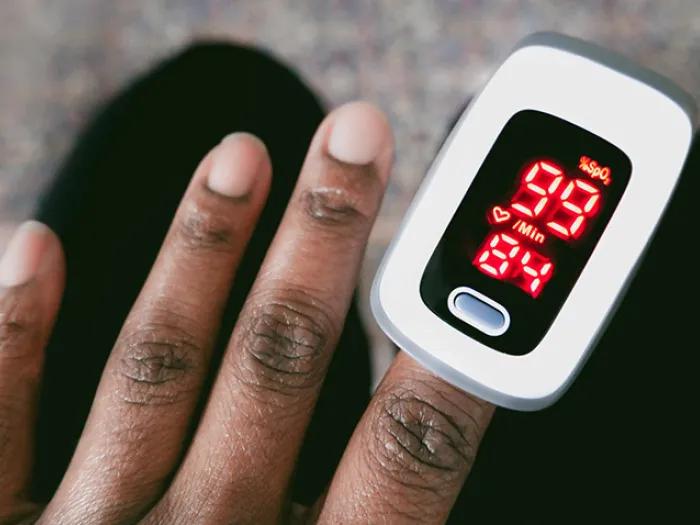
Dr. Michael Sjoding’s research spans critical care epidemiology, health services research, translational science, and artificial intelligence. Using routinely collected electronic health records and imaging data, his work aims to improve diagnosis, care delivery, and outcomes for critically ill patients and patients with pulmonary disease. He led seminal investigations uncovering racial bias in pulse oximetry accuracy, work that transformed national understanding of device equity and patient safety and helped spur new U. S. Food and Drug Administration guidance on pulse oximeter pre-market evaluation. More broadly, his research has advanced the use of artificial intelligence in pulmonary and critical care medicine, including the development and evaluation of AI tools designed to support clinical diagnosis. He also led influential studies examining how clinicians interact with AI tools and how these tools can impact clinician decision-making.
Center Memberships
-
Center MemberInstitute for Healthcare Policy and Innovation
-
Center MemberWeil Institute for Critical Care Research
-
Center MemberCenter for Computational Medicine and Bioinformatics
-
Center Membere-Health and Artificial Intelligence Initiative
-
Center MemberAI and Digital Health Innovation
Recent Publications
-
Kerlin MP, Harhay MO, Li F, Small DS, Lu Y, Wang W, Fuchs BD, Mikkelsen ME, Tran T, Belk A, Silvestri JA, Klaiman T, Scott S, Levy E, Sjoding MW, Kohn R, Roberts KJ, Beidas RS, Halpern SD. Implementation Science, 2026 Dec 1; 21 (1):Journal ArticleNudging implementation of low tidal volume ventilation: a stepped wedge, cluster randomized trial
DOI:10.1186/s13012-026-01500-8 PMID: 42098760 -
Zhong Y, Nuppnau M, Farzaneh N, Ansari S, Sjoding MW. Crit Care Med, 2026 Oct 23;Journal ArticleAssociation of Acute Respiratory Distress Syndrome Radiographic Findings Identified by Machine Learning and Outcomes of Patients Receiving Invasive Mechanical Ventilation.
DOI:10.1097/CCM.0000000000007384 PMID: 42919460 -
Rzewnicki DI, Chanderraj R, Qian ET, Semler MW, Casey JD, Rice TW, Coopersmith CM, He Y, Nuppnau M, Prescott HC, Admon AJ, Dickson RP, Sjoding MW, Bhavani SV. American Journal of Respiratory and Critical Care Medicine, 2026 Oct 1; 212 (10): 2607 - 2617.Journal ArticleAssociation of white blood cell count with treatment response to cefepime versus piperacillin-tazobactam
DOI:10.1093/ajrccm/aamag257 PMID: 42275170 -
Christian-Miller N, Lee KT, Pashun R, Ballut K, Prescott H, Cascino T, Taylor SP, Ansari S, Sjoding MW, Nagle M, Admon AJ. Critical Care Medicine, 2026 Sep 1; 54 (9): 2350 - 2360.Journal ArticleContinuing vs. Withholding Home Beta-Blockers at Admission for Suspected Infection: A Target Trial Emulation
DOI:10.1097/CCM.0000000000007229 PMID: 42262489 -
ADIE SK, KETCHAM SW, ZIMMERMAN C, WALKER E, HECHTMAN RK, SJODING MW, BARKER AK. Journal of Cardiac Failure - Intersections, 2026 May 24; 2 (5): 454 - 462.Journal ArticleImplementation of an Electronic Health Record Initiative to Reduce Deep Sedation in a Cardiac Intensive Care Unit
DOI:10.1016/j.yjcafi.2026.04.011 -
KETCHAM SW, ADIE SK, HAMILTON DE, PASHUN RA, LU D, DESAI K, SPAGNOLI J, SJODING MW, WONG A. Journal of Cardiac Failure - Intersections, 2026 Jun 19; 2 (5): 429 - 436.Journal ArticleLarge Language Models for the Identification of Patients With Cardiogenic Shock Without Hypotension
DOI:10.1016/j.yjcafi.2026.04.013 -
Jabbour S, Fouhey D, Banovic N, Shepard SD, Kazerooni E, Sjoding MW, Wiens J. 2025 Aug 13; arXiv,PreprintSelective Prediction Reduces the Negative Effects of Automation Bias Overall but Increases False Negatives
DOI:10.48550/arxiv.2508.07617 -
Winner KM, Chanderraj R, Sjoding MW, Dickson RP. American Journal of Respiratory and Critical Care Medicine, 2026 Aug 1; 212 (8): 1865 - 1867.Journal ArticleReply to Hamiltonet al.and Chen et al
DOI:10.1093/ajrccm/aamag209 PMID: 42118119
Featured News & Stories
Removal of ventilator breathing tube is delayed for some patients, posing health risks

Racial differences in medical testing could introduce bias to AI models