
Benjamin Hampstead

Philip B and Myrna R Fischer Research Professor of Neurology
Stanley Berent Ph.D. Legacy Professor of Psychology and Adjunct Professor of Psychiatry
Medical School
Available to mentor
Benjamin Hampstead
Adjunct Professor
Manage Your Profile
Qualifications
-
Postdoctoral FellowEmory University, Atlanta, United States
2006 - 2008
Recent Publications
-
Chesser C, Hiskens-Ravest S, Burke IJM, Charlton J, Hampstead BM, Belleville S, Sanz-Simon S, Dwolatsky T, Bahar-Fuchs A. Journal of Cognitive Enhancement, 2026 Sep 15; 1 - 17.Journal ArticleAutomated Evidence Synthesis of Cognitive Interventions in Older People Using the CogTale Platform: A Validation Study
DOI:10.1007/s41465-026-00372-6 -
Iordan AD, Pruitt PJ, Ploutz-Snyder R, Ghosh B, Devignes Q, Hampstead BM. Clinical Neurophysiology, 2026 Sep 1; 189:Journal Article2 mA is NOT 2 mA: Electric field variability in high-definition tDCS and its implications for precision neuromodulation in aging
DOI:10.1016/j.clinph.2026.2111877 PMID: 41966869 -
Hu Z, Qu Z, Xu M, Frey J, Pizzo Z, Scanio A, Seong S, Figueroa Morales CA, Hampstead B, Gong X. 2026 Aug 5; ChemRxiv,PreprintDecoupling Compliance and Toughness for Robust Hydrogel Adhesion on Hair-Covered Skin
DOI:10.26434/chemrxiv.15006395/v1 -
Sanderson-Cimino M, Gross AL, Gaynor LS, Paolillo EW, Saloner R, Albert MS, Apostolova LG, Boersema B, Boxer AL, Boeve BF, Casaletto KB, Heuer HW, Forsberg LK, Hallgarth SR, Diaz VE, Clark LR, Eloyan A, Farias ST, Maillard P, Gonzales MM, Hammers DB, La Joie R, Cobigo Y, Wolf A, Hampstead BM, Mechanic-Hamilton D, Miller BL, Rabinovici GD, Ringman JM, D'Orazio LM, Rosen HJ, Ryman SG, Prestopnik JL, Salmon DP, Smith GE, DeCarli C, Rajan KB, Jin L-W, Hinman JD, Johnson DK, Harvey DJ, Fornage M, Carrillo MC, Dickerson BC, Kramer JH, Staffaroni AM, ALLFTD consortium, MarkVCID study, LEADS consortium, and Diverse Vascular Contributions to Cognitive Impairment and Dementia (Diverse VCID) Study Investigators . Alzheimers Res Ther, 2026 Jun 15;Journal ArticleDevelopment and validation of a harmonized memory score for multicenter Alzheimer's disease and related dementia research.
DOI:10.1186/s13195-026-02100-w PMID: 42298651 -
Carlozzi NE, Lombard WL, Fansher M, Freeman JL, Capellari E, Graves CM, Miner JA, Hampstead BM, Lai JS, Leggett AN. Frontiers in Dementia, 2026 Jun 12; 5:Journal ArticleUnderstanding how informal dementia caregiver networks are assessed in the literature: results from a scoping review
DOI:10.3389/frdem.2026.1824829 -
DuBois KN, Pal S, Maher AC, Heidebrink J, Persad C, Giordani B, Hampstead BM, Bakulski KM, Morgan DG, Kanaan NM. Alzheimer S and Dementia, 2026 Jun 1; 22 (6):Journal ArticleDementia etiology classification using NULISA plasma biomarkers and machine learning
DOI:10.1002/alz.71603 PMID: 42337943 -
Stasenko A, Schadler AJ, Kaestner E, Smith CN, Brady E, Kim MS, Peterson DJ, Urbanic C, Shih JJ, Gholipour T, James GA, Qiu D, Hampstead BM, Drane DL, McDonald CR. Epilepsy Research, 2026 May 1; 223:Journal ArticleFace–name associative memory in temporal lobe epilepsy: Region-specific insights in right-hemisphere onset
DOI:10.1016/j.eplepsyres.2026.107767 PMID: 41806514 -
Cavazos JS, Egan M, Litinas K, Hampstead B, Peltier S. 2026 Feb 11; arXiv,PreprintBehavior Score Prediction in Resting-State Functional MRI by Deep State Space Modeling
DOI:10.48550/arxiv.2602.07131
Featured News & Stories

Philanthropy News
Benjamin M. Hampstead Named Philip B. and Myrna R. Fischer Research Professor of Neurology
Benjamin Hampstead, Ph.D., the Philip B. and Myrna R. Fischer Research Professor of Neurology at U-M, advances Alzheimer's disease research.
Department News
Dr. Benjamin Hampstead named the Fischer Research Professor in Neurology
Dr. Benjamin Hampstead has been named the Philip B. and Myrna R. Fischer Research Professor of Neurology at U-M, advancing Alzheimer’s research and care.
Health Lab
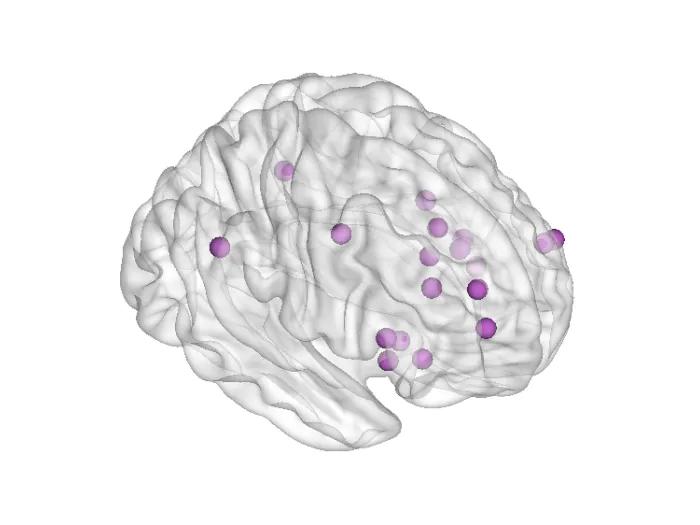
Brain network study reveals clues about dementia’s behavior changes
Dementia doesn’t just erode memory – it also changes behavior and mental health. A new study shows the brain’s salience network and tau protein may be involved.
