
Shelly Flagel

Professor of Psychiatry
Research Professor in Michigan Neuroscience Institute
Associate Director Academic Program, Neuroscience Graduate Program, Medical School
Professor of Psychology, College of Literature, Science, and the Arts
Office:
University of Michigan–Ann Arbor
Psychiatry/Michigan Neuroscience Institute
109 Zina Pitcher Place
Ann Arbor, Michigan 48109
Psychiatry/Michigan Neuroscience Institute
109 Zina Pitcher Place
Ann Arbor, Michigan 48109
Phone:
Available to mentor
Shelly Flagel
Research Professor
Manage Your Profile
About
I am a behavioral neuroscientist interested in the neural mechanisms that underlie maladaptive and psychopathological behaviors.
Links
http://www.flagellab.com/
Qualifications
-
Postdoctoral Research FellowMolecular & Behavioral Neuroscience Institute, Psychiatry, Ann Arbor, United States
2003 - 2007
Postdoctoral Fellowship
Center Memberships
-
Center MemberOpioid Research Institute
-
Center MemberEisenberg Family Depression Center
-
Center MemberCaswell Diabetes Institute
Research Overview
neuropsychopharmacology, addiction, impulse control disorders, animal models of psychiatric conditions, neural circuits, behavioral neuroscience, motivated behavior, reward learning
Recent Publications
-
Iglesias AG, Bhatti JK, Turfe AE, Chang S, Lu H-J, Campus P, Flagel SB. eNeuro, 2026 Jul 31;Journal ArticleChemogenetic Inhibition of Lateral Hypothalamus Inputs to the Paraventricular Thalamus Reduces Goal-Tracking in a Behaviorally Flexible Subgroup of Male Rats.
DOI:10.1523/ENEURO.0174-26.2026 PMID: 42538309 -
Iglesias AG, Bhatti JK, Turfe AE, Chang S, Liu J, Campus P, Flagel SB. 2026 May 29;PreprintChemogenetic Inhibition of Lateral Hypothalamus Inputs to the Paraventricular Thalamus Reduces Goal-Tracking in a Behaviorally Flexible Subgroup of Male Rats.
DOI:10.64898/2026.05.28.728487 PMID: 42244616 -
Emery MA, Parsegian A, Koonse S, Hebda-Bauer EK, Lee K, Luma BD, Chang SE, Becker J, Flagel SB, Watson SJ, Akil H. 2026 Apr 13;PreprintDifferential acquisition of cocaine and heroin self-administration in a rat model of internalizing versus externalizing temperament.
DOI:10.64898/2026.04.09.717453 PMID: 42039450 -
Chang SE, Turner CA, Pagán NM, Pereira D, Kleer S, Flagel SB. Psychopharmacology, 2026 Jan 1;Journal ArticleChronic semaglutide treatment enhances the incentive motivational value of a small food reward and associated cue in male and female rats
DOI:10.1007/s00213-026-07045-4 -
Hebda-Bauer EK, Hagenauer MH, Munro DB, Blandino P, Meng F, Arakawa K, Stead JDH, Chitre AS, Ozel AB, Mohammadi P, Watson SJ, Flagel SB, Li J, Palmer AA, Akil H. Frontiers in Molecular Neuroscience, 2026 Jan 1; 19:Journal ArticleCorrection: Bioenergetic-related gene expression in the hippocampus predicts internalizing vs. externalizing behavior in an animal model of temperament (Frontiers in Molecular Neuroscience, (2025), 18, (1469467), 10.3389/fnmol.2025.1469467)
DOI:10.3389/fnmol.2026.1784625 -
Beehner JC, Flagel SB. Neuropsychopharmacology, 2026 Jan 1; 51 (1): 366 - 367.Journal ArticleField experimentation enhances translation for behavioral neuroscience
DOI:10.1038/s41386-025-02177-1 PMID: 40707802 -
Chang SE, Turner CA, Pagán NM, Pereira D, Kleer S, Flagel SB. 2025 Dec 10;PreprintChronic semaglutide treatment enhances the incentive motivational value of a small food reward and associated cue in male and female rats.
DOI:10.64898/2025.12.06.692775 PMID: 41415399 -
Tonnelé H, Chen D, Morillo F, Garcia-Calleja J, Chitre AS, Johnson BB, Sanches TM, Cheng R, Bonder MJ, Gonzalez A, Kosciolek T, George AM, Han W, Holl K, Horvath A, Ishiwari K, King CP, Lamparelli AC, Martin CD, Martinez AG, Netzley AH, Tripi JA, Wang T, Bosch E, Doris PA, Stegle O, Chen H, Flagel SB, Meyer PJ, Richards JB, Robinson TE, Solberg Woods LC, Polesskaya O, Knight R, Palmer AA, Baud A. Nature Communications, 2025 Dec 1; 16 (1):Journal ArticleGenetic architecture and mechanisms of host-microbiome interactions from a multi-cohort analysis of outbred laboratory rats
DOI:10.1038/s41467-025-66105-z PMID: 41413022
Featured News & Stories
Department News
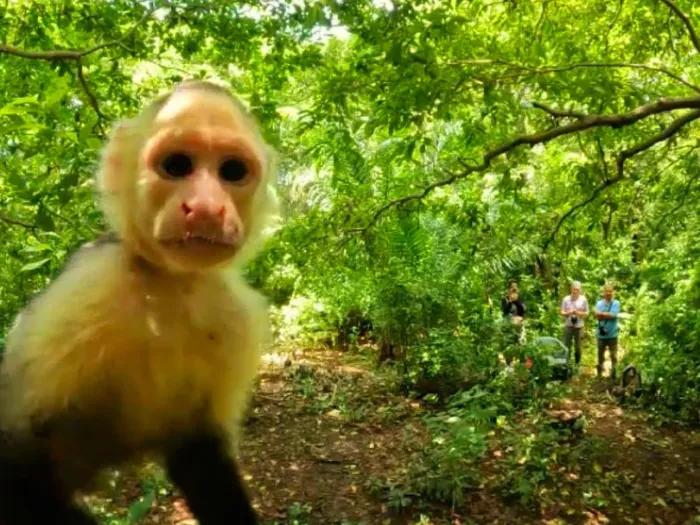
From the lab to the wild: Shelly Flagel’s research on brain, behavior, and the environment
Explore how Shelly Flagel studies wild capuchin monkeys to uncover why reward cues shape vulnerability to addiction, ADHD, OCD and PTSD.
Medicine at Michigan
Searching for the biology of mental illness
For half a century, Michigan Medicine researchers have been working to understand why we feel the way we feel. Their findings have offered hope to patients with mental health conditions from anxiety and depression to addiction and bipolar disorder.
