Swap and shop: 3 events and new campus site aid research equipment exchange
A series of swap events, and a new swap shop now open on Central Campus, have led to the collection and exchange of hundreds of items
Author |
One person’s trash is another person’s treasure.
And, while the former is far from trash — many items are worth several thousands of dollars — the spirit of this time-honored exchange is at the heart of recent Medical School and University of Michigan efforts to help their research communities swap vital equipment and help one another out.
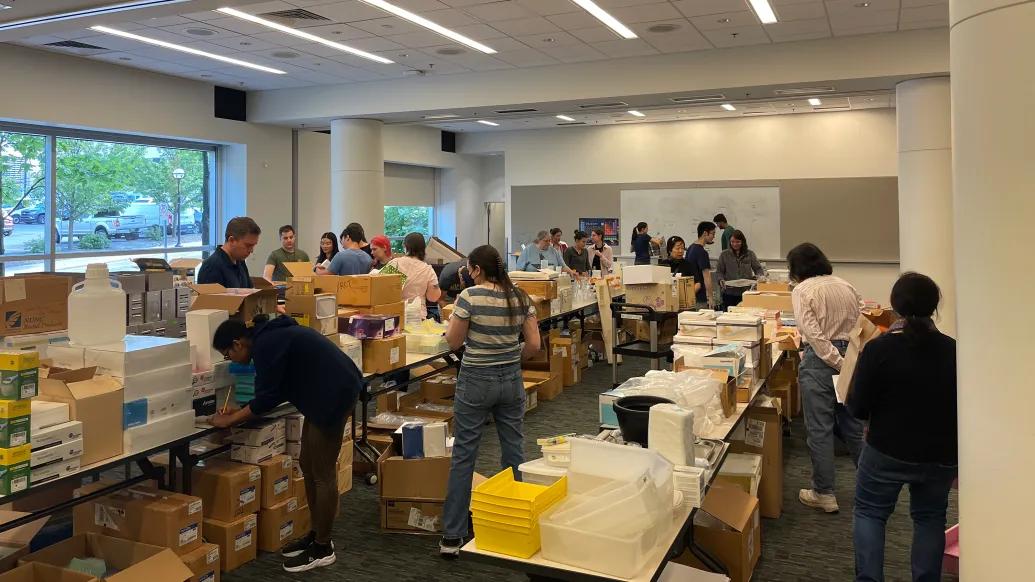
A series of swap events, and a new swap shop now open on Central Campus, have led to the collection and exchange of hundreds of items, which often are acquired by labs to realize costs savings in their areas. They also support UMMS and U-M waste-reduction goals, which are part of an overall sustainability strategy. Most of the items now go to labs that need them, rather than to a landfill.
Three Lab Swap Days on the medical campus in May and June allowed the University to keep 3,700 pounds of waste out of landfills and helped many of the 140 labs that participated (represented by nearly 300 staff) realize more than $212,000 in savings. Each event had a time window for lab staff to drop off donations, and a window later in the day for “shoppers” to drop by and peruse, and often acquire, needed materials.
The numbers by location:
North Campus Research Complex (May 9): 725 pounds of waste kept from the landfill, and researchers saved $26,927, as compared to buying new.
Medical Science Research Building 2 (May 16): 1,144 pounds of waste kept from the landfill, and researchers saved $49,006.
A. Alfred Taubman Biomedical Science Research Building (June 12): 1,901 pounds of waste kept from the landfill, and researchers saved $86,420.
Researchers who missed Lab Swap Days — or have equipment to donate, or items they are seeking — can participate in the exchange of equipment at the new Lab Swap Shop, which opened June 6 in Room 5004 of the North University Building (1100 N. University Ave.). As with the three medical campus events, the grand opening of the Lab Swap Shop brought in a load of materials (563 pounds) and saved “shoppers” $51,270 in equipment costs.
The Lab Swap Shop is open 1-3 p.m. each Thursday, with online shopping available any time. New inventory is added on an ongoing basis. Expanded hours and additional information will be shared on the Lab Reuse Program webpage.
Featured News & Stories
Many hospitals still don’t do enough to prevent UTIs from catheters

Reading as an Empathy and Community Practice: Building a Medical Student Book Club

15 years of data will help uncover how flu spreads—and how to reduce its impact
Digital alerts support timely treatment decisions of critically ill cardiac patients

Rural-urban disparities in head and neck cancer