
Resident leads Fogarty project to expand access to pediatric surgery in Rwanda
A University of Michigan Surgery resident has started a year-long project to train physicians in rural settings so they can better identify and manage pediatric patients who could benefit from surgical interventions.
Phillip Hsu, in the fourth year of his general surgery residency, received a global health fellowship from the NIH-funded Fogarty International Center for the project, with concurrent support from U-M and the Paul Farmer Program in Global Surgery. He will spend most of the next 12 months in Rwanda collaborating with partners at the University of Global Health Equity (UGHE) and University Teaching Hospital of Kigali (CHUK) on a train-the-trainer program to help general practitioners diagnose, manage, and appropriately triage very young patients with treatable surgical conditions.
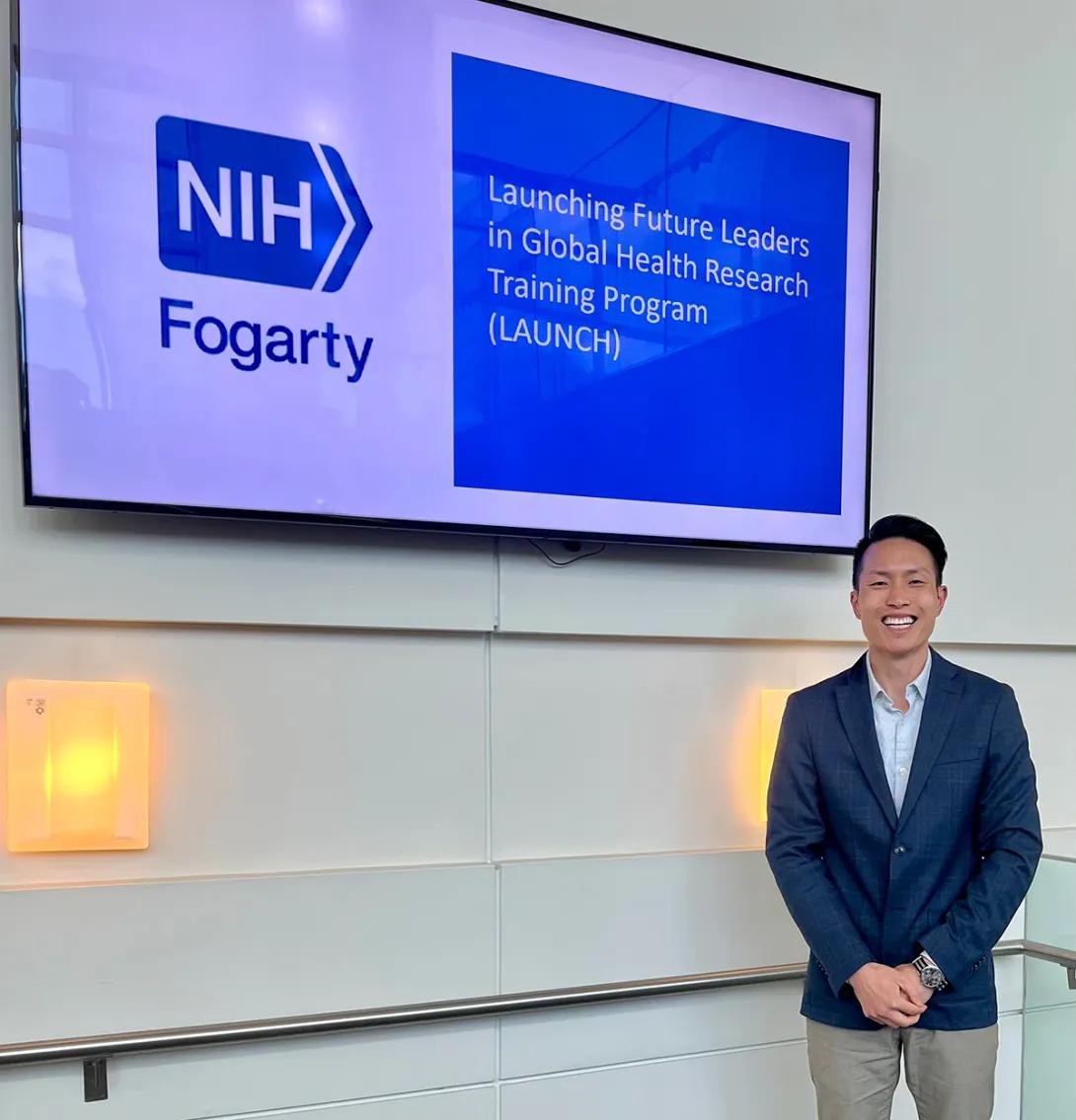
“When a child with a neonatal condition that requires surgery presents to a district hospital, oftentimes, the general practitioner who sees them has limited experience with their condition,” said Hsu, MD, PhD. “They may not know the best way to stabilize the patient for transfer. In some cases they might not think it is a survivable condition at all, when in fact it is.”
Such survivable conditions might include gastroschisis or omphalocele, defects in which the abdominal wall isn’t formed properly and require surgery to close. Intestinal obstruction is another treatable condition when properly diagnosed. Hsu’s project will begin by conducting a national needs assessment to identify the largest knowledge gaps.
Once needs are identified, Hsu and his Rwandan colleagues aim to organize and facilitate training sessions for general practitioners across at least five district hospitals across the country, with additional follow-up sessions for those interested in becoming trainers so they can teach others.
Guiding Hsu to develop the curriculum and conduct the training will be his UGHE and CHUK project mentors, Dr. Edmond Ntaganda, Rwanda’s first pediatric surgeon, and Dr. Barnabas Alayande, assistant professor of surgery. His US mentors are Dr. Robin Petroze, a pediatric surgeon at University of Michigan who also serves as Vice Chair for Global Surgery, and Dr. Robert Riviello, director of the Paul Farmer Program in Global Surgery at Harvard Medical School.
“I’m beyond thankful to be working with this team of incredible mentors,” Hsu said. “The Fogarty is a unique opportunity because it is a mentored experience, structured so that fellows can develop skills and a professional network while leading a meaningful project.”
U-M is a part of the Northern Pacific Global Health Research Training Consortium, a small group of US institutions that collaborate to connect trainees with established international partners and mentors. The consortium’s call for proposals for 2025 Fogarty Fellows is currently open until September 13, 2024.
While Hsu has done global health work previously, the Fogarty represents his most extended international experience.
“My long-term goal is to work internationally, building surgical capacity through clinical practice, education, and research,” he said. “To make an impact, I need to gain a skillset that allows me to collaborate effectively in an LMIC setting. The project represents a chance to develop those skills.”
Featured News & Stories
FDA-approved drug offers hope for patients with polycythemia vera, a rare bone marrow disorder
Announcing CCMB/DCMB Fall 2026 Seminar Series
Pediatric patient treated for rare kidney cancer
Jacob Mack: Helping Trainees Take the Next Step
AI, Well-Being and the Human Connection

