Maya M. Hammoud, MD, MBA, appointed Assistant Dean for Faculty, Clinical Track
She is the J. Robert Willson Research Professor and a clinical professor in the departments of Obstetrics and Gynecology and Learning Health Sciences
Author |

Maya M. Hammoud, M.D., M.B.A., has been appointed assistant dean for faculty, clinical track in the Medical School, effective May 11, 2026. In this role, she will provide leadership as part of the Office of Faculty Affairs on the oversight of clinical track faculty appointments, promotions, and advancement in the Medical School. She brings deep experience in faculty development, mentoring and coaching programs, and national medical education innovation, and will play a key role in strengthening the clinical track promotion and development infrastructure across the Medical School.
Hammoud is the J. Robert Willson Research Professor and a clinical professor in the departments of Obstetrics and Gynecology and Learning Health Sciences. She also is chief of the Women’s Health Division and director of the Program on Research, Innovation, and Development in Education in the Department of Obstetrics and Gynecology. She has a longstanding commitment to faculty development and advancement. She has led and implemented multiple faculty development initiatives locally and nationally, including the creation of faculty coaching programs and continuing medical education programs. She has extensive experience mentoring faculty and trainees in career development, promotion readiness, and educational scholarship, and has delivered numerous national workshops and faculty development seminars on topics such as academic advancement, coaching, and professional identity formation.
Hammoud completed her M.D. and M.B.A. degrees and residency training at the University of Michigan. She has been teaching for more than 20 years and has won many teaching and leadership awards, including the American Medical Association (AMA) Women Physicians Section Inspiration Award and Crain’s 2020 Notable Women in Health. Her research is in medical education with a special focus on the use of technology in education and the development of coaching frameworks that support learner and faculty growth. She has over 100 peer-reviewed publications and has published five books including “Coaching in Medical Education.”
Hammoud holds many leadership roles nationally. She is senior advisor for medical education innovations at the AMA with a focus on health systems science and coaching where she has led national faculty development efforts, including coaching programs, workshops, and educational resources that have reached thousands of educators across the country. She is past president for the Association of Professors of Gynecology and Obstetrics and currently serves on its Board of Directors. She also has served on the National Board of Medical Examiners’ Board of Directors and its council. In addition, she is principal investigator on a $1.75M Reimagining Residency Grant from the AMA on transforming the undergraduate medical education (UME) to graduate medical education (GME) transition. In this role, she led the development of ResidencyCAS, a novel residency application platform designed to support more transparent and holistic review.
Institutionally, she is serving in her second term on the Executive Committee of the Medical School, which oversees faculty appointments and promotions.
In This Story
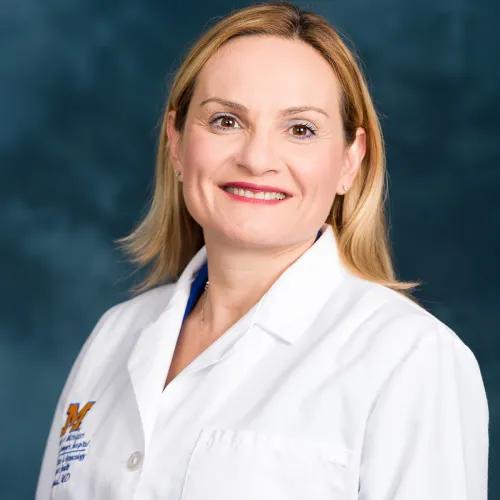
Maya Hammoud, MD, MBA
Clinical Professor
Featured News & Stories
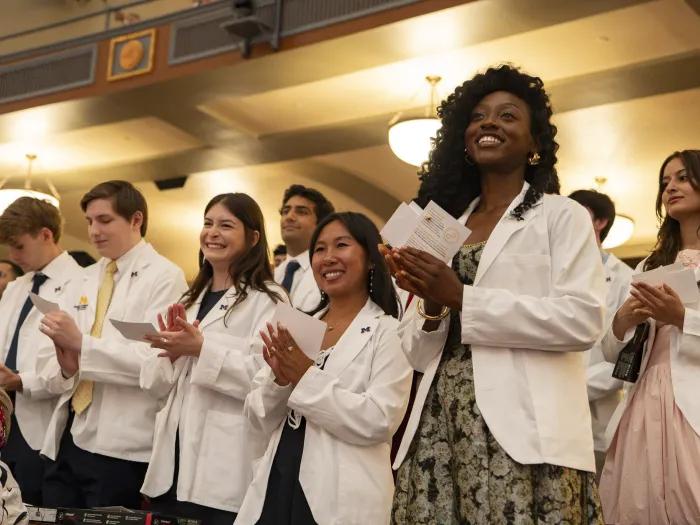
White Coat Ceremony marks start of medical school journey for incoming M1s
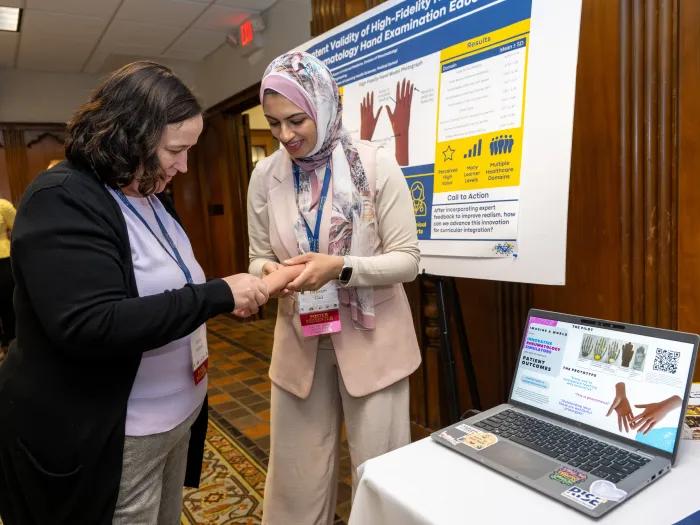
Helping Hands: Ibtissam Gad Is Rethinking How Clinicians Learn to Feel Disease

Many young adults may not be ready to manage their own health care

What should you know before starting a GLP-1?

University of Michigan Professional Nurse Council ratifies contract with University of Michigan Health