
Cellular & Molecular Biology PhD Program
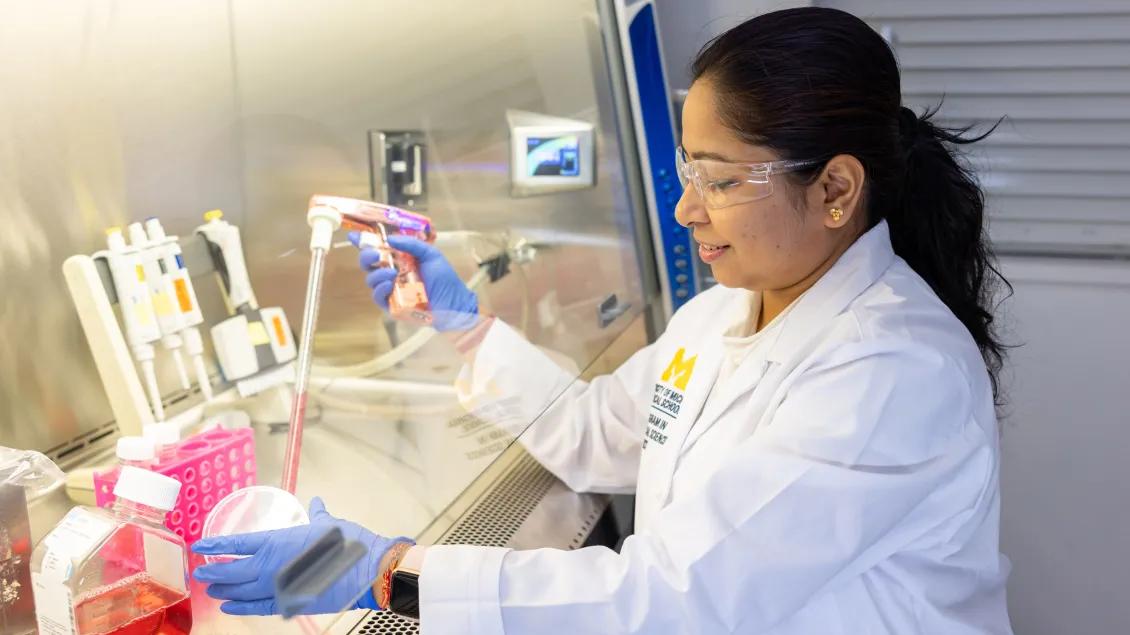
The U-M Medical School Cellular & Molecular Biology graduate program provides rigorous training in cellular and molecular biology while fostering individualized mentorship, leadership development, and interdisciplinary exploration.
Trainees are empowered to think across boundaries—from gene regulation and immunology to systems biology, precision medicine, and AI-driven discovery. In fact, many students now take advantage of a newly launched, hands-on AI and quantitative biology training series, pairing machine learning tools with cellular and molecular approaches to solve important biological problems.
For More Information
How to Apply
The application deadline is December 1st, for admission in September of the following year.
Qualifications:
- A Bachelor's degree or equivalent with a strong academic record.
- Prior laboratory research experience in a related discipline.
- Substantial undergraduate coursework in the areas of chemistry and biology.
Please note, you will apply first to be a PIBS student, and if admitted, will choose a PhD program from the PIBS umbrella of programs, which will start in your second year.
Applicants from the Medical Science Training Program (MSTP) interested in entering CMB should contact CMB at [email protected] during the G0 rotation year (no later than May if possible).
For questions about applying and being admitted in the first year, please contact the Program in Biomedical Sciences (PIBS) at [email protected]. For questions about transitioning from PIBS or MSTP to CMB, contact us at [email protected].
CMB Required Coursework
In addition to PIBS coursework, CMB has some course requirements as well. CMB-specific courses help you dive deeper into cell biology, biochemistry, and genetics. Along the way, you’ll take seminars, electives, and short courses designed to strengthen your research and communication skills.
One course in each of three areas is required: cell biology, biological chemistry, and genetics. CMB students can take any of a variety of graduate-level courses at the University to fulfill each of these subject requirements. The specific courses elected to fulfill these requirements are based on student's prior background and research interests.
Check out these sample courses from previous years, as well as a few course plans based on different research interest areas.
PIBS students take additional courses in the first year, such as the NIH-required ethics training in Responsible Conduct of Research; and Rigor, Reproducibility and Transparency. (MSTP students also take these courses in their G1 year).
Please check the PIBS Curriculum Guide for the most updated information on PIBS courses required in the first year.
- Pharm 502 is required in the 2nd year (grant writing, which helps prepare students for their preliminary exams)
- Two elective courses
- One quantitative course (core or elective)
- CMB Courses - CMB 850 (seminar required weekly), and CMB 630 (mini-speaker series, required 4 semesters)
Many of these are are taken in the 2nd year, but not always.
CMB students take CMB 850 each Fall and Winter. Every Monday, students present a seminar on current literature or their thesis work. The student seminar is a great tool for building communication skills and a breadth of scientific knowledge while incorporating social interaction.
CMBIOL 630/HUMGEN 631, or the "Short Course," is a mini seminar series that is coordinated by students each Fall and Winter semester, either by the CMB students in the Fall or Genetics students in the Winter (the course is cross-listed to both programs). Each semester has a theme in which guest speakers who are experts in their field and in the topic selected, are invited to Michigan for a seminar and discussion. This course is required 4 times before graduation, so students can select topics that are specifically interesting to them.
The sessions are open to the university community and attract large audiences. Titles of recent Short Courses include:
- Through the Looking Glass: Imaging-Based Innovation in Biomedical Science
- AI in Action: Applications in Cellular and Molecular Biology
- Adapting to a Changing World: Sustainability in a Biological Context
- Guarding the Genome: Recognition and Repair of DNA Damage
- The Nuts and Bolts of Protein Folding
- Stem Cell Biology
For Medical Scientist Training Program (MSTP) students, CMB recognizes the contribution of some medical school coursework to their graduate education and individualizes their curricula accordingly.
For this reason, MSTP students generally take 3 courses: genetics, Pharm 502, and a quantitative elective. They can also take a quantitative genetics course, but would still need to take a third course in this case.
Like PIBS students, MSTP students are also required to take PIBS 503 (Fall) and PIBS 504 (Winter). In addition to the pre-candidate courses listed above, this should be taken the first year they join CMB (G1 year).
Program Requirements & Training Features
The program provides flexible coursework that allows students to pursue individual interests, tailor their courses to their own backgrounds and research experience, and even pursue Master's degrees or certificates, while completing their PhDs. From research rotations to teaching, prelim exams, and committee guidance, you’ll follow a set of milestones that ensure both academic progress and professional growth.
- 1 term of teaching required: Option to submit a proposal for alternative professional development activities (e.g. internship, leadership of a student organization, clinical preceptorship, etc.)
- A minimum of 1 first-author publication is required to be submitted before defending (students average 1.7 first- author and 4.7 total publications)
- Program service (students are expected to serve on a CMB committee for 2 years, to gain leadership skills and contribute to program events)
- Regular attendance is required at dissertation defenses, and annual retreats and symposia
- Students are not required, but encouraged, to present their research, at various conferences and meetings (CMB and the graduate school both provide travel funds)
- Students are required to meet with their dissertation committees twice a year, to keep them on track and provide research and career guidance.
Students complete at least 3 research rotations in their first year (up to 5), after being admitted to the Program in Biomedical Sciences (PIBS). MSTP students take at least 2. Check the PIBS Curriculum page for more information.
After their rotation year, students can choose CMB as their program of choice, as well as a faculty mentor and a research topic. To find CMB faculty mentors, visit the PIBS Faculty Database, which allows you to search PIBS faculty by their research interests or other keywords.
The CMB preliminary examination involves students writing an original research proposal (written component) and defending it before a committee of CMB faculty members (oral component). The written and oral components of the preliminary examination must each be passed before a student achieves candidacy for the Ph.D. degree.
The preliminary exam (prelim) tests the student's ability to reason analytically and to develop ideas and experimental approaches. The exam is typically completed in the student's second/G1 year.
CMB requires students to complete one term of teaching as a GSI (Graduate Student Instructor). Students can also choose to pursue an optional Graduate Teaching Certificate, which is organized through the Center for Research on Learning & Teaching (CRLT). All GSI positions should be approved through CMB before the student accepts the position, since CMB needs to coordinate the GSI appointment with the student's current funding. Per the Graduate Employee Organization (GEO) rules, teaching should be a paid position, not volunteer.
To see a list of previous GSI positions students have held, review this List of Former/Current GSI Opportunities. Some may be outdated, so it is important to check the Careers website and the course catalog for updated courses and contact information.
As of May 2025, CMB has fully implemented the CMB Professional Development Program. CMB recognizes that our students have a wide breadth of research and career interests, and so it has created a program in which students can submit a proposal as an alternative to teaching, to complete other activities that will achieve similar competencies, but more closely match that individual student's future career aspirations. Review the guidelines and instructions for submitting a professional development proposal.
Students should start forming a dissertation committee within a month of passing their prelim exams and achieving candidacy. Dissertation committees provide research and career guidance to students, and keep students on track to write their dissertation and schedule their oral defense.
The lab mentor chairs the committee, which includes at least 3 additional members, each of whom must be affiliated with a Ph.D. program. At least two members of the committee in addition to the chair must be members of the CMB program faculty. Students are required to meet with their committee every 6 months. Students are expected to propose an oral defense date by their 5th year (G4 MSTP), assuming all CMB and committee requirements have been met.
Current PhD Students
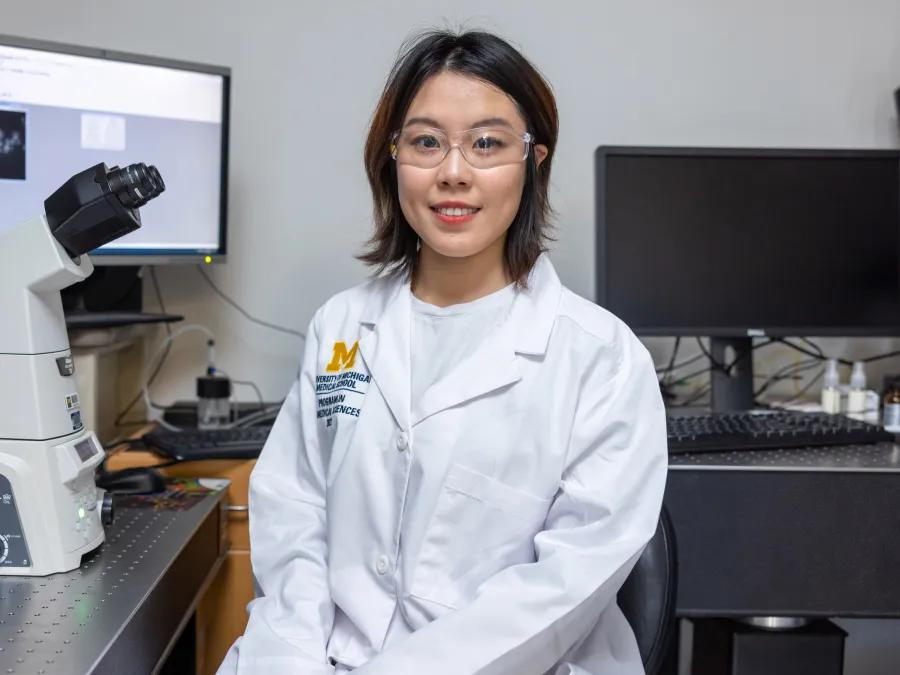
Meet the learners in the Cellular & Molecular Biology PhD program, each pursuing rigorous research and a flexible curriculum tailored to their interests.
Milestones & Timeline
Students all follow a slightly different timeline through the CMB PhD program. But in general, most students will have a timeline similar to the following for each year.
Learn more about the CMB program timeline and milestones in the CMB Student Handbook.
- Lab rotations
- PIBS and CMB Core Coursework
- Ethics Training - Responsible Conduct of Research (RCR) - Fall semester (PIBS 503) & Rigor, Reproducibility & Transparent (RRT): Winter semester (PIBS 504)
- At least 1 weekly program seminar (CMBIOL 850 if interested in CMB, or seminar from another program): Fall and/or Winter semester
- Selection of dissertation advisor and PhD program by end of academic year
For the most recent PIBS curriculum and rotation information, visit the PIBS website.
- CMB Core and Elective coursework: Finish by Fall semester
- Student seminar (CMB 850): Attend throughout graduate training - present seminar this year
- Short course (CMB 630): May begin taking short courses (4 semesters required before defense)
- Start attending CMB dissertation defenses: 4 per academic year required
- Preliminary exam: Winter of 2nd/G1 year
- Advancement to candidacy: End of 2nd/G1 year, once oral/written prelim exam are passed
- Formation of dissertation committee: Immediately after passing prelim exam and advancing to candidacy
- Start looking for a teaching position (Year 3/G2 or 4/G3)
- Dissertation committee meetings: Meet with committee by 6 months after candidacy, and every 6 months thereafter
- Student seminar (CMB 850): Attend throughout graduate training
- Short courses (CMB 630): At least 4 required before defending
- Teaching (one term): Typically during 3rd/G2 or 4th/G3 year
- Attend dissertation defenses: Attend 4 per academic year
- Write and defend dissertation, and complete Ph.D. requirements with target end date in 5th year (G4 MSTP)
Outreach & Student Life
The CMB program is student-driven, with over 10 student committees, and many other opportunities for students to get involved.
Funding & Fellowships
All students in good standing receive financial support throughout their graduate studies including a competitive stipend for living expenses, tuition and fees, and health and dental insurance.
The current minimum rate (effective Fall 2025) is $43,788/year ($3,649/mo, or $14,596/semester). This rate is set by Academic HR for GSRAs/GSIs and typically extends also to fellows. It is generally expected to increase each year, starting the first day of Fall classes.
Financial support is provided by PIBS for the first year. Second-year/G1 CMB students are generally supported by the CMB or MSTP Program through an NIH Training Grant and contributions from the Rackham Graduate School and the Medical School.
Other sources of support often include:
- Mentor’s research funds
- External fellowships: E.g. F31/F30, NSF, DOD NDSEG, various professional societies and foundations
- Specialized training grants: CMB students can compete for training support in a variety of specialized areas pertinent to their training, including Cancer Biology, Microbial Pathogenesis, Organogenesis, Systems and Integrative Biology, Tissue Engineering, etc.
In addition to full funding support, CMB also provides funding towards student travel to present their research at national meetings or attend career events ($500/academic year).
We are renowned for the quality of our health care. CMB students receive health and dental care insurance through the unique GradCare student health insurance plan, which allows students a full range of health care coverage. GradCare is provided to students and spouses, including a family allowance. Dental 1 is also included through Delta Dental in this plan, but students can pay extra to upgrade to Dental 2 or 3.
For questions about financial support in the first year of PIBS, please contact the Program in Biomedical Sciences (PIBS) at [email protected]. CMB can assist with applying for funding in the 2nd year (G1 MSTP) and beyond, although students are always supported financially in one form or another.
Contact [email protected] for any questions.

Wellness
The health and well-being of our team is a priority for our department's culture. Through onsite wellness programs and services, we offer diverse resources designed to support both you and your family.

Life in Ann Arbor
We find a new reason to love Ann Arbor nearly every day — year-round outdoor activities, cultural experiences, a growing food scene, and a welcoming, family-friendly atmosphere are just a few that come to mind. Explore all that Ann Arbor and our surrounding communities have to offer.
