Wildfires: How to protect your lung health in poor air quality
Experts offer advice for living in hazardous ranges
3:49 PM
Author |
This article originally ran on September 18, 2020 and was updated on January 8, 2025 and July 16, 2026.
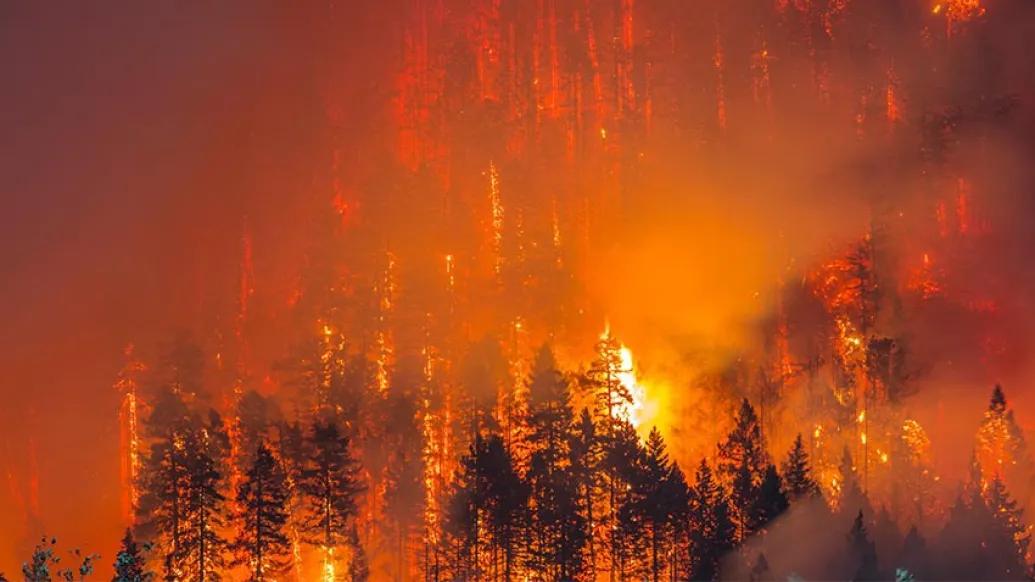
One of the unfortunate effects of climate change is an increase in the number and intensity of wildfires.
Air pollution and resulting poor air quality from wildfires is becoming an increasingly common occurrence, pushing the Air Quality index (AQI)—a numerical system running from 0 to 500 used by the EPA to report air quality—in many areas of the country into the unhealthy and very unhealthy ranges.
MeiLan Han, M.D., chief of pulmonary and critical care at University of Michigan Health and spokesperson for the American Lung Association, as well as Alexander Rabin, M.D., also a pulmonary and critical care doctor, discuss what this means and how you can cut down on your risk of illness due to exposure to poor air quality.
What does breathing "very unhealthy" air do to the lungs?
For patients with lung diseases such as asthma or chronic obstructive pulmonary disease, air pollution can make it immediately hard to breathe.
For children and teenagers, air pollution can impact lung development.
For individuals with cardiovascular disease, particle pollution can actually increase the risk of heart attacks and strokes.
Yet, even when the Air Quality Index reaches an unhealthy range, the health of people without underlying conditions can also be impacted.
Rabin says air quality is always a good enough reason to evacuate wherever you are, if possible, especially if you're part of a vulnerable population.
How can people protect themselves when the air quality is dangerous?
Limit the amount of time spent outside, if possible, when the Air Quality Index is high.
If you must go outdoors, try to limit exercising that requires you to take repeated, large breaths but if air pollution is high outside, avoid exercising outdoors.
Wearing an N-95 or KN95 mask outdoors can also help to mitigate risk when you must go outside.
Turning the air re-circulator on in your car can also provide added protection from soot and smoke.
If you have central air conditioning in your home, running it will also help to limit the amount of air pollution from outdoors circulating inside.
If you don’t have one, you can build an air filter at home for around $40.
People at particularly increased risk from harmful effects of smoke include pregnant people, children, older adults and those with chronic health conditions or who are immunocompromised.
However, when the Air Quality Index reaches the “unhealthy” zone, even those without underlying conditions may begin to notice difficulty breathing or burning sensations in their eyes and throat.
Rabin does note that, in general, only a couple days of exposure to smoke is unlikely to have long term effects for healthy people.
But, adds Han, inhalational exposures to cleanup workers can still occur if fire ash and dust are resuspended in the air in the process. Wearing an N95 or KN95 can help to protect recovery workers against inhaling toxic dusts during the cleanup process.
There is now a nationwide free email alert system called EnviroFlash that lets anyone sign up for alerts based on their location and the level of air quality in the forecast or at the current time. For instance, it's possible to request to be notified if the air quality forecast for your home area is forecast to be Unhealthy for Certain Groups tomorrow, or just to be notified if it is Very Unhealthy today.
What symptoms, if present, would you suggest people seek medical help for when air quality is poor?
Anyone who is experiencing significant respiratory difficulties should seek immediate medical attention.
In patients with an underlying lung condition like asthma, they should keep a rescue inhaler on hand.

Health Lab
Explore thousands of health news & research stories by visiting the Health Lab homepage for more.
Media Contact

Public Relations
Department of Communication at Michigan Medicine
In This Story

MeiLan K Han MD, MS
Professor

Alexander S Rabin, MD
Clinical Associate Professor
Related
Protecting children from poor air quality: 6 things to know
Weather emergencies affect older adults' health views
Stay Informed
Want top health & research news weekly? Sign up for Health Lab’s newsletters today!
Featured News & Stories

Nerf gun accident causes retinal detachment in pediatric patient
Rabies is on the rise: Experts offer advice

E-Bikes are everywhere, but most parents say they don’t know enough about them

Have an MCAS diagnosis? Well, maybe not

Foundation gift inspires additional gifts to strengthen youth mental health care