Researchers develop models to help diagnose ALS earlier through blood biomarkers
The models have the potential to shorten time to an ALS diagnosis, assess disease severity and identify possible treatment targets
5:00 AM
Author |
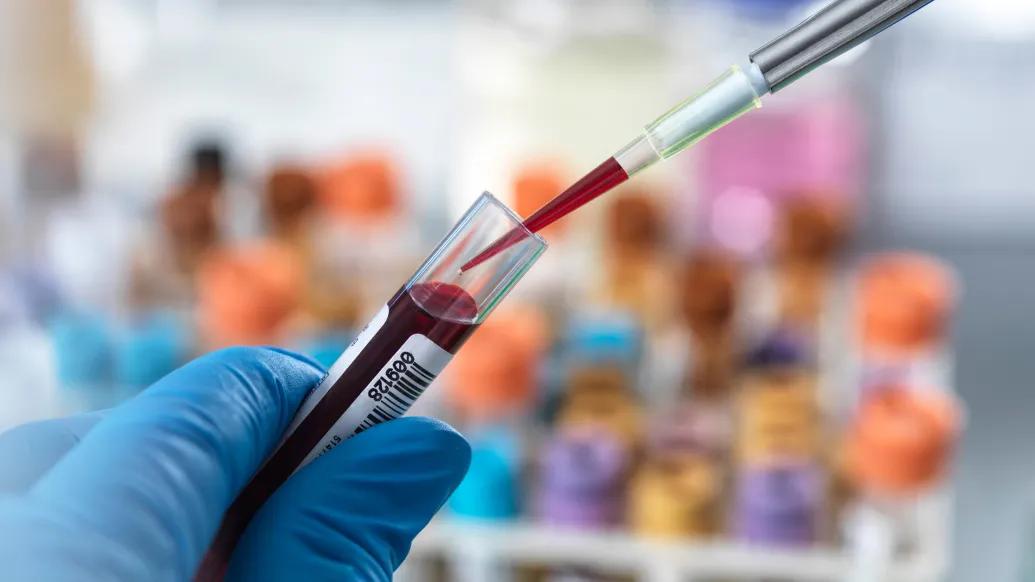
Using machine learning models, researchers at Michigan Medicine have identified a potential way to diagnose amyotrophic lateral sclerosis, or ALS, earlier from a blood sample, a study suggests.
The models, which analyze blood for biomarkers through gene expression with RNA sequencing to detect ALS, also have the potential to predict disease severity — and how long a person might live with the neurodegenerative condition.
The results are published in Nature Communications.
“Our findings present an incredible opportunity to potentially diagnose ALS earlier, which opens up doors to treatments and clinical trials for which people otherwise may not be eligible due to advanced disease,” said co-senior author Eva L. Feldman, M.D., Ph.D., director of the ALS Center of Excellence at U-M and James W. Albers Distinguished University Professor and Russell N. DeJong Professor of Neurology at U-M.
Patients with ALS typically survive between two and four years after they’re diagnosed.
However, ALS is difficult for physicians to identify, especially early in the disease. Many early symptoms may overlap with other more common neurological problems.
As a result, it can take over a year to get an official diagnosis, and patients may undergo unnecessary tests and procedures.
How the models work
Instead of identifying a single biomarker measure of ALS, Michigan Medicine researchers developed a gene classifier that detected several future disease biomarkers to expedite diagnosis.
This tool, called a gene expression biomarker panel, is commonly used in oncology to diagnose breast cancer and classify tumor subtypes.
Investigators found more than 2,500 unique genes that express differently in ALS compared to controls, many of which were linked to the immune system.
They input the data into a machine learning model, XGBoost, which they trained to predict whether ALS was present.
After narrowing panels down to contain between 27 and 46 genes, the model predicted ALS with up to 91% accuracy.
“After testing our model on our own samples, as well as data from other groups, it performed better than any previous attempt at an ALS biomarker signature,” said Yue Zhao, Ph.D., first author and research assistant professor in the U-M Department of Computational Medicine and Bioinformatics.
“Our results suggest a need for further investigation into this model as a tool to improve diagnostic accuracy and decrease diagnostic delay.”
Researchers later developed two more biomarker panels using different machine learning models to predict a person’s ALS survival.
This time, in addition to gene expression levels, they added clinical information to their models. This allowed them to better differentiate between shorter, intermediate and longer surviving cases.
No other biomarker is clinically developed for ALS prognosis. However, past research has associated levels of neurofilament light chain (NfL), an indicator of neuronal damage, with ALS disease progression.
The shortcoming with NfL, researchers note, is that levels are also elevated for other neurodegenerative diseases, such as Alzheimer’s, Parkinson’s and multiple sclerosis.
“While there are several methods of scoring and scaling ALS, our method is unique in its diagnostic and prognostic potential,” said co-author Stephen Goutman, M.D., M.S., director of the Pranger ALS Clinic, associate director of the ALS Center of Excellence, and Harriet Hiller Research Professor at U-M.
The analysis also revealed specific “core genes” in the blood of people with ALS that share features with the motor neurons in the spinal cord that are primarily affected by the disease.
Investigators leveraged the core genes to discover eight potential drugs that could have future therapeutic potential in ALS, after more research is completed.
Some of those drugs, such as the antipsychotic trifluoperazine and the BTK inhibitor ibrutinib, have been previously linked to ALS research.
Researchers say future studies are needed to validate these findings and drug targets before they can be applied to the clinical space.
“Pursuing these important next steps has incredible potential to advance diagnostic and therapeutic opportunities in ALS that could ultimately improve clinical care,” said Maureen A. Sartor, Ph.D., co-senior author and a professor of computational medicine and bioinformatics at U-M Medical School.
“It is an exciting time in ALS research.”
Additional authors: Xiayan Li, Kai Guo, Ph.D., Kai Wang, Ph.D., Minghua Li, Ph.D., Bo Li, Ph.D., Gayatri Iyer, Ph.D., Stacey A. Sakowski, Ph.D., Samuel J. Teener, Kelly M. Bakulski, Ph.D., John F. Dou, M.P.H., Alla Karnovsky, Ph.D., and Stuart A. Batterman, Ph.D., all of University of Michigan, Masha G. Savelieff, Ph.D., and Junguk Hur, Ph.D., both of University of North Dakota, Lili Zhao, Ph.D., of Northwestern University, and Bryan J Traynor, M.D., Ph.D., of Johns Hopkins University Medical Center and the National Institute on Aging.
Funding/disclosures: This study was partially supported by the National Institute of Neurological Disease and Stroke (NS127188, NS120926), the National Center for Advancing Translational Sciences (TR002240), the National Institute on Aging (AG000933 and the National Institute of Environmental Health Sciences (ES017885, ES030049) of the National Institutes of Health.
It also received support from the Centers for Disease Control and Prevention National ALS Registry (TS000289, TS000327) and the ALS Association (20-IIA-532).
The content is solely the responsibility of the authors and does not necessarily represent the official views of the NIH or CDC.
Additional support came from James and Margaret Hiller, Eric and Linda Novak, the Coleman Therapeutic Discovery Fund, the Peter R. Clark Fund for ALS Research, the Sinai Medical Staff Foundation, the Scott L. Pranger ALS Clinic Fund, the Dr. Randall W. Whitcomb Fund for ALS Genetics, the Richard Stravitz Foundation, the Stanford Morris ALS Research Fund and the NeuroNetwork for Emerging Therapies, University of Michigan.
Tech transfer(s)/Conflict(s) of interest:, Goutman, Feldman and Sakowski are listed as inventors on a patent (issue number US10660895) held by the University of Michigan titled “Methods for Treating Amyotrophic Lateral Sclerosis” that targets immune pathways for use in ALS therapeutics.
Michigan Research Core(s): University of Michigan Advanced Genomics Core
Paper cited: “Gene expression signatures from whole blood predict amyotrophic lateral sclerosis case status and survival,” Nature Communications. DOI: 10.1038/s41467-025-64622-5
Sign up for Health Lab newsletters today. Get medical tips from top experts and learn about new scientific discoveries every week
Sign up for the Health Lab Podcast. Add us wherever you listen to your favorite shows

Health Lab
Explore thousands of health news & research stories by visiting the Health Lab homepage for more.
Media Contact
Public Relations
Department of Communication at Michigan Medicine
In This Story

Eva L Feldman, MD, PhD
Professor

Yue Zhao, PhD
Research Assistant Professor

Stephen A Goutman, MD, MS, FAAN
Professor

Maureen Sartor, PhD
Professor
Stay Informed
Want top health & research news weekly? Sign up for Health Lab’s newsletters today!
Featured News & Stories

A metabolic “switch” that could help reset scar-producing cells in scleroderma

Emergency room intervention pairs smartphone, telehealth counseling to reduce risky firearm behavior

A pediatric epilepsy fundraiser that changes lives

Pain, psychological factors and physical function closely linked in people with systemic sclerosis
Many hospitals still don’t do enough to prevent UTIs from catheters