Finding answers for Dravet syndrome, a deadly form of epilepsy
Clinical trial for new treatment built on research aims to target root cause of rare neurological disorder
5:00 AM
Author |
Starting in infancy, some children experience frequent, hard-to-control seizures and developmental delays due to a severe type of epilepsy called Dravet syndrome.
The lifelong condition is notoriously difficult to treat, as many anti-seizure medications are either ineffective or can worsen symptoms and cause side effects that significantly diminish quality of life.
Dravet syndrome is also one of the most fatal forms of epilepsy: one in five children with the condition die from Sudden Unexpected Death in Epilepsy.
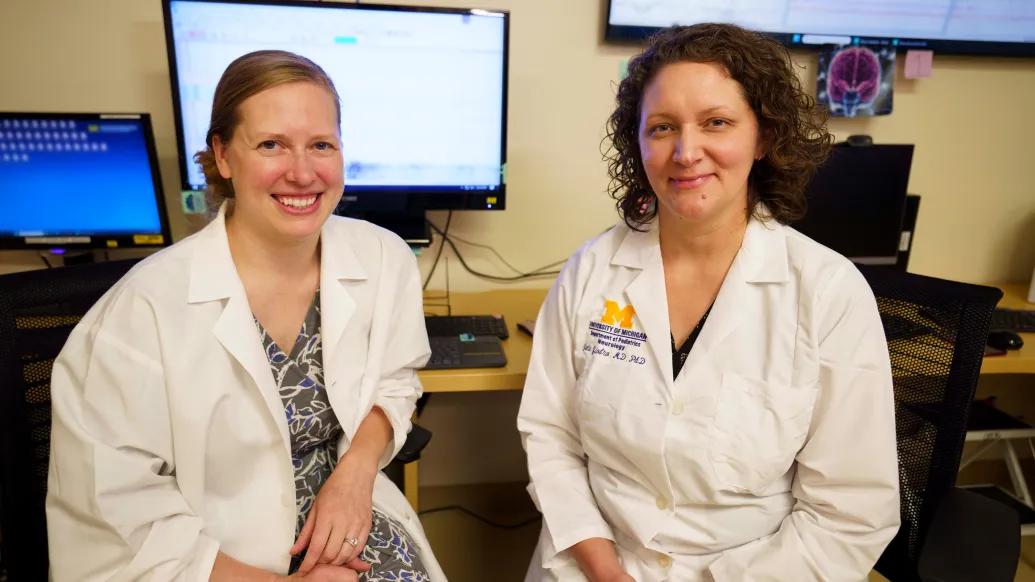
That’s why researchers at Michigan Medicine — from scientists in basic science labs at the U-M Medical School to pediatric neurologists at U-M Health C.S. Mott Children’s Hospital — are working to change the outlook for families living with this condition.
Mott has joined hospitals across the country in a global clinical trial sponsored by Stoke Therapeutics to test a potentially disease-modifying therapy for Dravet syndrome.
The new treatment is built on foundational research from Michigan Medicine and would be the first to directly address the underlying genetic cause of the disease.
“What makes this exciting is that we’re targeting the genetic change at the molecular level,” said Julie Ziobro, M.D., Ph.D., pediatric neurologist at the Comprehensive Pediatric Epilepsy Program at Mott Children’s and site sub-investigator. Mott pediatric neurologist Laurel Reed, M.D., is the site’s principal investigator.
“Current therapies are mainly focused on managing symptoms and many come with difficult side effects,” Ziobro adds. “With this trial, we’re exploring a treatment that could change the course of the disease itself.”
Ziobro answers key questions about Dravet syndrome, the research behind the clinical trial, and what this could mean for affected families.
How is research changing the approach to treating epilepsy like Dravet syndrome?
Ziobro: In the more than 15 years I’ve worked in epilepsy research and pediatric neurology, we’ve experienced a kind of genetic revolution where we’re finally identifying some of the causes of children’s seizures and epilepsy.
For years we could tell families what was wrong but not why. Now, with advances in genetics, we’re identifying specific molecular abnormalities and designing treatments that target those directly—down to the level of individual proteins—rather than just masking symptoms.
With this trial, we’re exploring a treatment that could change the course of the disease itself.”
-Julie Ziobro, M.D., Ph.D.
Dravet syndrome is one of the first examples where we’re trying to treat a genetic epilepsy at its source, and we hope this approach can be expanded to other forms of epilepsy in the future.
How did this particular line of research begin?
Ziobro: This trial is a great example of how basic science can lead to clinical breakthroughs.
It started with groundbreaking work by U-M scientists Lori Isom, Ph.D. and Miriam Meisler, Ph.D., who have been pioneers in understanding the link between sodium ion channel dysfunction and severe epilepsies such as Dravet syndrome.
They studied a mouse model with mutations in the SCN1A gene, the same gene affected in many children with Dravet. This allowed them to study the disease’s biology and test early treatment approaches.
Biotechnology company Stoke Therapeutics partnered with the team to explore a treatment strategy based on this foundational work. After promising results in the lab, they moved into clinical development.
That work led to the launch of the multi-center MONARCH study.
Our site has been participating since the first human subjects were enrolled in 2021 and the investigational medicine is now entering phase three.
What exactly is the trial testing?
Ziobro: We know that about 80% of patients with Dravet syndrome have a mutation in the SCN1A gene, which helps create a critical sodium channel in the brain.
People with Dravet usually have one healthy copy of this gene and one faulty copy, resulting in reduced production of this essential sodium channel.
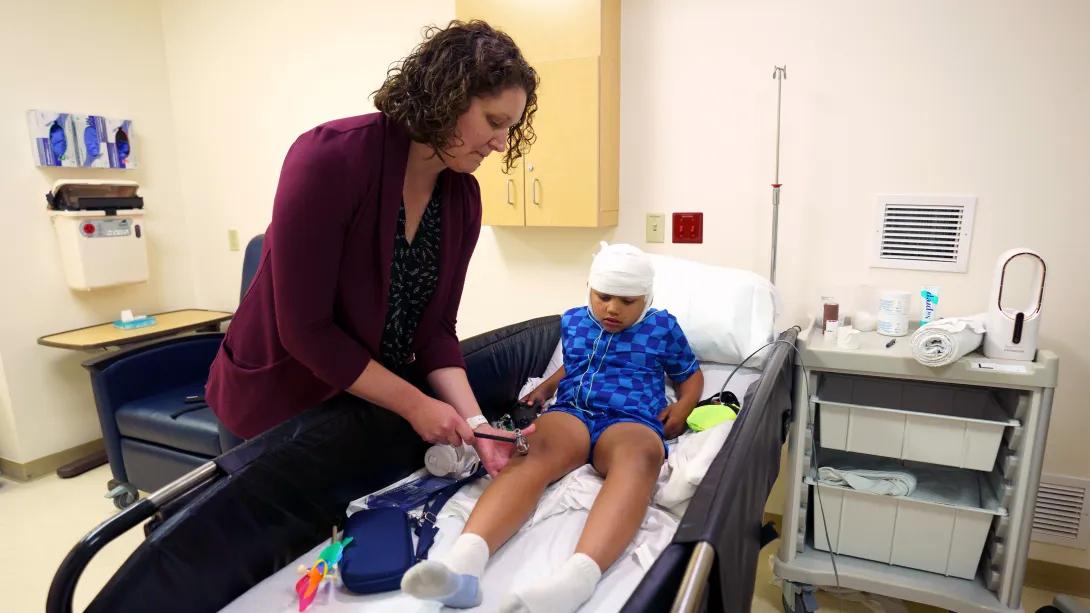
That reduction disrupts brain function and leads to epilepsy.
This new therapy is designed to upregulate the working copy of the SCN1A gene, essentially prompting brain cells to produce more of the healthy protein to compensate for the faulty gene.
The hope is that by restoring sodium channel function, we can reduce seizures and improve brain function in a meaningful, lasting way.
What results have emerged from phases 1 and 2 of the trial?
Ziobro: So far, the early results are encouraging, though additional research is needed to confirm long-term effectiveness and safety.
The medication, Zorevunersen, has shown potential as a disease-modifying therapy, meaning it doesn’t just treat symptoms but may change the disease’s progression.
Stoke recently shared data from patients treated for up to 4.5 years in the initial studies that showed seizure reductions of more than 75% in addition to improvement in cognitive function, behavior and overall development, which are areas that traditional medications don’t typically address.
Why is this research such a breakthrough for families?
Ziobro: While we’ve come a long way in improving early diagnosis, families still face enormous challenges.
Dravet is a lifelong condition with high risks, including prolonged seizures, developmental delays, injuries from accidents during seizures and in the most tragic cases, SUDEP.
It also strikes during a child’s most critical years of development, affecting cognition, motor skills, speech, and behavior. Many families live with constant fear, and existing treatments often come with trade-offs that limit quality of life.
If we can intervene early with a therapy that targets the root cause, we may be able to alter that trajectory and give these children a chance at a fuller, safer life.
Disclosures: Ziobro and Reed participate in research funded by Stoke Therapeutics. Ziobro has participated in research studies funded by Biocodex and has a research collaboration with Ionis Pharmaceuticals.
Sign up for Health Lab newsletters today. Get medical tips from top experts and learn about new scientific discoveries every week.
Sign up for the Health Lab Podcast. Add us wherever you listen to your favorite shows.

Health Lab
Explore thousands of health news & research stories by visiting the Health Lab homepage for more.
Media Contact

Public Relations
Department of Communication at Michigan Medicine
In This Story

Laurel Reed, MD
Clinical Assistant Professor
Related
The dangerous intestinal disease fatal to premature babies and vulnerable infants
Stay Informed
Want top health & research news weekly? Sign up for Health Lab’s newsletters today!
Featured News & Stories

What’s the latest on 7-OH and kratom availability and addiction care?

A metabolic “switch” that could help reset scar-producing cells in scleroderma

Depression in OBGYN residents needs more attention, study suggests

Emergency room intervention pairs smartphone, telehealth counseling to reduce risky firearm behavior

A pediatric epilepsy fundraiser that changes lives