CCMB Seminar: Morgan Levine, PhD
Palmer Commons, Forum Hall
This week's DCMB seminar will be held via Zoom (only)
About This Event
“Origins of Life & Death: Aging as an Out of Distribution Problem”
Abstract
Evolution was able to produce living systems with unfettered complexity, solely by optimizing a simple emergent feature—reproductive fitness. In many ways, this task shares features with learning in machine systems allowing us to draw parallels between evolution and deep neural networks. One of the keys to successful learning in both artificial and living systems is training in the context of variable conditions, and it is this limitation that I propose as a theoretical underpinning of the phenomenon of biology aging. While Darwinian Evolution elegantly hints at how the highly ordered complex structures that define living matter evolved, we are still left wondering why such systems inevitably perish. Many theories have been proposed over the years that can generally be grouped into three categories: programmed, damage-based, or quasi-programmed. I propose a novel theory of aging that falls in the category of quasi-programmed, yet at the same time, frames quasi-programmed theories in the context of optimization constraints in living systems. In essence, I propose the following: that the programs employed by living systems have been highly optimized for fitness via selection. However, as with AI models, successful performance in these systems is predicated on the context to which they were trained. As described by proponents of evolutionary theories, the forces of natural selection decline with age and from this perspective, one can also frame this as a dearth of exposure to the context of old age during “evolutionary training”. Thus, the systems will still employ the policies it had learned under the training contexts (e.g. the young organismal state with high fitness potential), however these policies can be inappropriate or even detrimental under the never-before-seen context (e.g. the old organism with low fitness potential). Finally, I will discuss the application of multi-scale AI/ML models for capturing the complex phenomena of aging and learning how to optimize health.
Presenters
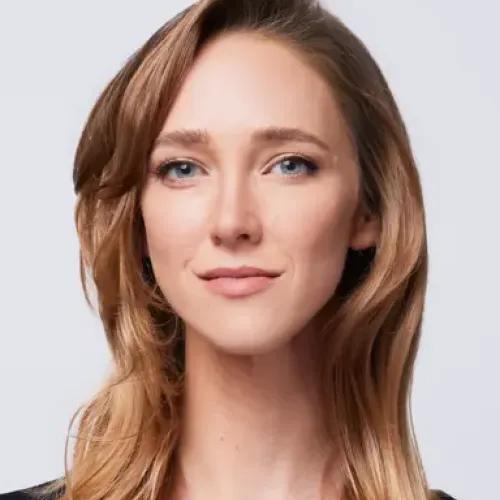
Morgan Levine, PhD
VP, Computation
Altos Labs
Dr. Morgan Levine is a Vice President of Computation at Altos Labs and formerly a Principal Investigator at the San Diego Institute of Science.
Prior to joining Altos, Morgan was a ladder rank professor at Yale University School of Medicine. She is considered a leader in the biology of aging, most famous for generating cutting-edge methods for quantifying the system dysregulation that occurs over an organism’s lifetime. Her work relies on interdisciplinary approaches, integrating theories and techniques from computational and cellular biology to track trajectories aging cells and organisms take over time. Morgan's vision is to develop multi-scale computational models that translate how dynamic molecular states of cells lead to manifestations of health and disease at the tissue, organ-system, or organismal level. She has received numerous awards for her work, including the Vincent Cristofalo Rising Star Award in Aging Research in 2021 and the Nathan Shock New Investigator Award in 2020.