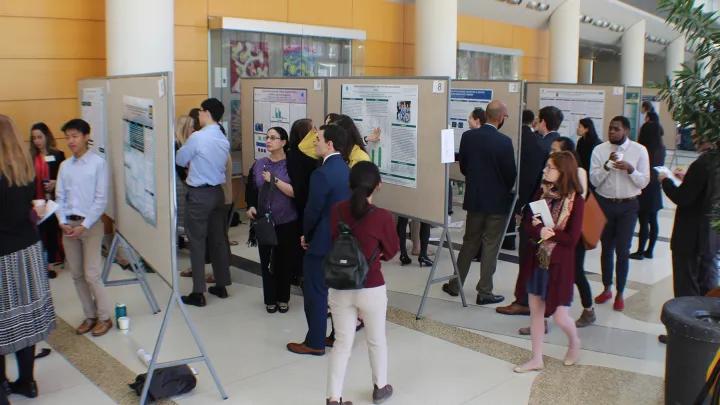
CCMB Seminar: Jianzhi Zhang, PhD
Medical Science Building 1 (MS1), Room 4B700
ZOOMAbout This Event
CCMB/DCMB Seminar by Jianzhi (George) Zhang, PhD
"Multi-environment fitness landscapes suggest effectively endless adaptation"
Abstract
Adaptive evolution proceeds through beneficial nucleotide substitutions in the genome, yet the number of such substitutions (N) required to reach a local or global fitness peak where no single mutation further increases fitness remains unknown. Here we estimate N by simulating adaptive walks on two large, complete, multi-environment adaptive landscapes inferred from massive empirical data using machine learning, with validation from smaller experimentally mapped landscapes. We find that N rises linearly with the number of variable sites (L) in the landscape, regardless of prior adaptation in another environment. Extrapolation suggests a minimal N of 10^5 for typical prokaryotes and 10^7 for mammals. By contrast, in highly rugged shuffled landscapes, N is markedly reduced, while fitness gains also shrink. The relatively smooth empirical landscapes therefore enable greater fitness gains while lengthening adaptive walks, rendering even local fitness peaks effectively unreachable before environments change. These results explain the persistence of fitness gains in long-term evolution experiments and the widespread occurrence of beneficial mutations across species. They suggest that populations continuously adapt while remaining far from fitness optima, challenging the long-held view that adaptation culminates at fitness peaks.
Presenters
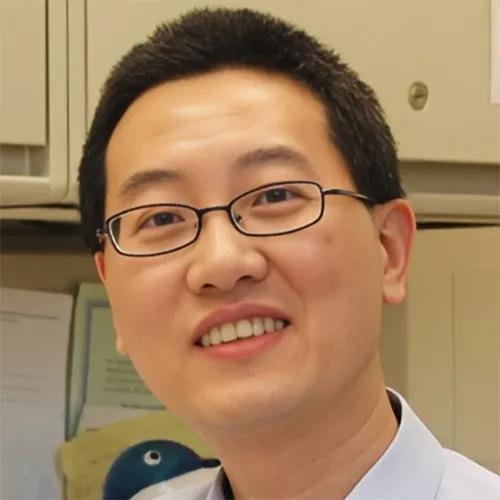
Jianzhi (George) Zhang, PhD
Marshall W. Nirenberg Collegiate Professor
Department of Ecology and Evolutionary Biology
University of Michigan
Jianzhi (George) Zhang is a Professor of Ecology and Evolutionary Biology interested in the relative roles of chance and necessity in evolution. He got his B. S. from Fudan University in Shanghai, China, and his Ph. D. in Genetics from Pennsylvania State University. He was a Fogarty postdoctoral fellow at the National Institute of Allergy and Infectious Diseases before moving to the University of Michigan.
Professor Zhang’s research focuses on two main research areas: (1) yeast as an experimental system for studying evolution, where his research group uses the budding yeast Saccharomyces cerevisiae and its relatives as model organisms to understand a variety of evolutionary processes such as the genetic basis of phenotypic variations among strains and species, or molecular and genomic bases of heterosis; and (2) computational evolutionary genomics where they use evolutionary, genomic, and/or systemic approaches to analyze publicly available data to characterize and understand pleiotropy, robustness, epistasis, gene-environment interaction, gene expression noise, translational regulation, RNA editing, convergent evolution, adaptation, origin of new genes, among-protein evolutionary rate variation, and other important genetic and evolutionary phenomena. Projects may also involve modeling and simulation, including the MICDE catalyst grant project where the team is using deep neural networks to infer molecular phylogenies and extract phylogenetically useful patterns from amino acid or nucleotide sequences, which will help understand evolutionary mechanisms and build evolutionary models for a variety of analyses.
Host/Moderator

Meng Wang, PhD
Assistant Professor