Yolanda Rivera-Cuevas, PhD, receives 2022 MacNeal Dissertation Award
The Department of Microbiology and Immunology (M&I) recognizes a doctorate thesis for its exceptional and innovative science as well as for its understandability to a non-expert audience with The Ward J. MacNeal Educational and Scientific Memorial Trust Distinguished Dissertation Award. Since 1999, 22 prestigious MacNeal awards have been bestowed to M&I PhD trainees.
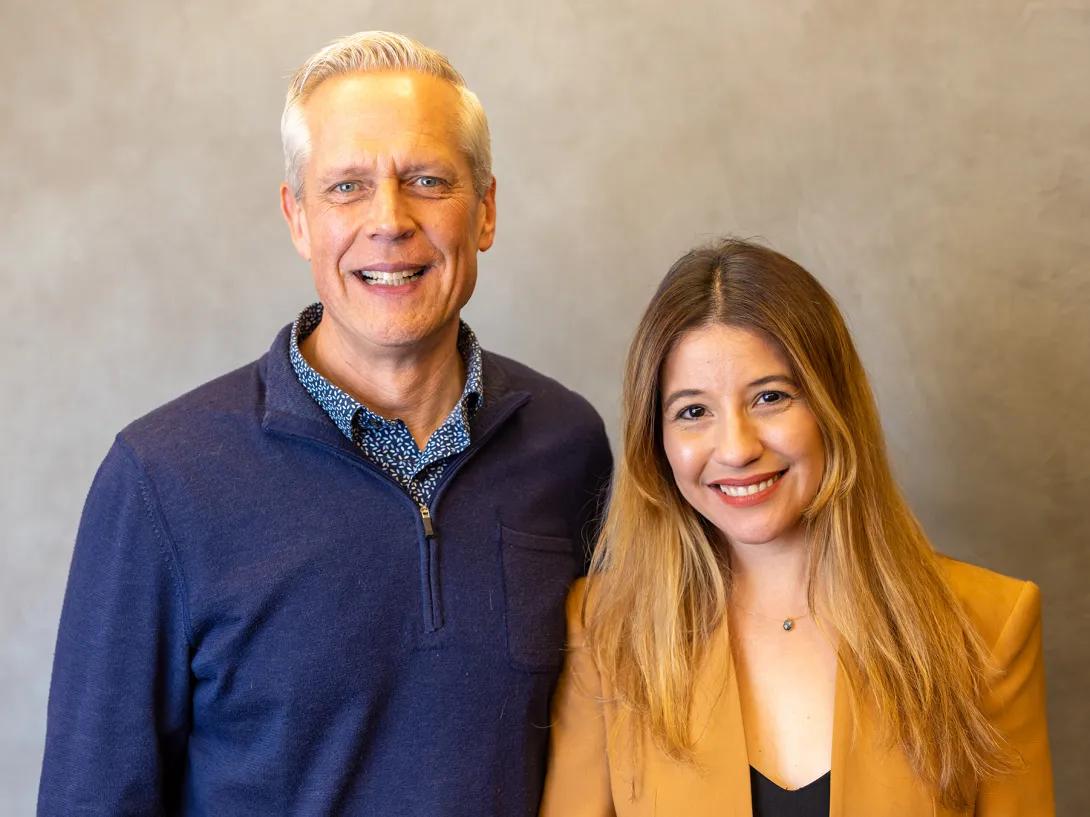
The 2022 MacNeal Award was presented to Yolanda Rivera-Cuevas for her dissertation titled “Toxoplasma gondii exploits the host ESCRT machinery for the uptake of host cytosolic proteins,” defended March 10, 2022. Her dissertation mentor was Professor Vern Carruthers. On March 3, 2023, Dr. Rivera-Cuevas gave the 2022 MacNeal Award lecture in Ann Arbor. Her talk was titled “GBP1-driven innate immune defence against Toxoplasma gondii.” Lecture abstract and PPT
About Yolanda Rivera-Cuevas, PhD
Dr. Rivera-Cuevas graduated with a PhD in Microbiology and Immunology from the University of Michigan in 2022. In 2015–16, she was a National Institute of Health (NIH) Postbaccalaureate Research Education Program (PREP) Biomedical Research Fellow at the University of Michigan Medical School, under the mentorship of Professor Michele Swanson.
Rivera-Cuevas received a BS, magna cum laude, in Molecular Cell Biology from the University of Puerto Rico in Rio Piedras, Puerto Rico and an A.S., magna cum laude, in Natural Sciences from the University of Puerto Rico in Utuado, Puerto Rico.
She is currently a Postdoctoral Research Fellow at the University of Birmingham, School of Biosciences, UK, in Dr. Eva-Maria Frickel’s Lab. Her research seeks to elucidate the hierarchy for the recruitment of immune related proteins targeting T. gondii replicative compartment.
Her scientific interests are in infectious diseases, host-pathogen interactions, neglected tropical diseases, parasitology, eukaryotic pathogens, vector biology, apicomplexan biology, molecular cell biology, protein-protein interactions, and vesicular trafficking.
Meet Yolanda Rivera-Cuevas, PhD
-
What brought you into this field?
When I started doing research, I was first interested in host-microbe interactions. It wasn't until taking the microbial pathogenesis course from the M&I core graduate courses that I became fascinated by parasites. That's when I decided to rotate in Vern's lab and found that my interests aligned with the PhD project he presented to me on Toxoplasma gondii.
-
What was the most exciting moment(s) in the Carruthers lab?
We established a collaboration with a group at Albert Einstein College of Medicine and they were doing experiments to identify GRA14-interacting proteins. From the beginning of the project, even before I joined, it was hypothesized that GRA14 (our protein of interest encoded by the parasite) was capable of interacting with the host Endosomal sorting complex required for transport (ESCRT) machinery. ESCRT machinery manipulates membranes to form small packets called vesicles. I remember receiving the results from our collaborator when I was walking around beautiful Old San Juan at night with my family. I opened the email and saw that most of the proteins identified by our collaborators as interacting with GRA14 are components of the ESCRT machinery. This really cemented that our prediction was correct. I cherish this moment because I was able to share it with my family, since being far from them to pursue my professional career has always been difficult for me.
Another memorable and exciting moment from the Carruthers lab was when I first saw that TSG101 (a key ESCRT component) was recruited to the parasite replicative compartment and that this was completely disrupted when the parasites no longer expressed GRA14. By then we already had lots of data supporting our hypothesis but after seeing it through live microscopy it was pretty crystal clear. I suppose I'm more of a visual learner so microscopy-based experiments have been my favorites.
-
How are your U-M research and experience helping you as a postdoc – and possibly beyond?
I'm very thankful for the training I received at the U-M, the collaborative environment, the constructive feedback during student seminars and the exposure to so many science and network opportunities from our departmental seminar series. Thanks to all these experiences I'm able to contribute intellectually to other people's research and also become a more independent researcher. I’m also capable of establishing productive collaborations for my postdoc work and future in academia.
-
What are your career plans?
My goal is to pursue a tenure-track position at a research-intensive institution where I will advance the understanding of host-microbe interactions and neglected infectious diseases i.e., those that have not received sufficient attention. As an underrepresented minority I am committed to increasing diversity in STEM and I aspire to do so through inspiring, teaching and mentoring the next generation scientists. Being a first-generation college student has made me appreciate the value of having role models early in our education. For this purpose, I additionally want to engage in science communication and outreach.
-
What do you like to do outside the lab?
I really like travel and photography, the move to Europe has been great to get back into it. Always enjoy being with family and friends, being outdoors or at the beach, and while in Puerto Rico I have a special hobby with my dad to go on a hike along a river and look for petroglyphs made by the indigenous people of Puerto Rico.
In This Story
Vernon B Carruthers, PhD
Professor
Featured News & Stories
Human Rabies Exposures Growing Across the Country
Continuing the legacy of a doctor’s doctor
New Certificate in Global Health Program welcomes first cohort of residents, fellows
Karsten Bartels, MD, earns Gladys Sessler Outcomes Research Consortium Award