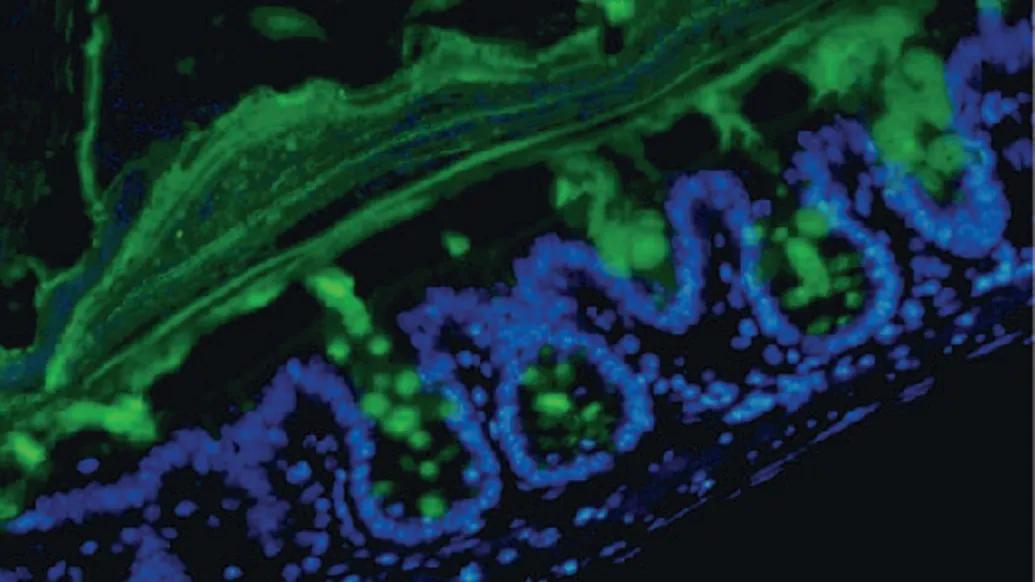
Have you ever wondered about the hidden microbial world inside your gut? Dive into the fascinating study of the molecules that fuel our energy or learn how a high fiber diet can do wonders for your gut. From the life-saving early detection of colon cancer to finding possible treatments for inflammatory bowel diseases and C diff. infection, M&I cutting-edge research is transforming our understanding of the biology that impacts our health and is shaping the future of healthcare.
Our intestine is home to a multitude of different types of bacteria, viruses and other microbes that form a dynamic ecosystem called the gut microbiome. These microbes exchange a multitude of chemical signals with each other and with their host and have tremendous power over our health. The numbers and types of organisms in this community are influenced by changes in our diet, or our overall health, including when we take antibiotics. Sometimes these changes can lead to an imbalance in the gut community, which can make us sick or make some chronic illnesses worse.
| Interesting fact: The microorganisms living in the human gut use multiple strategies to process and scavenge for food, including feeding on dietary resources as well as on certain carbohydrates processed and produced by the host. |
M&I scientists seek to understand the still largely unknown and complex interactions between gut bacteria and how these microbes shape our health. A challenge for this area of research is that microbiome composition is different between individuals, changes over time and can be impacted by our diet and the environment we live in. Therefore this work requires deep knowledge of the biochemistry of individual microbes, and how these bacteria respond to each other and their environment. Despite the complexity of this work, M&I researchers are forging ahead as their research into the gut microbiome has potential for therapeutic discoveries ranging from diagnostic to treatments, drug discovery and cures.
| Interesting fact: Some bacteria produce molecules (metabolites) that might cure a disease in their host. This fact suggests tremendous potential for pharmaceutical applications of this research. |
Below are several examples of research led by M&I scientists. This research is funded in part by federal grants from the NIH and NSF. We are grateful for this support.
Colon cancer diagnostic
Pat Schloss, Ph.D., studies the microbiome to find microbial biomarkers that indicate the presence of colorectal cancer. Such discovery could reduce the need for invasive colonoscopies. There are 1.4 million people in the US with a history of colorectal cancer who could benefit from this research. This work requires collecting data and developing computational tools to analyze them.
| Interesting fact: In the U.S., only about 30% of people follow colon cancer screening guidelines, largely in part because colonoscopies are so invasive. By developing better non-invasive diagnostics we hope to increase the likelihood that people will get screened and that those diagnostics will do a better job of detecting early stage tumors. |
Bacterial take over
Antibiotics that treat bacterial infections can also create an imbalance in the composition of the gut microbiome, which can lead to severe diseases. This is the case for example of Clostridioides difficile, a bacterium that can take over during antibiotic treatments, resulting in a dangerous infection of the colon. It is a considerable threat to human health, each year causing as many as half a million infections, 29,000 deaths, and a healthcare burden of $4.8 million.
In M&I, Vincent Young, M.D., Ph.D., has demonstrated that C. difficile infection recurrence is associated with changes in the structure and function of the indigenous gut microbiota. Current research in the Young Lab includes an integrated approach that combines clinical research, bacterial genomics in collaboration with the Snitkin lab, microbial ecology and immunology/host response projects. With these complementary approaches, these scientists seek new ways to prevent and control C. difficile infection.
The team discovered how fecal microbiota transplantation can change gut microbiota structure back towards "normal" to treat recurrent C. difficile infection (CDI). Dr. Young was an ad hoc member of the FDA committee that recommended approval of the first "microbiome therapeutic" for treating recurrent CDI.
The Schloss lab also focuses on the impact of antibiotic therapies and C. difficile infections. This team uses a combination of RNA sequences to determine categories of bacteria, and has developed sophisticated computational medicine methods and techniques (metagenomics, metatranscriptomics, and metabolomics) to identify microbial functions. These are important to understand as they play a role in resistance to antibiotics and clearance of C. difficile. These computational tools have been widely used by microbial ecologists for the past 15 years.
| Interesting fact: In 2023, the first microbiome therapeutics was approved by the FDA. The oral administration of fecal microbiota is thought to facilitate restoration of the gut flora to prevent further episodes of Clostridioides difficile Infection (CDI). |
(Interesting fact source)
Harnessing the microbiome healing power
This research requires a deep understanding of the relationship between diet, digestion, and the processes by which the gut microorganisms interact with each other or the components of our diet that are not readily digested by our own bodies.
Eric Martens, Ph.D., seeks to optimize the beneficial functions provided by the microbiome to prevent or treat diseases. For this research, his team focuses on dietary fiber polysaccharides, which are the health-promoting components contained mostly in the plants we eat (fruits, vegetables, seeds, nuts). Unlike cooked starches (e.g., potatoes and rice) and simple sugars, dietary fiber polysaccharides are by definition not digestible by human intestinal enzymes. Thus, humans rely on our gut bacteria to digest fibers for us and our symbiotic bacteria release some of the nutrients they unlock from fibers in the form of molecules that we directly absorb and use as sources of energy.
The Martens Lab has spent many years connecting individual bacteria and their corresponding genes to degradation of different dietary fibers, which has contributed to our understanding of this central component of human digestion. At the same time, they have discovered that some bacteria degrade protective intestinal mucus, which is also a carbohydrate-rich mixture. When dietary fiber is insufficient, our gut bacteria become “hungry” and degrade mucus, which in some cases contribute to inflammation and intestinal disease. This research in the Martens Lab could identify naturally occurring foods and prebiotics made from fruits and vegetables that would promote certain bacteria or block deleterious behavior like mucus degradation to promote better health and inhibit or treat diseases.
Tom Schmidt, Ph.D., is also seeking healing resources in the microbiome. He began efforts to understand how dietary fiber affects the human gut microbiome by establishing a large cohort of healthy individuals who were recruited from an undergraduate course on the microbiome. Participants consumed a dietary fiber supplement and monitored changes in the composition and production of microbial metabolites by microbial communities in the gut. They found that production of a beneficial metabolite, called butyrate, was stimulated by increasing consumption of some fermentable fibers.
Based on this result, a clinical trial was initiated to determine if patients receiving a bone marrow transplant would benefit from consuming a dietary fiber supplement. Preliminary results suggest that butyrate production also increased in participants in this clinical trial and that it was associated with a decreased incidence of Graft versus Host Disease. While the clinical trial is continuing, the Schmidt lab is working to better understand interactions between gut microbes and their host, and how therapeutic concentrations of these metabolites could be obtained through manipulation of the microbiome.
| Interesting fact: By-products of one organism serve as important resources for another: Some gut microbiome organisms act as generalists that are able to degrade a wide range of polysaccharides that provide energy. Others are specialists that are only able to target a few select large carbohydrates. All are members of a metabolic network where substantial cross-feeding takes place. |
Nicole Koropatkin, Ph.D., studies how starch in our diet is consumed by different gut bacteria. Starch is the most abundant carbohydrate in the average American diet and is a favorite fuel for some gut bacteria. These microbes express highly specific starch-binding proteins on their cell surface that give them the ability to bind to starch and break it down to use as energy. The Koropatkin lab uses techniques such as protein crystallography and cryoelectron microscopy that allows them to “see” these cell surface proteins to understand how they recognize different parts of starch molecules.This information can be used to design food supplements that can feed certain gut bacteria based on how they recognize and use carbohydrates like starch. Gut bacteria that consume starch produce metabolites called short chain fatty acids as an end product. These molecules can help curb inflammation, prevent colorectal cancer, and prevent infection from pathogens including Salmonella.
| Interesting fact: Starch is not the same thing as fiber! Starch is a carbohydrate made only of the sugar glucose, the same sugar that our cells use for energy. Starch is a very long molecule and much of it forms a long “curly” structure of hundreds of glucoses. Only a few bacteria in the gut have evolved a way to recognize the “curly” shape of starch directly within starch granules such as those found in foods like whole grains and potatoes. |
Diet affects colon inflammation
In the U.S., inflammatory bowel disease (IBD) is estimated to affect the lives of 2.4 to 3.1 million patients, with various degrees of severity. But we still do not thoroughly understand how IBD comes about. Seeking remedies, the Martens’ team studies the impact of dietary fiber on the development of inflammation that results from bacterial erosion of the colon’s mucus layer. These scientists observed that in the case of a fiber deficient diet and host gene variants associated with human IBD, that the gut microbiota feeds on glycoproteins that make up the bulk of colon mucus. When this happens, the protective effects of secreted mucus are deteriorated and this triggers colitis. They also found that production of certain bacterial metabolites can reduce inflammation paving the way to optimize these molecules to prevent inflammation. These results, observed in animals, suggest dietary strategies to address Crohn’s Disease and ulcerative colitis.
Communication in complex relationships
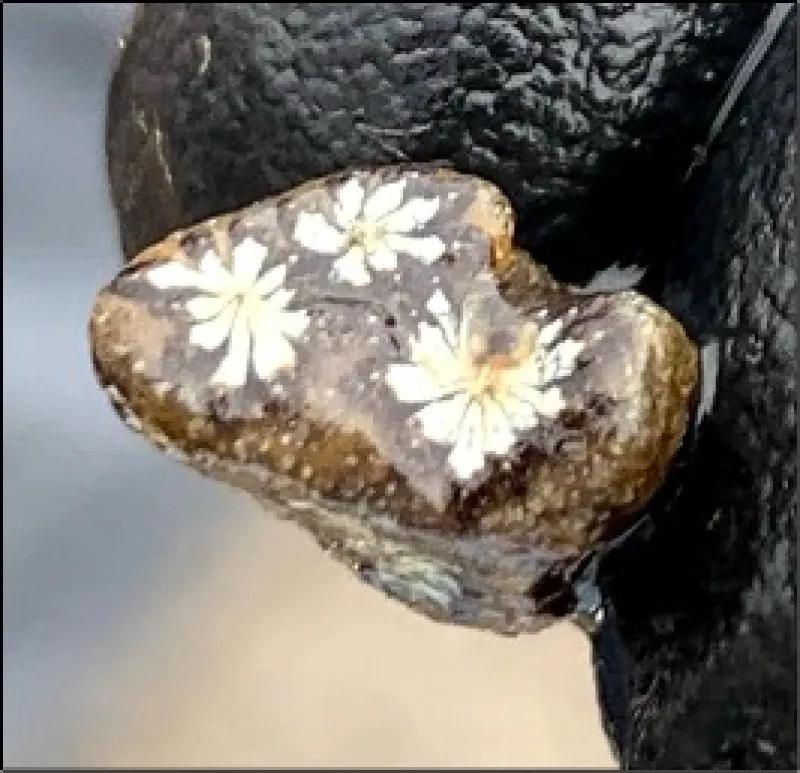
Photo: A marine tunicate, Botryllus schlosseri, on a small chunk of sand. These tunicates are one of our closest living relatives and harbor fascinating molecules that might one day be useful as drug leads for human health.
Many basic questions remain regarding the gut microbiome interactions, for example regarding the symbiotic relationship between host cells and bacteria, where one lives only if in relation with the other. How do these close partners communicate? Are their interactions driven by molecules?
Marcy Balunas, Ph.D., and her research team look for answers to these questions. Her team seeks to understand the complex chemical communication that happens in microbiome systems, including the human gut as well as several model systems like the Hawaiian bobtail squid, tunicates (also known as sea squirts), honeybees and their hives, and fungus growing ants. Could bacteria produce molecules that have therapeutic benefits for their host? Could these molecules become drug leads for human diseases?
| Interesting fact: Some bacteria produce molecules (metabolites) that might cure a disease in their host. This fact suggests tremendous potential for pharmaceutical applications of this research. |
The Balunas Lab use dynamic approaches that combine microbiology, natural products chemistry, metabolomics, and genomics from humans and model systems. To process this complex data, the Balunas team developed software that helps prioritize molecules from metabolomics data. These analyses contribute to identifying the molecules that interact with the host cells, contributing to either disease or health by inhibiting pathogens. These findings could lead to new molecules for drug discovery for human diseases.
| Interesting fact: The female Hawaiian bobtail squid possess a unique organ entirely dedicated to hosting bacteria to protect their eggs. |
For more information on all the research done by our faculty in this area, please visit our microbiome research page.
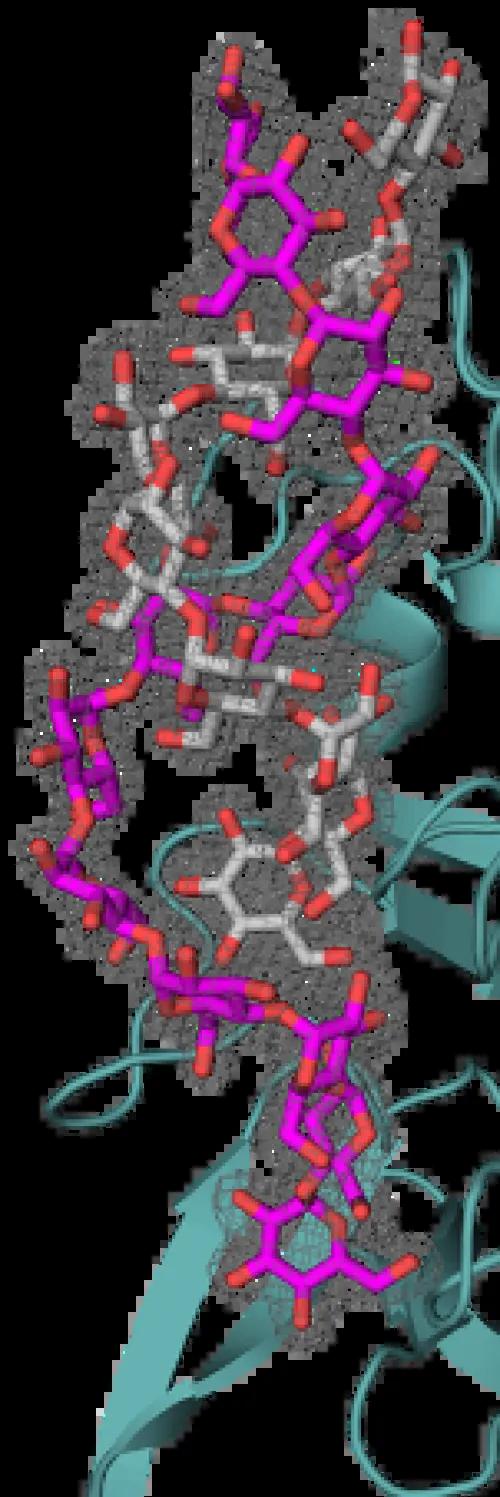
Below: Electron density and model for a fragment of the starch polysaccharide amylopectin bound to a bacterial protein (From Photenhauer, et al., Nat Struct Molec Biol 2024). Most amylopectin in starch granules is a double helix, and each chain is made of repeating glucose sugars. The two chains are shown in pink and grey.
References
Balunas and Schloss labs
Mason, A.R.; Johnson, G.; Krampen, J.; Nguyen, J.N.T.; Balunas, M.J.; Schloss, P.D. mpactR: An R adaptation of the Metabolomics Peak Analysis Computational Tool (MPACT) for use in reproducible data analysis pipelines. Microbiol. Resour. Announc., 2025, 14, e00997-24. Link
Koropatkin lab
Photenhauer AL, Villafuerte-Vega RC, Cerqueira FM, Armbruster KM, Mareček F, Chen T, Wawrzak Z, Hopkins JB, Vander Kooi CW, Janeček Š, Ruotolo BT, Koropatkin NM. The Ruminococcus bromii amylosome protein Sas6 binds single and double helical α-glucan structures in starch. Nat Struct Mol Biol. 01/2024. doi: 10.1038/s41594-023-01166-6. PMID: 38177679.
Martens lab
Desai, M.S., Seekatz, A.M., Koropatkin, N.M., Kamada, N., Hickey, C.A., Wolter, M., Pudlo, N.A., Kitamoto, S., Terrapon, N., Muller, A., Young, V.B., Henrissat, B., Wilmes, P., Stappenbeck, T.S., Núñez, G., and Eric C. Martens. (2016). A dietary fiber-deprived gut microbiota degrades the colonic mucus barrier and enhances pathogen susceptibility. Cell 167(5):1339-1353. PMC5131798.
Luis A.S., Chunseng J, Vasconcelos Pereira G., Glowacki W.P., Gugel S., Singh S., Byrne D.P., Pudlo N.A., London J.A., Baslé A., Reihill M., Oscarson S., Eyers P.A., Czjzek M., Michel G., Barbeyron T., Yates E.A., Hansson G.C., Karlsson N.G., Cartmell A., Martens E.C. (2021). A single sulfatase required to access colonic mucin by a gut bacterium. Nature, 598:332-337. PMC9128668.
Vasconcelos Pereira G., Boudaud M., Wolter M., Alexander C., De Sciscio A., Grant E., Caetano Trindade B., Pudlo N.A., Singh S., Campbell A., Shan M., Zhang L., Yang Q., Willieme S., Kim K., Denike-Duval T., Kennedy L., Schmidt T.M., Lyssiotis C., Chen G., Eaton K., Desai M.S., Martens E.C. (2024) Opposing diet, microbiome, and metabolite mechanisms regulate inflammatory bowel disease in a genetically susceptible host. Cell Host & Microbe 32:527-542. PMID: 3851365.
Schloss lab
Schloss software packages
Armour CR, Topcuoglu BD, Garretto A, Schloss PD. 2022. A Goldilocks Principle for the Gut Microbiome: Taxonomic Resolution Matters for Microbiome-Based Classification of Colorectal Cancer. mBio. 13: e03161-21. DOI: 10.1128/mbio.03161-21.
Schmidt lab
Riwes MM, Golob JL, Magenau J, Shan M, Dick G, Braun T, Schmidt TM, Pawarode A, Sarah Anand S, Ghosh M, Maciejewski J, King D, Choi S, Yanik G, Geer M, Hillman E, Lyssiotis CA, Tewari M, Pavan Reddy P (2023) Feasibility of a dietary intervention to modify gut microbial metabolism in patients with hematopoietic stem cell transplantation. Nature Medicine 29: 2805-2813
Campbell A, Gdanetz K, Schmidt AW, Schmidt T.M. H2 generated by fermentation in the human gut microbiome influences metabolism and competitive fitness of gut butyrate producers. Microbiome (2023) Jun 15;11(1):133. doi: 10.1186/s40168-023-01565-3.
Smith BJ, Miller RA, Schmidt TM (2021) Muribaculaceae genomes assembled from metagenomes suggest genetic drivers of differential response to acarbose treatment in mice. mSphere 6(6):e0085121. doi: 10.1128/msphere.00851-21.
Young lab
Miles-Jay, A., Snitkin, E.S., Lin, M.Y. et al. Longitudinal genomic surveillance of carriage and transmission of Clostridioides difficile in an intensive care unit. Nat Med 29, 2526–2534 (2023). https://doi.org/10.1038/s41591-023-02549-4
In This Story
Patrick Schloss, PhD
Professor
Vincent Bensan Young, MD/PhD, FIDSA, FAAM
Professor
Evan Snitkin, PhD
Associate Professor

Eric C Martens, PhD
Professor

Thomas Schmidt, PhD
Professor
Nicole M Koropatkin, PhD
Associate Professor
Marcy Balunas, PhD
Associate Professor
Featured News & Stories