U-M study to evaluate cannabis coaching program for chronic low back pain
Rachel Bergmans, PhD, MPH, and Kevin Boehnke, PhD, will lead the NIH-funded feasibility trial
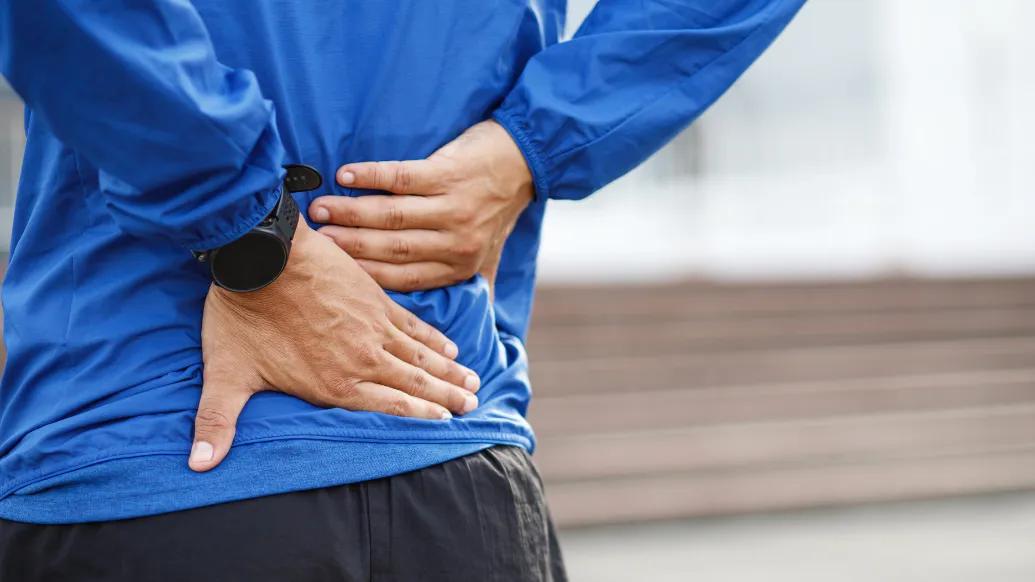
A new University of Michigan Medical School study will evaluate whether a coaching program designed to help adults with chronic low back pain use legal cannabis products more safely and effectively is ready for a larger effectiveness trial.
The project is led by Rachel Bergmans, PhD, MPH, and Kevin Boehnke, PhD, of the Department of Anesthesiology. It recently received funding from the National Institutes of Health’s National Center for Complementary and Integrative Health.
Medical cannabis is legal in 41 states, and cannabis products are increasingly used to manage pain. However, because cannabis had been classified as a Schedule I drug at the federal level until April of this year, researchers have faced substantial barriers to conducting clinical trials examining its safety and effectiveness for chronic pain.
“Many people rely on cannabis products for pain management, and many others are interested in whether cannabis is something they should consider. At the same time, there is a disconnect between the availability of and interest in these products and the clinical guidelines for their use. As a result, people may fall through the cracks as they seek relief, and healthcare providers may not feel comfortable or equipped to discuss cannabis as an integrative therapy for pain,” Bergmans said.
“This project provides an essential foundation for advancing pain science and understanding how to support patient-centered decisions based on individual preferences, goals and safety concerns.”
To support these patient-centered decisions, U-M researchers developed a personalized coaching intervention for cannabis use and pain management.
The program pairs participants with a coach who provides cannabis-based education and helps the participant create a self-directed cannabis-use plan based on their needs and goals. It also uses a virtual dashboard, where participants can access educational materials and track their cannabis use, symptoms and potential safety concerns on a smartphone, computer or similar device.
Unlike a conventional drug trial, the study will not provide or prescribe a standardized cannabis product. Participants will select and use their own legally obtained products, allowing researchers to study cannabis use in a real-world setting without supplying a federally restricted substance.
“Current clinical trials for pain use products that are not available to patients using cannabis, and it is very difficult to assess the effects of cannabis used by people in the real world for pain in classic clinical trials because the products are not FDA approved,” Boehnke said.
“Through this intervention, we can assess real-world use patterns of cannabis and, ideally, help shape them to minimize harm and maximize benefit.”
The research team will conduct a 12-month feasibility trial involving 80 adults with chronic low back pain at sites in Michigan and California. Participants will be randomly assigned to receive either the coaching intervention or access to the dashboard’s educational and tracking resources without coaching.
The researchers will assess whether participants can be successfully recruited and retained across both sites, whether the coaching program can be delivered consistently while addressing individual needs, and whether the study’s digital and in-person methods adequately capture cannabis-use and safety information.
The new study builds on a 2022 single-site feasibility study that focused the coaching intervention on veterans with chronic pain (now being tested in a larger trial). By focusing this new study on adults with chronic low back pain, the researchers can evaluate the program in a broader population affected by a condition associated with substantial disability and economic cost.
If the study meets its feasibility benchmarks, the findings will provide a foundation for a larger trial evaluating whether the program improves pain-related outcomes and supports safer cannabis use among people with chronic low back pain.
In This Story

Rachel S Bergmans, MPH, PhD
Research Assistant Professor

Kevin F Boehnke, PhD
Assistant Professor
Featured News & Stories

Human Rabies Exposures Growing Across the Country

Continuing the legacy of a doctor’s doctor
New Certificate in Global Health Program welcomes first cohort of residents, fellows
Karsten Bartels, MD, earns Gladys Sessler Outcomes Research Consortium Award