Metro Detroit high schoolers train as researchers with U-M's MYHealth Program
Students examined data about youths’ sleep habits and energy drink consumption.
Author |
More than 30 high school students from across metro Detroit recently presented MYHealth Impact Projects Final Presentations as part of their nine-month research training work with the University of Michigan’s Department of Family Medicine faculty and staff, as well as student peer leaders from area high schools and U-M.
The MYHealth program is a completely virtual, NIH-funded health research training program for high school students in southeast Michigan. The program typically begins with a summer session where students meet other program members and learn research basics.
During the academic year, students who continue with the program work in teams to choose a youth-focused health topic and conduct their own Impact Projects studies using hands-on activities and surveys. Program alumni can return for an additional 12 months as peer leaders to learn more about research and mentor Impact Projects teams throughout the research process.
“We’ve seen participation in this program rise over the years,” said Melissa DeJonckheere, Ph.D., MYHealth program director and assistant professor in the Department of Family Medicine. “Every year, I continue to be impressed by the level of engagement on the part of these high school students. And the program builds upon itself since many students stay on to become mentors and peer leaders to new students coming into the program.
“These young people truly represent the future of health research.”
Seventeen young researchers-in-training presented their findings from a survey that asked their peers about behaviors that impacted their sleep, for better or worse. Their presentation was titled, ‘“Putting Away Sleep”: Are Youth Sleeping on Sleep?’
An additional 15 high school student researchers focused on the effects of energy drinks on young people with their presentation titled, “Everyone is running low on battery”: Findings from an Open-Ended Survey on Youth Energy Drink Consumption.”
In addition, program participants from the Peer Leaders and the Research Training Advisory Council (RTAC) introduced the MYHealth program components and methods and moderated a Q&A session for each presentation.
Data for both studies were collected from the MyVoice National Youth Survey, an open-ended, text message-based poll led by Department of Family Medicine faculty member Tammy Chang, M.D., MPH, MS, and her research staff.
Upon receiving the collected data, students worked in teams to conduct a thematic analysis to identify key patterns and themes. They then condensed information into an end-of-year presentation to share with the community.
Both teams presented information on what is already known about the subjects; talked about the importance of studying the two health topics; described how they conducted thematic analyses of qualitative data provided by MyVoice responders; and outlined their findings.
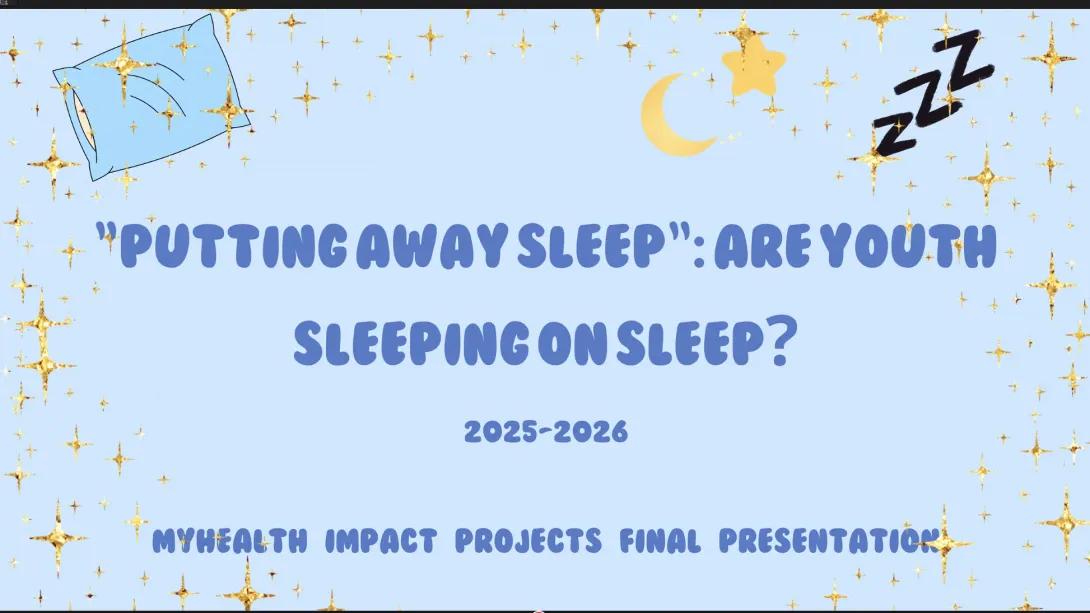
The sleep study team found that many young people lose sleep due to stress and anxiety; time spent on their phones; busy schedules between work and school, causing them to stay up late to gain back free time; and medical issues related to insomnia. MYHealth students also reported that youth felt they needed between seven to nine hours of uninterrupted sleep each night to feel well rested.
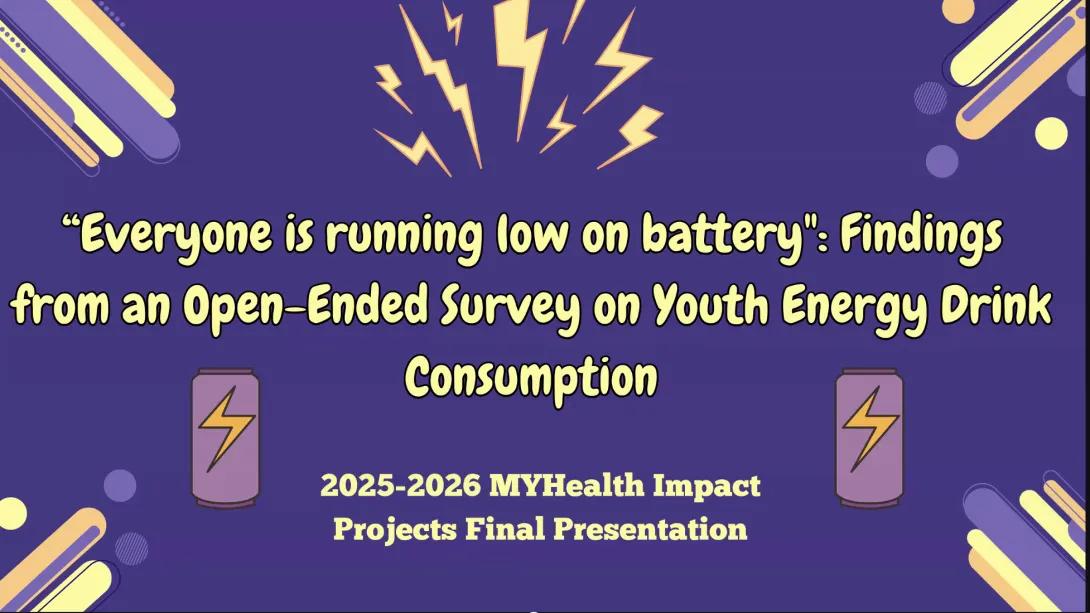
The energy drink team found that people tend to drink energy drinks if their friends and family do, and societal pressure to be productive can lead to increased stress and reliance on energy drinks. Most people know that energy drinks can cause exhaustion, less energy, and may harm mental health. Adolescents are aware of these negative effects and believe that more education and better alternatives could help reduce energy drink consumption.
MYHealth program participants also suggested future research directions for each study.
“My favorite part of the research process was probably the theme analysis, mainly because we got to look at the overall responses and truly got deeper into why we think these responses (related to not getting enough sleep) were so common, and why we think certain responses weren't as common,” said Impact Projects participant Kamilah Muhammad.
Athena German, who also worked on the sleep Impact Projects team, remarked that putting the slides together and sorting out the different ideas for each topic was her favorite part of the overall research project.
“With this kind of research, we create research from scratch,” she said. “We are given all kinds of lessons, practically each week, about researching. We also create our research questions, then send them out to all kinds of people around the United States, not just in Michigan.”
Other students discussed the challenges of examining so much data. Impact Projects participant Regina Sánchez Gálvez said she found taking the scope of the research subject -- something as large and complex as teen attitudes towards energy drink consumption -- and finding five good, neutral research survey questions that would elicit the most responses was the most challenging part of the study for her.
“Something that we did see with some of our responses were single-word answers, or limited or vague answers,” she said. “Finding the sweet spot to create questions that would give us the scope of the information that we wanted, while being as straightforward for the participant to respond and give us a detailed response, took a lot of thought on our part.”
Peer Leader Sarah Modalla, who has participated since the summer of 2024, shared reasons for wanting to dedicate the approximately two years learning about research and mentorship that peer leaders usually spend.
“Personally, I really wanted join (the MYHealth program) because I'm planning to work in the healthcare field in the future, and I feel like no matter where you are in healthcare, having a good understanding of research is what helps you stand out and be a good healthcare provider,” she said. “It's really rare to find something like this at the high school level, so that's why I wanted to join and get ... an early introduction to research before I can go to my undergraduate years.”
Alen Ter-Azaryan, who participated in the energy drink Impact Projects team, agreed that being knowledgeable about conducting research is academically beneficial.
“I think just having a good understanding of research is important, especially if you want to go into the medical field, because (when you’re) looking into ideas for clinical trials or you're looking at past research papers, you ... need to know what type of research study you’ll find,” he said.
Peer Leader Eiliyah Syed said that her participation has netted her many valuable skills.
“I think research is an amazing skill to have, no matter what field you go into,” she remarked. “Working with the team really exposed me to different perspectives and helped me gain confidence in a scientific setting. This program also has helped me with overall skills outside of research, such as public speaking.”
Impact Projects participant Lylah Anwar said she appreciated the fact that the work is conducted by young people, examining data provided by young people.
“What makes the MYHealth Program stand out is that it's research about adolescents, done by adolescents, so it brings in real perspectives and experiences that you don't usually get in a field dominated by adult researchers,” she said.<
Impact Projects participant Peyton Caldwell, who took part in analyzing sleep information, said she wanted to take part because she intends to go into biomedical engineering.
“I wanted to get hands-on experience with research, because I know it's a part of what I want to do in the future,” she said. “(I wouldn’t be able to) do that without looking into articles, peer-reviewed sources, and doing literature reviews, and thematic analysis.
“I feel like I've already seen the payoff ... in an AP History class,” she added, “and I've already had to use some of those skills there, so even if you're not in STEM, I think a lot of the baseline skills still transfer.”
MYHealth Program Director DeJonckheere is hopeful that funding for the program will continue to ensure that high school students are exposed to health research from an earlier age.
“We will continue supporting MYHealth participants as they explore the possibilities of research and STEM careers in the future,” she said. “They are part of our research community, and I hope they return to work with MyVoice studies and with our MYHealth team along their educational journey”
More information and updates from the MYHealth program can be found on their website at www.myhealthmichigan.com.
In This Story
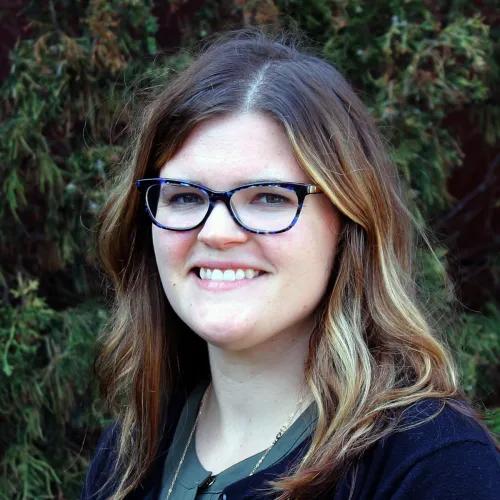
Melissa DeJonckheere, PhD
Associate Professor
Related
High school students present social media research findings as part of MYHealth program
MYHealth student participants present final Impact Projects
Featured News & Stories

Have an MCAS diagnosis? Well, maybe not

Stephan Taylor, M.D., quoted in Ars Technica story, "Man told ChatGPT he was feeling delusional. ChatGPT insisted he was Jesus"
Faculty Spotlight: Dr. Sara McCoy
Rare cancer diagnosis inspires community of support
Who’s at risk for painful periods?