On March 21, 2025, Jialin Liu, Ph.D., defended his doctoral dissertation titled “Mapping Cell Fate Transitions from Single-Cell Multi-Omic and Spatial Transcriptomic Data.” His mentor was professor Joshua Welch, Associate Professor in the Gilbert S. Omenn Department of Computational Medicine and Bioinformatics (DCMB) and the Department of Computer Science and Engineering at the University of Michigan.
“Spatial transcriptomic is a new field with many brand new opportunities.”—Jialin Liu, Ph.D.
Liu has developed computational methods for integrating multiple variable data of single cells. To make this software robust and to validate it, the team collaborated with professor Noriaki Ono, DDS, Ph.D., formerly at U-M and now at the University of Texas Health Houston. Dr. Ono is interested in stem cells and cell differentiation in embryos. The team developed an algorithm to analyze data in three dimensions and then added a timeline to assess cell evolution. They compared RNA sequences from young and old mice, and were able to identify potential stem cells. These results presented in his dissertation, have already been published in three articles, including in Nature Communications (2023).
“Defining stem cells is most challenging, because by definition, they have undefined multiple characteristics with many possibilities. That makes these cells very exciting to study, while it is also the strongest way to prove that our algorithm is really working,” said Liu.
Liu has already published 10 scientific articles, demonstrating his productivity as much as his collaborative approach to computational work.
“Jialin was an outstanding student, and I will miss having him in my group. He was one of the most collaborative and ambitious students I have worked with. One of his key strengths is his ability to bring together a team of researchers to accomplish a common goal. He had his own “lab within the lab”, as evidenced by the large number of co-authors on his papers.”—Joshua D. Welch, Ph.D., Associate Professor, Gilbert S. Omenn Department of Computational Medicine and Bioinformatics and Department of Computer Science and Engineering, University of Michigan
Liu’s future as a postdoctoral fellow
Liu aspires to become a professor in academia and will do his postdoctoral training at the U-M Life Sciences Institute with professor Tzumin Lee, a neuroscientist and a Howard Hughes Medical Institute investigator.
The Lee lab uses both invertebrate and vertebrate model systems to study neuronal lineage development and cellular fate mechanisms. They aim to tailor neuronal lineages to engineer neural networks with desired functions, and ultimately seek to improve cell therapy for neurodegenerative diseases.
In the Lee lab, Liu will apply the computational tools that he has developed during his doctoral studies to understand brain development. The Lee lab is building a spatial-temporal atlas of the brain, developing a technique for 3-D analysis of spatial transcriptomics of deep tissues. This technique has the power to analyze the entire drosophila brain made of a limited number of neural stem cells, and can identify how stem cells specialize in the drosophila brain over time, generating 4-D spatial transcriptomic models. Unlike traditional methods that take slices of the brain and assemble them together, Liu aims to consider all the brain cells as one data set, reducing technical bias. “While a drosophila brain is very solvable, mouse or human brains are far more complicated than that! There will be many challenges but I think that we can do it,” he said.
Background
Liu’s purely computational work constitutes a shift from his undergraduate studies in molecular biology that took place at ShanghaiTech University, China.
Single cell sequencing technology was quickly developing during that time, and Liu realized the power and efficiency of computational medicine. “Research through quantitative approaches is entirely different from traditional qualitative approaches at the bench. Computer gives you an answer very quickly and you can keep trying.” With the computer's feedback, findings that benefit the community are delivered more quickly. “New data comes rapidly, and I could publish new computational tools to address cutting-edge and urgent needs every year,” he said.
Liu joined DCMB and the Welch lab in 2019, first as a Master’s student. Upon graduating in May 2020, he became a research associate in Dr. Welch’s lab and eventually transferred into the Ph.D. curriculum of DCMB’s Bioinformatics Graduate Program.
Pairing with professor Welch, Liu was awarded a Chan Zuckerberg Initiative (CZI) grant from 2023–2024. With this experience, he learned the grant process and how to write a grant application. Liu was also recognized with a Rackham Predoctoral Fellowship.
Advice to students
Liu emphasizes the importance of resilience to be successful in bioinformatics and science. “In science, one keeps failing again and again until a positive outcome happens, and you have to be resilient and not stop. Just hanging in there!”
“Pursuing a career in academia, I might keep learning my whole life–and get paid for that!” —Jialin Liu, Ph.D.
He also encourages to have a strong goal, and keep the big picture in mind to achieve that goal. “Don’t worry too much about the details, like chasing perfect grades. These are just ways to help you find what you want to do and love, and define your big goal in life.”
Outside of the lab, Liu has many interests, including gaming. He sings and plays several sports: basketball, badminton, swimming, and started hiking and kayaking.
Photo: Dr. Jialin Liu visits Zion National Park, Utah, in January 2024
In This Story
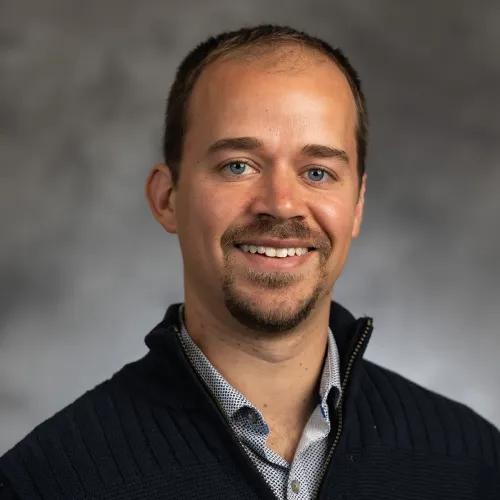
Joshua Welch, PhD
Associate Professor
Featured News & Stories
Improving care for patients with brain injuries
Human connection takes center stage at Medical School Commencement
Alum reconnects to his roots through Doctors of Tomorrow scholarship fund
Advancing proteomics through computational innovation: Kai Li successfully defends dissertation
Scholarship honors love and gratitude