Internal Medicine Faculty Spotlight - Dr. Sumit Agarwal
Sumit Agarwal, MD, MPH, PhD, is a tenure-track assistant professor of internal medicine in the Division of General Medicine and an assistant professor of health management and policy at the School of Public Health. Dr. Agarwal is also a research faculty member of the Institute of Healthcare Policy & Innovation.
Prior to joining the University of Michigan, Dr. Agarwal went to medical school at Mayo Clinic Alix School of Medicine and did his clinical training in internal medicine and primary care at the University of Virginia Hospital. He also recently completed his PhD in Health Policy and Economics from Harvard University while working as a primary care physician at Brigham and Women’s Hospital.
Dr. Agarwal’s research as a health economist and physician examines the impact of social, economic, and insurance policies on health and explores several areas related to primary care, including its workforce, quality of care, and payment reform. His work has been published in several high-impact journals including the New England Journal of Medicine, Journal of the American Medical Association, Annals of Internal Medicine, JAMA, and more. Dr. Agarwal is also a primary care physician who sees patients at our General Medicine Clinic in the Taubman Center.
Learn more about Dr. Agarwal's work on economic policy and its effects on healthcare systems and patient outcomes, as well as what inspired him to pursue general medicine and what he finds most fulfilling in his work.
Can you tell us about your research on the impacts of social, economic, and insurance policies on health? What do you hope to achieve?
I investigate policies such as Medicaid, minimum wage laws, and cash transfers as potential ways for improving economic security, which is increasingly being recognized as a key determinant of health. For example, in a randomized study published in JAMA, I found that a cash transfer program in Chelsea, Massachusetts resulted in a decrease in visits to the emergency department, improved mental health, and increased access to outpatient care.
How do your findings inform real-world decisions made by healthcare systems and policymakers?
By rigorously evaluating transformative policies using the tools of causal inference, my research as both a physician and health economist can help policymakers make informed decisions that consider the far-reaching health effects of economic policies. For example, one of my research studies shows that the availability of Medicaid is critical for people who lose their jobs in order to maintain health coverage and access to doctors.
How do you hope your research will improve health outcomes for patients — especially those in underserved communities?
I hope my research helps shift how we think about what drives health outcomes — especially for underserved communities. Too often, we focus narrowly on clinical care when in fact, economic insecurity and underinsurance are major contributors to poor access or adverse health outcomes. My goal is to equip policymakers and health systems with evidence that enables them to advocate for, design, or implement interventions in hopes of meaningfully improving health for the people most at risk of being left behind.
What drew you to your research focus and general internal medicine? What made you want to become a doctor?
My clinical and research interests developed from experiences I had volunteering and working in a safety net hospital. I witnessed the effects of medical illness and social complexities on health. Ultimately, I discovered that I could help people as a physician caring for individual patients in the clinical setting and as an investigator researching policies that make access to care and better health more achievable for all.
What do you find most rewarding about your work?
I enjoy connecting with patients and developing a long-term relationship with them. I am humbled by the stories they share with me, which motivates the questions I ask as a researcher.
Learn more about Dr. Agarwal’s research.
In This Story
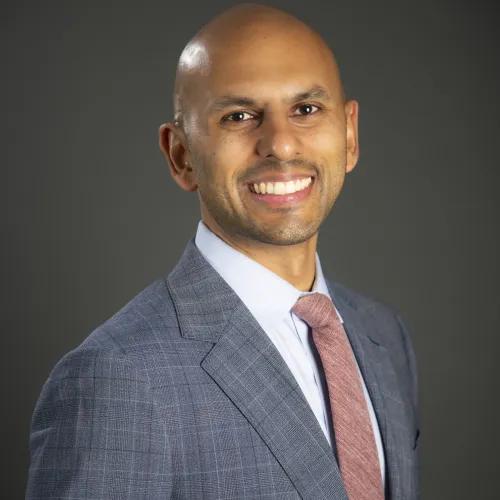
Sumit Agarwal, MD, MPH, PhD
Assistant Professor
Featured News & Stories
Rebecca Nause-Osthoff, MD, named Associate Chair for Pediatric Anesthesiology
Dr. Adam Rodman to deliver Woolliscroft Endowed Lecture on November 17

Bigger data reveals the second, third, and fourth switches controlling a gene
Dr. Amy Kelley named chief of Geriatric and Palliative Medicine

Commentary: Global health research makes America richer and healthier