Faculty Spotlight: Dr. Sara McCoy
Advancing Sjögren’s Disease Research from the Patient to the Bench—and Back Again
For Dr. McCoy, a career in rheumatology is deeply personal. Diagnosed with a rheumatic disease as a child, Dr. McCoy experienced firsthand the difference that effective treatment can make. That experience ultimately shaped a career focused on improving care and developing new treatment options for patients living with Sjögren’s disease.
More than a decade ago, Dr. McCoy began focusing clinical practice and research on Sjögren’s disease, a chronic autoimmune condition that can cause significant symptoms, including dry mouth and dry eyes. While Dr. McCoy was fortunate to have treatments available during childhood, caring for patients with Sjögren’s revealed a significant unmet need: many patients continue to have limited options for managing their symptoms.
“That drove me to establish a clinic where I could focus my clinical practice on optimizing care options for this group and use research to generate novel treatments,” Dr. McCoy explains.
Understanding Sjögren’s Disease at a Deeper Level
Today, Dr. McCoy’s research centers on understanding the biology of Sjögren’s disease and, ultimately, using that knowledge to develop more precise treatments.
A major goal is to understand how the disease varies among patients at the biological level. By identifying distinct endotypes—subgroups of patients whose disease may be driven by different underlying biological mechanisms—Dr. McCoy hopes to help advance targeted therapies tailored to those differences.
The research program explores several interconnected areas. One focuses on better understanding pain in Sjögren’s disease, including how pain relates to eye symptoms and whether specific proteins may help identify a distinct Sjögren’s pain endotype.
Another area examines inflammatory pathways and their effects on fibroblasts, cells that play important roles in the structure and function of tissues. Dr. McCoy and the research team are particularly interested in how fibroblasts interact with traditional immune cells and how those interactions may contribute to disease.
To investigate these questions, the team uses a range of sophisticated research models, including animal models and organoids within microphysiologic systems. Together, these approaches allow researchers to examine disease mechanisms from multiple perspectives and identify potential avenues for new therapies.
From the Patient to the Bench—and Back Again
One of the most exciting recent milestones in Dr. McCoy’s research has been comleting enrollment in a first-in-world safety study which investigates an innovative approach to treating dry mouth in Sjögren’s disease.
In the study, activated mesenchymal stromal cells (MSCs) were injected into one of a patient’s two submandibular glands—the glands responsible for producing much of the saliva in the mouth. The goal is to explore whether this regenerative approach can help address dry mouth, a symptom that can be particularly challenging to treat.
With enrollment now complete, Dr. McCoy and the team hope to move toward opening a Phase 1 study in which activated MSCs would be injected into both submandibular glands.
For Dr. McCoy, the significance of the work extends beyond a single clinical milestone. It represents a model of research that begins with listening to patients, translating their concerns into scientific questions, and ultimately bringing discoveries back to the clinic.
“I believe that patients can teach us so much about their disease,” Dr. McCoy says. “I enjoy learning from my patients about what is most important for research, bringing their concerns to the bench, and developing solutions.”
Treating the first patient in the MSC study was especially meaningful because it demonstrated that this approach could move from concept to clinical application.
“It was the first time I could show we went from the patient to the bench, and back again,” Dr. McCoy recalls. “It was a very rewarding moment.”
A Career Driven by Patients
That connection between patient care and discovery remains at the heart of Dr. McCoy’s work. By combining clinical practice with innovative research, the goal is not only to better understand Sjögren’s disease, but to translate that understanding into meaningful new options for patients.
Outside of work, Dr. McCoy’s time is largely devoted to family. With four children ranging in age from 18 months to 14 years, free time is often spent “driving and attending school events”.
Through clinical care, research and a commitment to listening to patients, Dr. McCoy is helping advance a more personalized approach to Sjögren’s disease—and working toward a future in which patients have more effective options for treating the disease and its symptoms.
Featured News & Stories
Nerf gun accident causes retinal detachment in pediatric patient

PMOS is the New PCOS
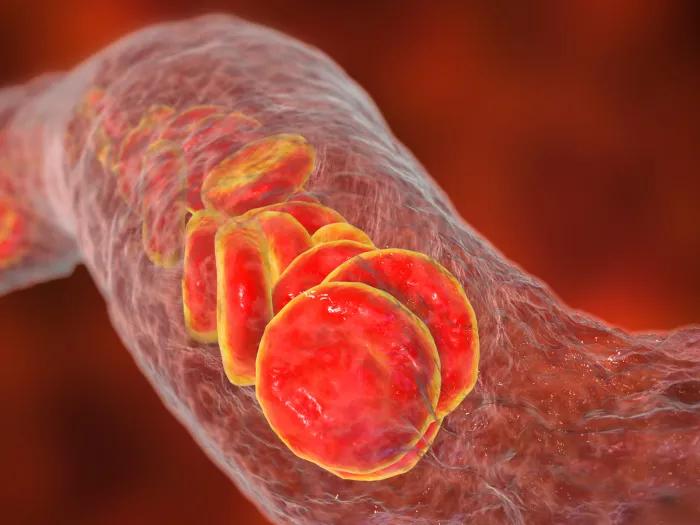
FDA-approved drug offers hope for patients with polycythemia vera, a rare bone marrow disorder
Couples’ Snoring Solutions Guide: Here’s What Causes Snoring and How to Stop It Disrupting Your Sleep
Jacob Mack: Helping Trainees Take the Next Step