Faculty Spotlight: Dr. Nora Becker - Shaping health policies to improve patient health & financial outcomes

Many primary care physicians have cared for patients who have been forced to make the impossible decision of whether they receive the healthcare they need because of financial constraints. For Dr. Nora Becker, primary care physician and assistant professor in the Division of General Medicine, these experiences have become a driving force behind her research.
Dr. Becker's early research focused on women's health and access to contraception—one of the most financially significant aspects of healthcare for many women. Today, her work examines how health and social policies shape patients' health and financial outcomes. She also studies how financial circumstances influence patients' interactions with the healthcare system, insurance design, and their ability to afford care.
Turning Data into Policy
Dr. Becker aims to address a major gap in healthcare research by using novel administrative data sources to measure health and economic outcomes across large patient populations. By putting numbers on the financial consequences of illness, she hopes to provide evidence that motivates policymakers to address these challenges.
“We know income has a huge impact on health, but we haven’t had high quality longitudinal data for large populations that measure both economic and health outcomes for patients,” she said.
As a physician scientist, Dr. Becker also draws on her clinical experiences to identify patterns from large datasets and contribute to broader conversations about healthcare policy. It’s one of the reasons she chose the combined career, and is what continues to motivate her work today.
“I was always interested in public health and how to find a way to make a big contribution that could help people become healthier,” she said. “I liked the idea of being a physician scientist because it meant I can help the patient in front of me to whatever extent I can and then take those patterns to large data sets and describe them in order to contribute to conversations around broader systemic solutions we can’t individually solve as physicians.”
Dr. Becker says one of the greatest privileges of her clinical work is that it adds urgency to her research. As a primary care physician, Dr. Becker regularly sees patients struggle with costs, which inspires her to keep striving for change.
“I’ve lost count at the number of times someone has left a prescription unfilled or canceled a necessary procedure simply because the out-of-pocket costs were too high,” she said. “While my research can feel slow, these experiences give me clarity that what I’m doing is important to people.”
What Research Reveals About Medical Debt for Low-Income Families
One of the most surprising findings from Dr. Becker’s research has been the financial vulnerability among lower- and middle-income patients, even those with health insurance.
“There’s a huge gap in how health insurance is designed for our lowest income people,” she said. “We have Medicaid, which does a great job of protecting patients financially, but if your income is even slightly above the federal poverty limit, you’re moved into the world of private insurance where premiums and out-of-pocket costs can consume a large portion of income.”
As Medicaid policies continue to evolve and many lower-income people are either dropping or losing their coverage, Dr. Becker hopes her work can inform the creation of better policies, whether at the institutional, state, or federal level, to help protect patients financially and improve health outcomes.
Influencing Real-World Policy Change
Early in her career, Dr. Becker’s research on the Affordable Care Act demonstrated how lowering the cost of contraception improved access to care. This was later cited by the U.S. Department of Health and Human Services when they were developing their federal regulations.
“When you can put numbers to it in real dollar amounts, such as, this percentage of people can’t afford their care and it costs X amount, it can contribute greatly to these policy discussions whenever they come along,” she said.
Now, Dr. Becker is helping translate her research into real-world action through her work here at the University of Michigan and Michigan Medicine. As a member of the Institute for Health Policy and Innovation (IHPI), Dr. Becker works alongside communications and policy experts excited to bring findings to policymakers. She is also involved as a collaborator of the state-funded evaluation of Michigan Medicaid. After completing a decade of work evaluating the program’s impact, the team is now sharing its findings with federal and state policymakers as major changes are challenging the Medicaid system. The research showed enrollment in Medicaid reduced medical debt and collections by, on average, $1,000 for people seven years after enrollment.
Driven by Purpose
What keeps Dr. Becker motivated is the opportunity to connect her patients' experiences with her research—and to bring those insights back into the exam room. In the clinic, she likes meeting different people, hearing their stories, and helping them navigate health challenges with the training and tools she has. On the research side, she enjoys stepping back and thinking about her experiences and solutions that can improve healthcare on a larger scale.
“I want to do work that has meaning and makes a contribution,” she said. “I love the combination of clinical care and research…I feel lucky to do this!”
See more of Dr. Becker's research.
In This Story
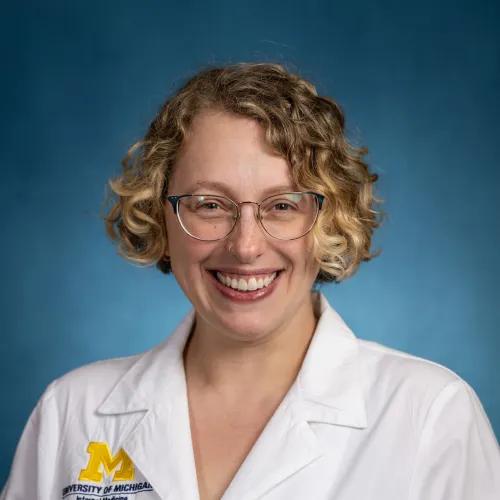
Nora V Becker, MD, PhD
Assistant Professor
Related

Medicaid expansion helped enrollees’ long term financial health, study finds
Featured News & Stories

Nerf gun accident causes retinal detachment in pediatric patient

PMOS is the New PCOS

FDA-approved drug offers hope for patients with polycythemia vera, a rare bone marrow disorder
Couples’ Snoring Solutions Guide: Here’s What Causes Snoring and How to Stop It Disrupting Your Sleep

Jacob Mack: Helping Trainees Take the Next Step