
More articles about: Rogel Cancer Center
Health Lab
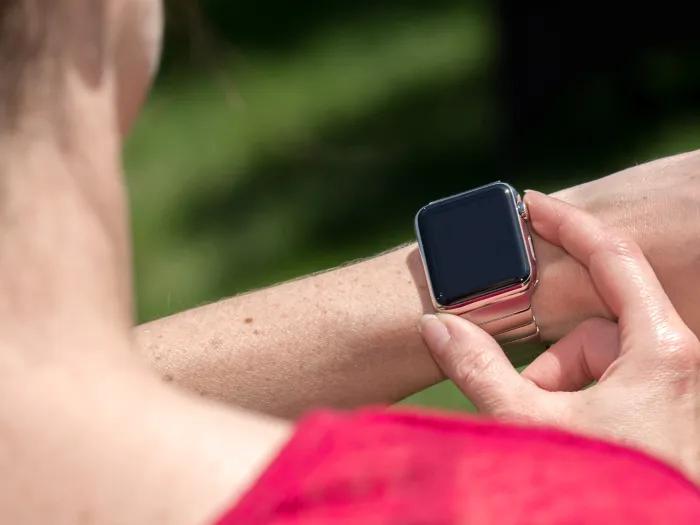
Personalized app reduces cancer-related fatigue
Researchers at the Rogel Cancer Center, in collaboration with Arcascope, have developed and tested a personalized app that tracks a user’s circadian rhythm and makes behavioral recommendations to reduce daily fatigue.
Health Lab
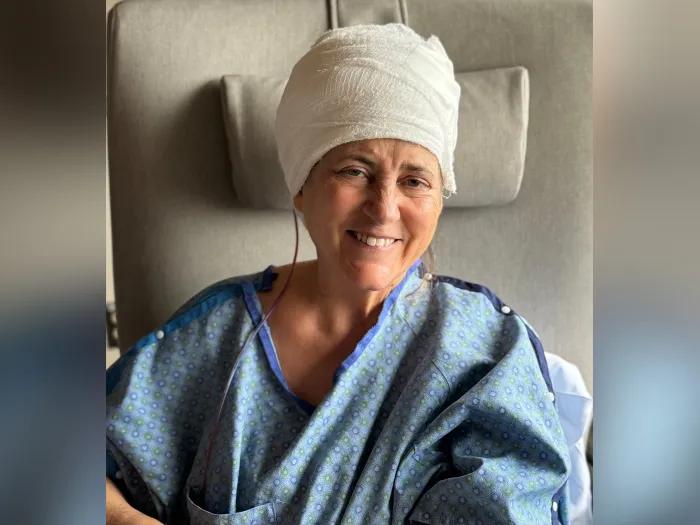
Aggressive brain cancer doesn’t stop woman’s positive perspective
Despite a devastating diagnosis of glioblastoma, Chris Barry is thankful for her family, friends and the care she’s receiving at Michigan Medicine.
Health Lab
4 exciting advances in multiple myeloma
A specialist outlines some recent advances that have him excited for the future of multiple myeloma treatment.

Philanthropy News
Granger family supports prostate cancer research with dedicated fund
With the same high standards that drive their successful construction company, Glenn and Trish Granger approach philanthropy with a commitment to meaningful impact.

Health Lab
New cellular therapy trials for brain tumors
Michigan Medicine experts discuss CAR T therapy, its use in other clinical trials at U-M and the new Phase I trials that started in March 2025.

Health Lab
Re-purposed FDA-approved drug could help treat high-grade glioma
Avapritinib, an FDA-approved drug used to treat other types of cancer, also decreases aggressive gliomas in animal models and in an initial cohort of patients with high-grade glioma.
Health Lab
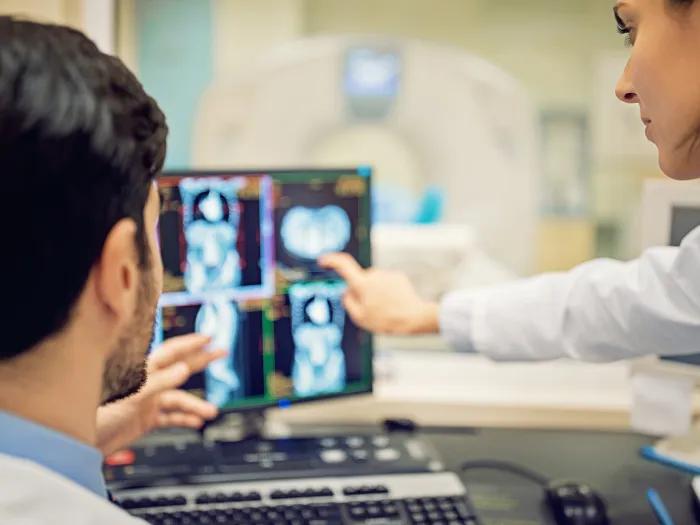
A dosimetry code ready for widespread use in software
Patients receiving radiation treatment for cancer from around the country now benefit from a University of Michigan-developed code that research clinicians developed.

Health Lab
An emerging class of RNA fighting cancer, infectious and genetic diseases
Michigan Medicine's College of Pharmacy researchers have developed a promising new weapon in the war on cancer: small circular mRNA vaccines.

Health Lab
Speculum exams unnecessary for HPV screening
HPV screening usually entails a speculum-based exam, which is an uncomfortable experience for most patients. University of Michigan researchers are the first to demonstrate in the United States that self-sampling is just as effective as speculum-based testing for HPV detection.
Cancer Aware
How De-Implementation Can Improve Health Care in the U.S.
In the United States, unnecessary tests and treatments not only drive-up health care costs but may also contribute to a waste of valuable resources and avoidable patient harms. Today we talk with Michigan Medicine assistant professor of surgery Dr. Lesly Dossett, M.D., MPH about an effort to reduce such practices through a process called de-implementation.

Health Lab
Exercise can reduce your cancer risk and help prevent its return
A director of exercise and health behavior in oncology shares ways to help cancer survivors live longer and better lives by incorporating exercise and other physical activity into everyday routines.
Health Lab
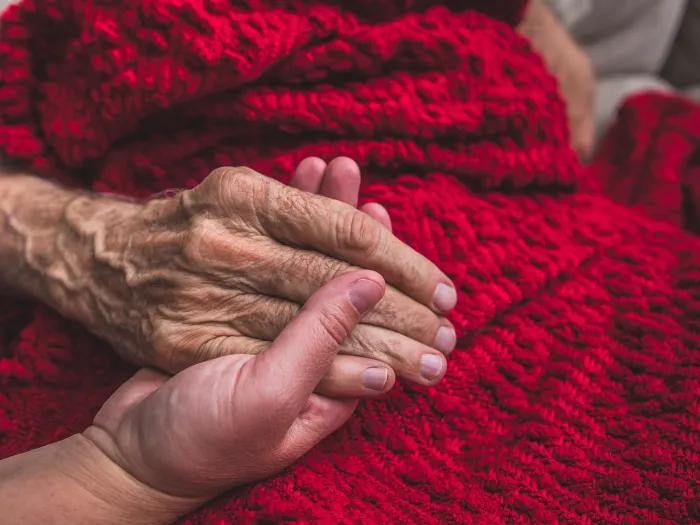
What experts wish more people knew about hospice and other end-of-life care
Hospice, palliative care, end-of-life decisions, long-term care insurance and durable power of attorney are all things people with serious health issues should think about.

Health Lab
How race impacts patients’ response to cancer immunotherapy
The first large scale analysis finds immune checkpoint inhibitors are equally effective in Black and white patients, with Black patients having fewer side effects.

Health Lab
Exercise and physical activity help with cancer recovery and prevention
When it comes to living well and preventing cancer, scientists long ago established that exercise and physical activity are key. But some cancer survivors wonder which activities are best for maximizing health benefits. An assistant professor of applied exercise science at the University of Michigan School of Kinesiology talks more.

Health Lab
New drug candidate blocks resistance to cancer therapies
A team of researchers at the University of Michigan Health Rogel Cancer Center has designed a molecule that impairs signaling mediated by two key drivers of cancer therapy resistance.
