Meeting Patients Where They Are: The Joys of Family Medicine
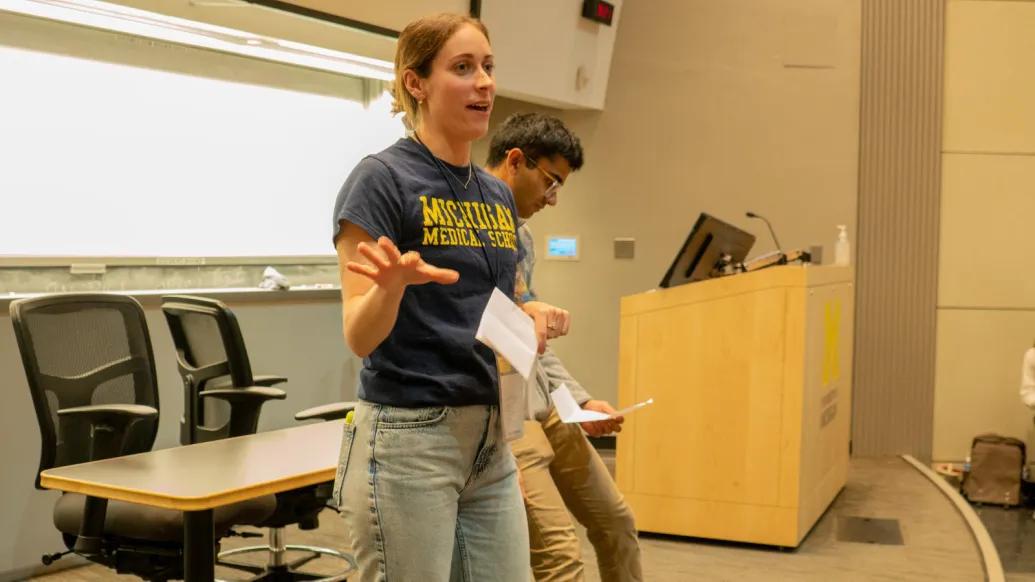
“Three…two…one. Let go!”
Two high-school boys in oversized white coats eagerly gestured to their classmates to release their fingers from their wrists, where they’d been compressing their own radial and ulnar arteries.
“Look at how half of your hand stays pale! That’s because your hands get blood from TWO different arteries, and you only let go of ONE of them!”.
I had shown them this trick five minutes ago during a Doctors of Tomorrow mentorship session, and now they were racing around the clinical simulation center, displaying it proudly to their peers. I thought about how earlier in the day, they’d been sitting in the back of the auditorium with their heads in their phones, wondering how this field trip to the medical school in Ann Arbor would be worth the bus ride from Detroit.
I’ve always loved watching people who don’t think they have a seat at the table, don’t believe they are capable, or don’t want to get too excited, let themselves feel that spark. After graduating from Tufts University with an undergraduate degree in child study and human development, I went on to become a 9th-grade writing teacher at KIPP Collegiate High School in Nashville, Tennessee, where so many of my students had already cemented their stories about themselves:
“I’m a bad writer.”
“I’m a bad listener.”
“I’m a bad kid.”
One of my jobs, in addition to planning, executing and grading, was to give my students opportunities to reframe these narratives, and cheering them on when they did.
But so many things were outside of my scope as an educator, whose main priority was ensuring finished essays and good grades. My kids brought so many things into the classroom that I couldn’t always help them reframe.
One of my students came into school one day looking like a completely different person; usually he was one of the quickest to raise his hand, but that day he kept his head down, answering my questions with angry grumbles, kicking the floor with his sneakers. My school’s guidelines at first glance would call for punishment: a demerit for “not following directions.” Instead, I pulled him aside and asked, “What happened this morning before you came to school? You seem different today.” He told me about what was going on at home with his family, and his behavior suddenly made a lot more sense.
As much as I loved teaching, I’d always felt a calling to medicine, and interactions like those are why I want to be a family medicine doctor who builds long-term relationships with my patients and works to address social determinants of health.
If I’d been meeting that student at a moment in time, I might have been punitive, frustrated and blamed him for not aligning to my expectations. I might have pushed him away, making him feel like school (and maybe, worst case, the world) is full of people who don’t really see him for who he is or can’t recognize when he’s struggling and unable to express it.
As a family medicine doctor, I want to be the same kind of person I was as a teacher. I never want my patients to feel like they are being judged. I’ll wash their feet, I’ll clip their toenails, I’ll biopsy that mole on their back, I’ll reassure them that they don’t need antibiotics for their cold and no, it’s not silly to ask! I’ll tell them what warning signs to watch out for. I’ll offer them a nicotine patch every visit, even if they don’t feel like they’re ready yet. I want to be the trusted person who notices when something is off and asks, “What happened to you?” instead of, “What’s wrong with you?”
I also want to be the person who sees the big picture; on my family medicine rotation, I had a patient come to clinic after receiving a serious new diagnosis in the hospital. They had already heard talks on prognosis and gotten set up with follow-up from all the specialists. Instead, we talked about how they would fare at home (did they have a ramp to get inside?), what types of side effects to expect with treatment and how to set up a group chat with their adult children to coordinate caregiving. It’s such a privilege to be able to be there for the ebbs and flows of a person’s life, even if it’s not making a diagnosis or surgically removing a tumor. The small changes often speak volumes, and just as I noticed my students’ moods change day to day, I can observe my patients over time and call attention to the subtle shifts that might indicate a deeper issue. Continuity is its own form of data!
So much of primary care is comforting, counseling and perhaps most importantly, compromising. Another clerkship year patient, a person who had been falling at home at night, revealed that their nighttime routine included a few glasses of wine followed by a trip up a flight of stairs to bed. My preceptor was honest with me: “No matter what we suggest, they aren’t going to change their drinking habits overnight.” So together, we devised a simple plan for harm reduction: they would pour some wine into a to-go cup before heading upstairs. I could see them visibly relax, recognizing that they were capable of change, and that their provider was capable of being creative to meet their needs. And with the constancy that family medicine offers, I scheduled them for close follow-up to revisit the conversation around their alcohol use.
When I actually had real relationships with my students, and they could trust that I’d show up every day because I cared about them and saw them, I could be more of a straight shooter with them. “You know you have an F in my class right now, right?” translated to, “I know you’re better than this, how can I help you?”. I see the same types of opportunities as a family doctor who has shown up time and time again and been there to answer questions, provide reassurance and treat aches and pains. “You know your A1c needs work, right?” translates to, “I know you’re having trouble managing your sugars, but that you want to. What can I do?”. I recognize that high expectations are not enough to overcome the systemic barriers so many patients face that make behavior change and health maintenance impossible, but as a family doctor, I can leverage my network and resources to meet patients where they are - like through street medicine runs or school-based health clinics.
Just like the high school students who got excited about Allen’s test and reframed their own beliefs that medical school was not a place where they belonged, I see myself encouraging my future patients to reframe their own stories about themselves, and celebrating them when they achieve their health goals, however small. I’m currently finalizing my rank list of family medicine residencies, and I can’t wait to end up at a program where I can work in diverse practice settings that creatively address systemic barriers for patients, from the cradle to the grave. Wherever I work, I look forward to making everyone with whom I interact feel seen, heard and valued, and I’m grateful for my family medicine mentors at Michigan for helping me continue to hone those skills in clinical encounters!
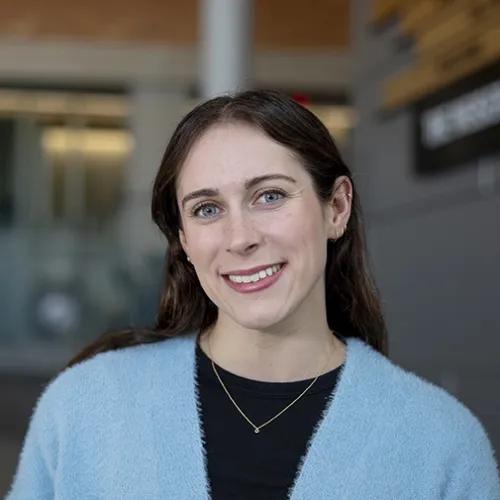
Ailish Dougherty is a fourth-year medical student from Philadelphia applying into family medicine. She loves cheering for the Eagles, working the room in karaoke, tormenting her opponents in various board games and knitting. She is grateful for the opportunity to preach the gospel of FM!
Media Contact
MD Admissions
University of Michigan Medical School
Featured News & Stories
Jacob Mack: Helping Trainees Take the Next Step

From Uganda to Ecuador: A Journey of Adaptability
One Patient, Five Schools: Building Interprofessional Care at Michigan's Student-Run Free Clinic

Beyond the White Coat: The Med Student Tradition Behind Michigan’s Smoker
Learning about the Life Loaf: My Experience Working in OBGYN Research