Inaugural RISE Prize Recognizes Innovation in Health Sciences Education
2:16 PM
Author |
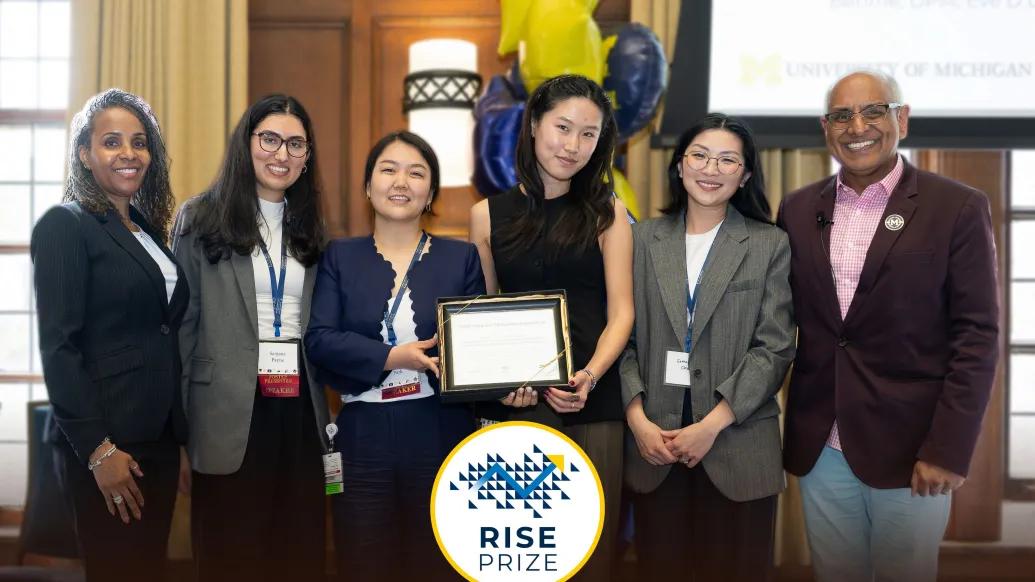
Recognition has become an increasingly important part of how Michigan Medicine RISE (Research. Innovation. Scholarship. Education.) approaches educational innovation. Across the health professions education community, innovators are developing new approaches to teaching, learning, and patient care in real time. The newly established RISE Prize for Education Innovation was created to recognize that work publicly and provide ongoing support for awardees to continue to develop the innovation. The award highlights projects that demonstrate creativity in practice, measurable impact, and strong potential to shape the future of health science education.
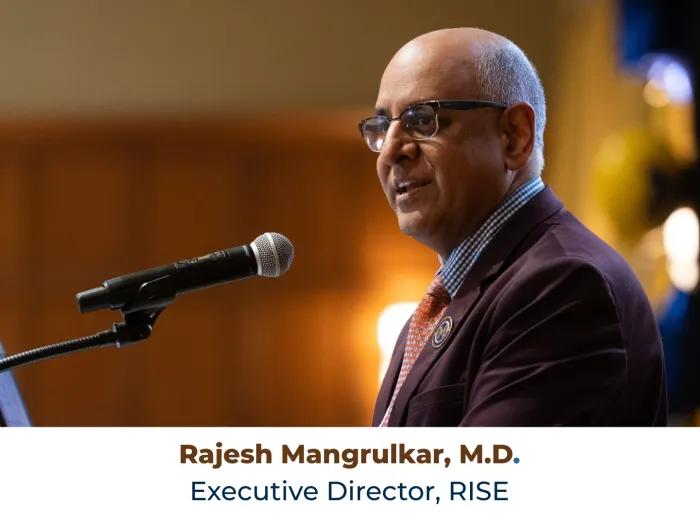
“Our community told us clearly that formal recognition matters to innovators, and they are absolutely right,” said Dr. Rajesh Mangrulkar, executive director of RISE. “Recognizing impactful work like this goes beyond celebrating an individual team. We are signaling that we truly value advancing those ideas that are having a great impact on our education community. The Wolverine Street Medicine foot-care team has built something that is already transforming how students learn and improving access to patient care, and that deserves to be seen.”
Presented for the first time at the cross-campus HPE Connect ’26 conference this past April, the annual $1,500 RISE Prize recognizes the conference abstract that best exemplifies those values. The prize reflects a broader commitment from RISE to not only support innovation, but also create visible opportunities for impactful work to be shared and expanded across the community. The Wolverine Street Medicine foot-care team emerged as a strong example of that mission in action with their winning abstract, Street-Based Foot Care as Experiential Education Model Across Three Medical Student-Run Street Medicine Teams.
Learning While Doing
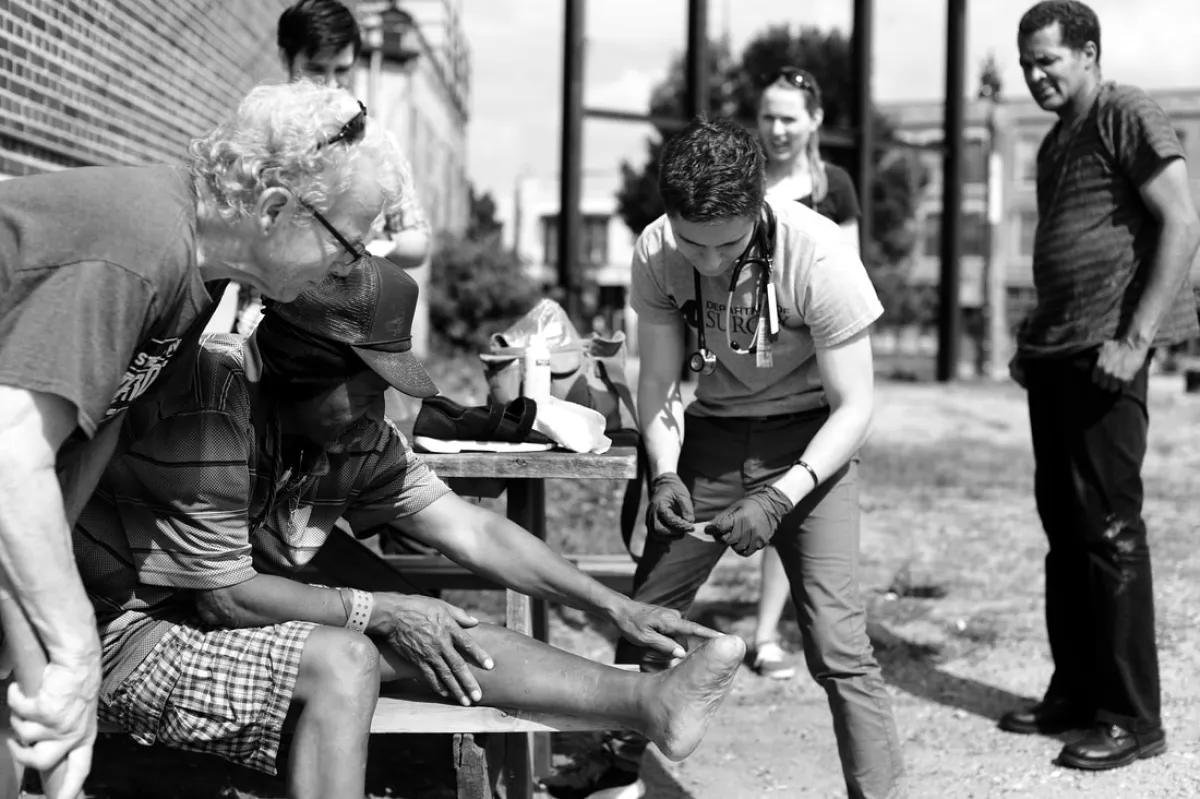
When medical students at the University of Michigan began delivering foot care to people experiencing homelessness (PEH) living on the streets of Detroit, they began closing the distance between the classroom and the community in a way that was grounded in real need. As clinician educators put it, the team is fostering the practice of “learning while doing,” which directly situates education into the patient care setting.
In total, 385 medical students and 14 undergraduate students have received hands-on training in foot pathology recognition, wound and nail care, triage, and patient-centered communication. Last year, the collaboration completed 747 medical street encounters, with roughly 30% involving foot care across Wayne, Washtenaw, and Jackson counties. During that same period, dedicated foot care encounters within the Wolverine Street Medicine team increased by 43% compared to 2024.
Experiential Education Building Real Confidence
Currently led by Ashley Park and Sanjana Paye, students at the University of Michigan Medical School, this initiative brings together students and faculty from the University of Michigan, Wayne State University, and Michigan State University. Faculty mentors include podiatrists Dr. Christopher Girgis, Dr. Stephanie Behme, and Dr. Michael Munson, as well as emergency medicine physicians Dr. Samantha Chao and Dr. Eve Losman. Together, the team has developed a model that embeds podiatric education directly into student-run street medicine. Podiatrists train medical students, who then deliver supervised foot care in street and shelter settings, creating a learning environment that is hands-on, scalable, and grounded in real patient needs.
For many students, the program offers a type of clinical learning they may encounter only briefly during traditional training. Through repeated hands-on care and mentorship from faculty and senior students, learners gain experience identifying infections, guiding preventative self-care, and managing foot health while taking ownership of patient interactions in a meaningful way. “Two weeks into my M1 year, feeling unqualified had become commonplace,” said Zoe Siegel, a member of the Wolverine Street Medicine team. “The mentorship and encouragement I received from the outgoing M4 leaders gave me the confidence to share my own ideas from day one and helped me see that my perspective had value.”
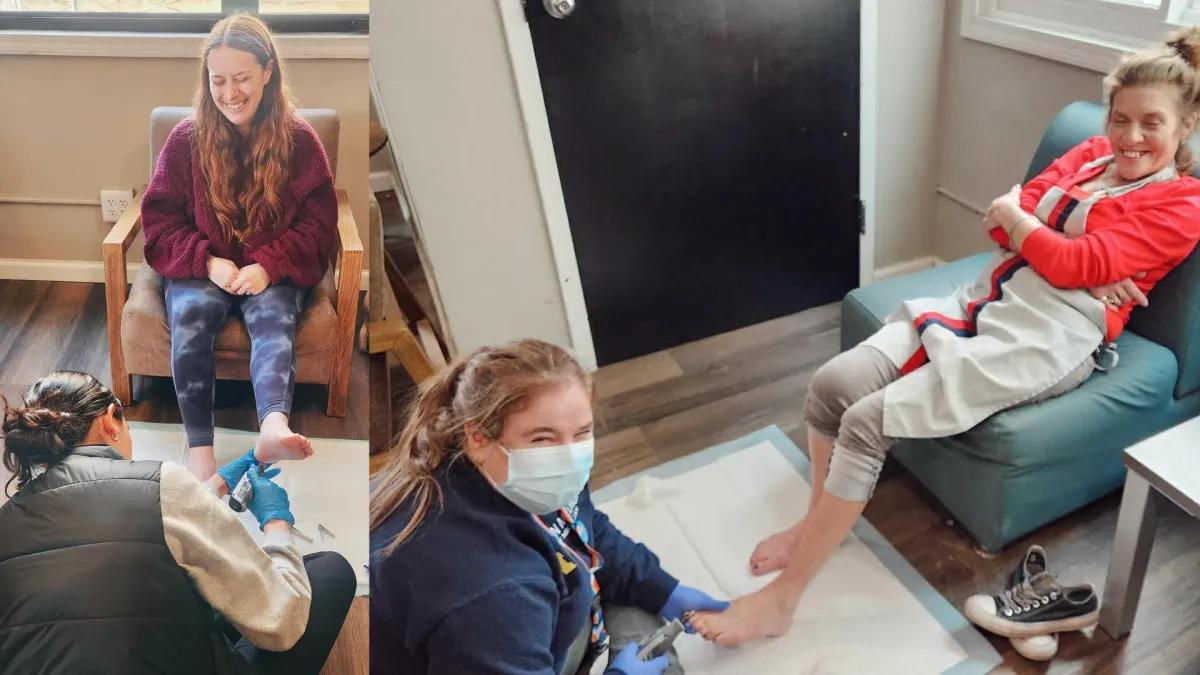
That confidence extends beyond technical skills. Working with patients over time helps students develop clinical judgment, communication skills, and a deeper understanding of relationship-centered care. “There's something that happens when you do this work repeatedly, in the field, with real patients,” said Paye. “You stop second-guessing yourself. You start to trust your hands and your instincts in a way that's hard to build in a classroom.”
For Park and Paye, some of the most meaningful lessons come through longitudinal relationships with patients at sites such as the Jackson Interfaith Shelter, where foot care often serves as a low-stakes entry point into a patient's broader healthcare journey. “There are moments where you hand someone a pair of shoes and tell them you'll see them next month, and you mean it,” said Park. “It has been incredibly refreshing to learn from experienced students and healthcare providers who not only encourage, but expect, active adaptation to the changing landscape of our community.”
Looking Ahead
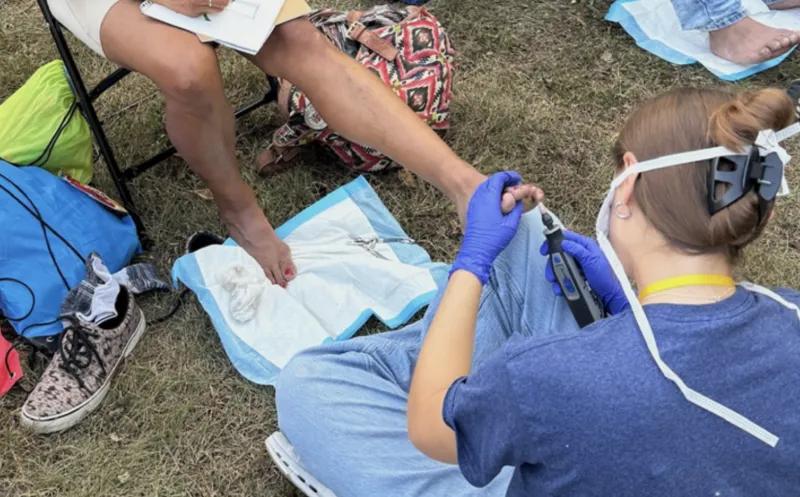
Through the RISE Prize, the team gains more than funding. With support from the RISE Core Team, Ashley, Sanjana, and their collaborators will work to strengthen the foundation for long-term impact, clarifying key outcomes, engaging partners across disciplines, supporting scholarly dissemination, and building the relationships needed to sustain and expand the initiative across Michigan Medicine and beyond.
The model has already demonstrated its ability to scale. What began at one institution has grown across three, and the vision for where it goes next is expansive. Over time, this work has the potential to inform more coordinated care models, support consistent educational practices across professions, and contribute to broader integration across clinical and learning environments where the next generation of health professionals is being shaped.
HPE Connect Abstract Authors: Ashley Park, BA, Amanda Casetti, BS, Brooke Waldon, BS, Liliana Melgoza, BA, BS, Lauren Bradford, BS, Zoe Chen, BA, Zoe Siegel, BA, Nithya Gogineni, BS, Christopher Girgis, DPM, CWSP, Stephanie Behme, DPM, Eve D Losman, MD, MHSA, Samantha Chao, MD, HEC-C
Featured News & Stories

LGBTQ+ Aging in America
From the Executive Director’s Desk: June 2026
New Findings on a Decade of Medicaid Expansion in Michigan
Had I Earned This Expert Status? Learning to Be a Student in Uganda

The Bioethics of Data and A.I. in Healthcare