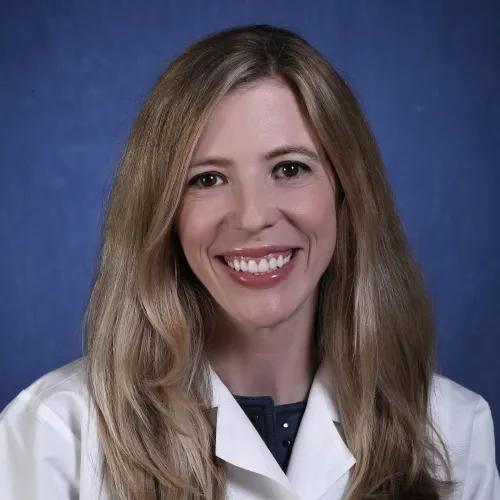
Abigail Fahim, MD, PhD
Ophthalmology & Visual Sciences
1000 Wall Street
Ann Arbor, Michigan 48105
Manage Your Profile
Qualifications
-
Medical Retina FellowUniversity of Michigan–Ann Arbor, Ann Arbor, United States
2016 - 2017
Clinical Fellowship
-
Retinal Dystrophy FellowUniversity of Michigan–Ann Arbor, Ophthalmology and Visual Sciences, Ann Arbor, United States
2015 - 2016
Clinical Fellowship
-
Retinal Dystrophy FellowMoorfields Eye Hospital, London, United Kingdom
2015 - 2015
Clinical Fellowship
-
Chief ResidentUniversity of Michigan–Ann Arbor, Ophthalmology and Visual Sciences, Ann Arbor, United States
2014 - 2015
Chief Resident
-
ResidencyUniversity of Michigan–Ann Arbor, Ophthalmology and Visual Sciences, Ann Arbor, United States
2011 - 2014
Residency
-
Transitional yearThe University of Texas Health Science Center at Houston, Houston, United States
2010 - 2011
Internship
-
Postdoctoral FellowshipThe University of Texas Health Science Center at Houston, Houston, United States
2009 - 2010
Postdoctoral Research
Center Memberships
-
Center MemberCenter for Cell Plasticity and Organ Design
Research Overview
Many forms of retinal degeneration, including inherited retinal diseases (IRDs) and age-related macular degeneration (AMD), cause irreversible blindness and are largely untreatable. The Fahim lab uses cell culture and animal models of IRDs and AMD to understand these diseases at the molecular level and identify therapeutic targets. The lab uses a variety of models and techniques, including induced pluripotent stem cells (iPSCs), CRISPR/Cas-9 gene editing, viral vector gene delivery, and mouse models.
Dr. Fahim also has a clinical practice as an IRD specialist and participates in IRD clinical trials, which informs her research questions for maximum translational impact and also supports her research through patient-derived iPSCs. Our mission is to advance understanding of the molecular pathways leading to retinal degeneration in IRDs and to identify therapeutic targets for these blinding diseases.
Links
Fahim Reserach Lab
Recent Publications
-
Raeker MÖ, Perera ND, Karoukis AJ, Chen L, Feathers KL, Ali RR, Thompson DA, Fahim AT. Cells, 2026 Jul 21; 15 (14):Journal ArticleCorrection: Raeker et al. Reduced Retinal Pigment Epithelial Autophagy Due to Loss of Rab12 Prenylation in a Human iPSC-RPE Model of Choroideremia. Cells 2024, 13, 1068.
DOI:10.3390/cells15141303 PMID: 42505423 -
Mei L, Weh E, Yu M, Walsh L, Fahim AT, Liu Y, Besirli CG, Schwendeman A. Molecular Pharmaceutics, 2026 Jul 6; 23 (7): 3574 - 3587.Journal ArticleHigh-Density Lipoprotein Nanoparticles Delivering Liver X Receptor Agonist for the Treatment of Age-Related Macular Degeneration
DOI:10.1021/acs.molpharmaceut.5c01852 PMID: 42172633 -
Fahim A, Karoukis A, Perera ND, Raeker M. 2026 May 30;Proceeding / Abstract / PosterA human co-culture model of choroideremia implicates MMP2 as a potential link between Rab prenylation defects and RPE-choroid atrophy
-
Fahim A, karoukis A, Perera ND, Raeker M. 2026 May 4;Proceeding / Abstract / PosterMMP2 links Rab prenylation defects and RPE-choroid atrophy in choroideremia
-
Nguyen VP, Qian W, Fahim AT, Wang X, Paulus YM. Microscopy Histopathology and Analytics Proceedings Optica Biophotonics Congress 2026, 2026 Jan 1;Proceeding / Abstract / PosterLongitudinal Multimodal PAM, OCT, and Fluorescence Imaging Tracking of hiPSC-RPE Transplantation in Large Animals with Neurological Degeneration
DOI:10.1364/MICROSCOPY.2026.MT3B.5 -
Nguyen VP, Qian W, Fahim A, Wang X, Paulus YM. Progress in Biomedical Optics and Imaging Proceedings of SPIE, 2025 Dec 18; 13937:Proceeding / Abstract / PosterMultimodal PAM, OCT, and fluorescence imaging guided stem cell treatment of macular degeneration
DOI:10.1117/12.3098066 -
Delaney A, Branham KE, Jayasundera KT, Khan NW, Fahim AT. Case Reports in Ophthalmology, 2025 Dec 1; 16 (1): 395 - 405.Journal ArticleFemale Simplex Carriers of X-Linked Retinal Dystrophies: A Case Series
DOI:10.1159/000546129 -
Thompson DA, Jayasundera KT, Alekseev O, Ali RR, Amato A, Arshavsky VY, Audo IS, Auricchio A, Bainbridge JWB, Banin E, Besirli CG, Birch DG, Branham KE, Cideciyan AV, Daiger SP, Duncan JL, Fahim A, Flannery JG, Gattegna R, Heckenlively JR, Héon E, Iannaccone A, Khan NW, Khateb S, Klassen HJ, Leroy BP, Marangoni D, Michaelides M, Musch DC, Pennesi ME, Petersen-Jones SM, Pierce EA, Rao RC, Sahel J-A, Sieving PA, Strettoi E, Strong CR, Wubben TJ, Yang P, Zacks DN. Translational Vision Science & Technology, 2025 Aug 27; 14 (8): 37 - 37.Journal ArticleAddressing Challenges in Developing Treatments for Inherited Retinal Diseases: Recommendations From the Third Monaciano Symposium
DOI:10.1167/tvst.14.8.37
Featured News & Stories