
Amanda Crandall, PhD
Manage Your Profile
About
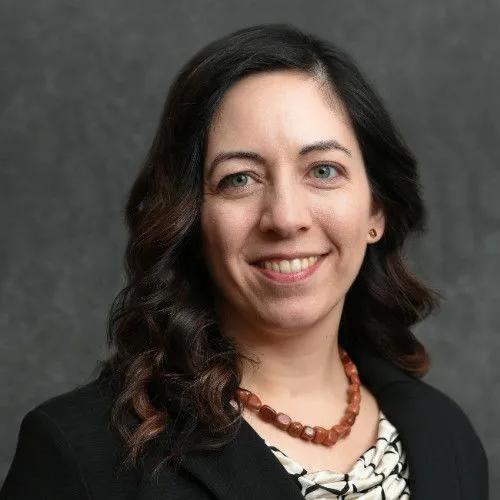
Amanda K. Crandall, PhD, is an Assistant Professor in Developmental and Behavioral Pediatrics at the University of Michigan Medical School. Her interdisciplinary training spans nutrition (BS), psychology (MS), and public health (PhD), and reflects her commitment to understanding eating behavior across biological, behavioral, and environmental levels of influence. This background grounds her research program, which examines how eating behavior emerges in infancy and evolves across early childhood and adolescence. She is committed to generating evidence that supports families, clinicians, and policymakers in promoting healthy eating trajectories from the very beginning of life.
Center Memberships
-
Center MemberInstitute for Healthcare Policy and Innovation
-
Center MemberCenter for Global Health Equity
Research Overview
Dr. Crandall’s work centers on how early feeding experiences, food motivation, and self-regulation interact with environmental stressors—including food insecurity, caregiving context, and family routines—to influence growth and later health. She uses observational methods, behavioral tasks, and advanced analytic approaches to reveal the moment-to-moment processes that guide infant satiation, feeding interactions, and developing inhibitory control. By attending to both proximal interactions and broader social and structural conditions, her work clarifies how environmental pressures shape eating behavior development and disease risk.
Recent Publications
-
Crandall AK, Gearhardt AN, Miller AL, Rosenblum KL, Kaciroti N, Lumeng JC. Appetite, 2025 Oct 1; 214:Journal ArticleInfant feeding behavior development to 12 months with typical and slower-flow artificial nipples
DOI:10.1016/j.appet.2025.108160 PMID: 40449564 -
Wang C, Murley WD, Panda S, Stiver CA, Garell CL, Moin T, Crandall AK, Tomiyama AJ. Curr Obes Rep, 2025 Apr 14; 14 (1): 35Journal ArticleAssessing Weight Stigma Interventions: A Systematic Review of Randomized Controlled Trials.
DOI:10.1007/s13679-025-00628-w PMID: PMC11997004 -
Feldman K, Asta K, Gearhardt AN, Sturza JM, Appugliese D, Miller AL, Rosenblum K, Kong KL, Crandall AK, Lumeng JC. Appetite, 2023 Jun 1; 185:Journal ArticleCharacterization of a Vigorous sucking style in early infancy and its predictive value for weight gain and eating behaviors at 12 months
DOI:10.1016/j.appet.2023.106525 PMID: 36898582 -
Crandall AK, Epstein LH, Fillo J, Carfley K, Fumerelle E, Temple JL. Children, 2022 Sep 1; 9 (9):Journal ArticleThe Effect of Financial Scarcity on Reinforcer Pathology: A Dyadic Developmental Examination
DOI:10.3390/children9091338 -
Crandall AK, Madhudi N, Osborne B, Carter A, Williams AK, Temple JL. BMC Public Health, 2022 Aug 19; 22 (1): 1576Journal ArticleThe effect of food insecurity and stress on delay discounting across families: a COVID-19 natural experiment.
DOI:10.1186/s12889-022-13969-1 PMID: PMC9388997 -
Crandall AK, Epstein LH, Fillo J, Carfley K, Fumerelle E, Temple JL. 2022 Aug 9; Springer Science and Business Media LLC,PreprintThe Effect of Financial Scarcity on Reinforcer Pathology: A Dyadic Developmental Examination
DOI:10.21203/rs.3.rs-1901849/v2 -
Crandall AK, Epstein LH, Fillo J, Carfley K, Fumerelle E, Temple JL. 2022 Aug 9; Springer Science and Business Media LLC,PreprintThe Effect of Financial Scarcity on Reinforcer Pathology: A Dyadic Developmental Examination
DOI:10.21203/rs.3.rs-1901849/v1 -
Crandall AK, McKay NJ, Khan AM, Lantyer MC, Temple JL. Physiol Behav, 2022 Mar 15; 246: 113684Journal ArticleThe effect of acute and chronic scarcity on acute stress: A dyadic developmental examination.
DOI:10.1016/j.physbeh.2021.113684 PMID: PMC8821326
